
Amazon Affiliate Disclosure: As an Amazon Associate I earn from qualifying purchases.
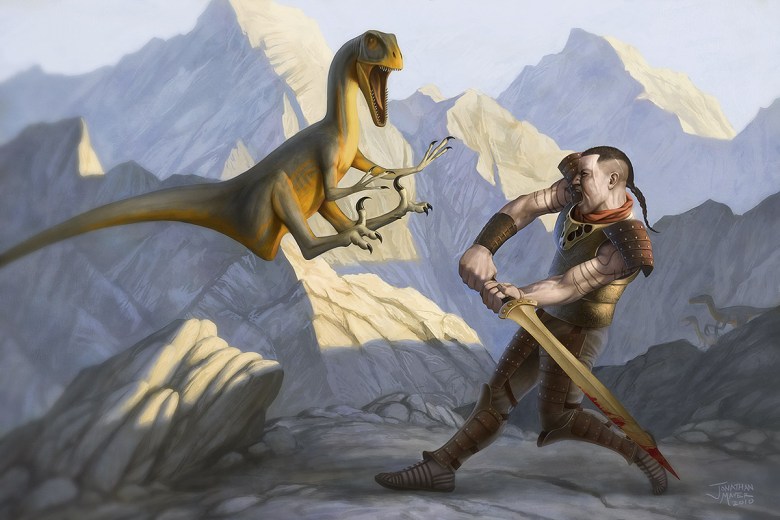
To rehearse my previous posts, Genesis 6:4 says, “The Nephilim were on the earth in those days, and also afterward, when the sons of God came in to the daughters of man and they bore children to them. These were the mighty men [gibborim] who were of old, the men of renown [literally, “men of the name” (shem)].”
Mighty Warrior
We’re told that the Nephilim were “might warriors” (or, “gibbor(im)”) and men of renown, or “men of the name.”
The next time a “mighty man” comes up is in Genesis 10:8-9, “Cush fathered Nimrod; he was the first on earth to be a mighty man. He was a mighty hunter before the Lord. Therefore it is said, ‘Like Nimrod a mighty hunter before the Lord.’”
According to Heiser, this Nimrod “(whose name most likely means ‘rebellion’),” a great hunter, a mighty warrior, gave birth to nations too (111). In verses 10-11 we see specifically two nations and one city that will play a major role in Israel’s story, “The beginning of his kingdom was Babel, Erech, Accad, and Calneh, in the land of Shinar. From that land he went into Assyria and built Nineveh, Rehoboth-Ir, Calah….”
Heiser reminds us, “Once again, as with Genesis 6, the Mesopotamian context is transparent. Assyria and Babylon are the two civilizations that will later destroy the dream of the earthly kingdom of God in Israel, dismantling, respectively, the northern kingdom (Israel) and southern kingdom (Judah)” (111).
Connections
As Heiser points out, the text of Nimrod makes connections with Genesis 6 by giving a few clue words:
- Both Nimrod and the Nephilim were mighty men (gibborim).
- Both have connections with rebellion (Nimrod’s name and the divine beings’ actions against Yahweh).
- Both have connections with Babylon.
Conclusion
Heiser notes, “The Nimrod description in Genesis 10, in the so-called Table of Nations, is therefore a theological bridge between the violation of Genesis 6:1-4 and the next momentous event in the Torah that will frame the entire story of Israel” (111).
In our next post I’ll look at what happened at the tower of Babel. There’s more to it than we think.
Previous Posts
The Nephilim
- Who Were the Nephilim?
- Why This Topic?
- Three Interpretations on the NephilimSethites
- Why is Genesis 6.1-4 in the Bible?A Flood of Stories
- Weird Texts of the Bible
Dividing the Nations
The OT Trinity
- The Trinity in the Old Testament
- And He Struggled With the Angel
- He Rides the Clouds
- The Holy Spirit
Buy it on Amazon!
And also Heiser’s more condensed version,

 spoiledmilks
Hi, there is a good on that topic that you probably know, The Two Babylons: Or, the Papal Worship Proved to Be the Worship of Nimrod by Alexander Hislop. Highly recommend. Thanks for your posts.
LikeLike
Hey, thanks, rubenderus. I haven’t heard of that one, but I’ll look it up now.
LikeLike
Though Hislop’s name does sound familiar.
LikeLike
No problem. That book is a classic. You will enjoy it.
LikeLike
Have you read it? What idd you think of it?
LikeLike
Yes, I have read it, but in Spanish. It provides a good insight on the history of idolatry and the role that Nimrod played in the establishment of idolatry. It also explores how the Roman Catholic church has incorporated idolatry and the excesses that some popes committed. A great historical book.
LikeLike
Was nimrod the founder of the catholic church?
LikeLike
Hi Bob, I think Nimrod was a little bit ahead of his time, so probably not.
LikeLike
How did Nimrod lost his life?
LikeLiked by 1 person
I don’t know. The Bible doesn’t tell us that one.
LikeLike