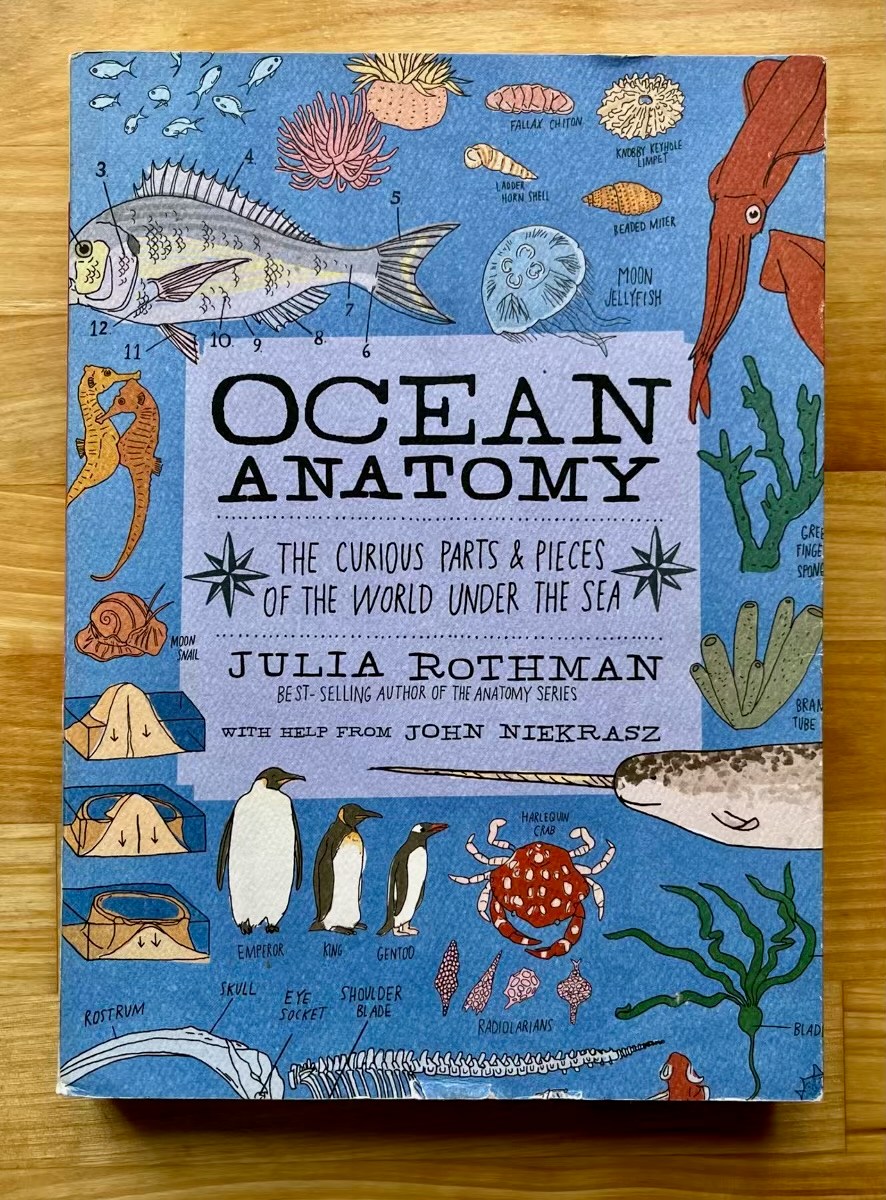

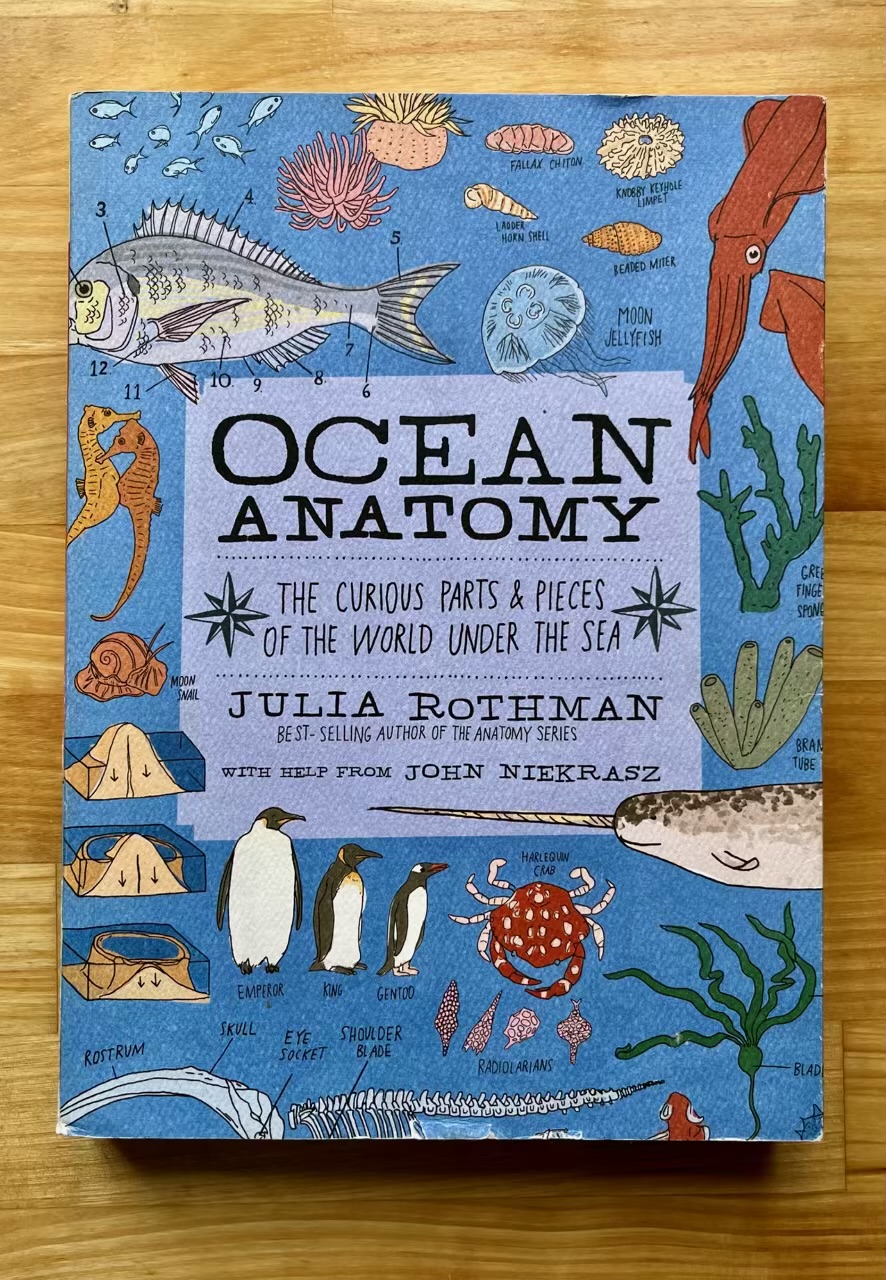
If you’re looking for a visually engaging and family-friendly science book, Ocean Anatomy by Julia Rothman is a popular choice, especially among homeschoolers. But is it actually a good educational resource? In this review, I’ll look at what the book teaches, who it’s aimed at, and whether it’s worth adding to your book stack (or homeschool curriculum).
What Is Ocean Anatomy About?
Ocean Anatomy is part of Julia Rothman’s popular Anatomy series, which explores subjects like food, wildlife, farms, and the natural world. It isn’t an encyclopedia. Instead, it offers chosen slices of each subject through detailed illustrations and bite-sized explanations. Ocean Anatomy fits right in with Rothman’s approach, which fits right in a homeschool setting (we use it and love the books).
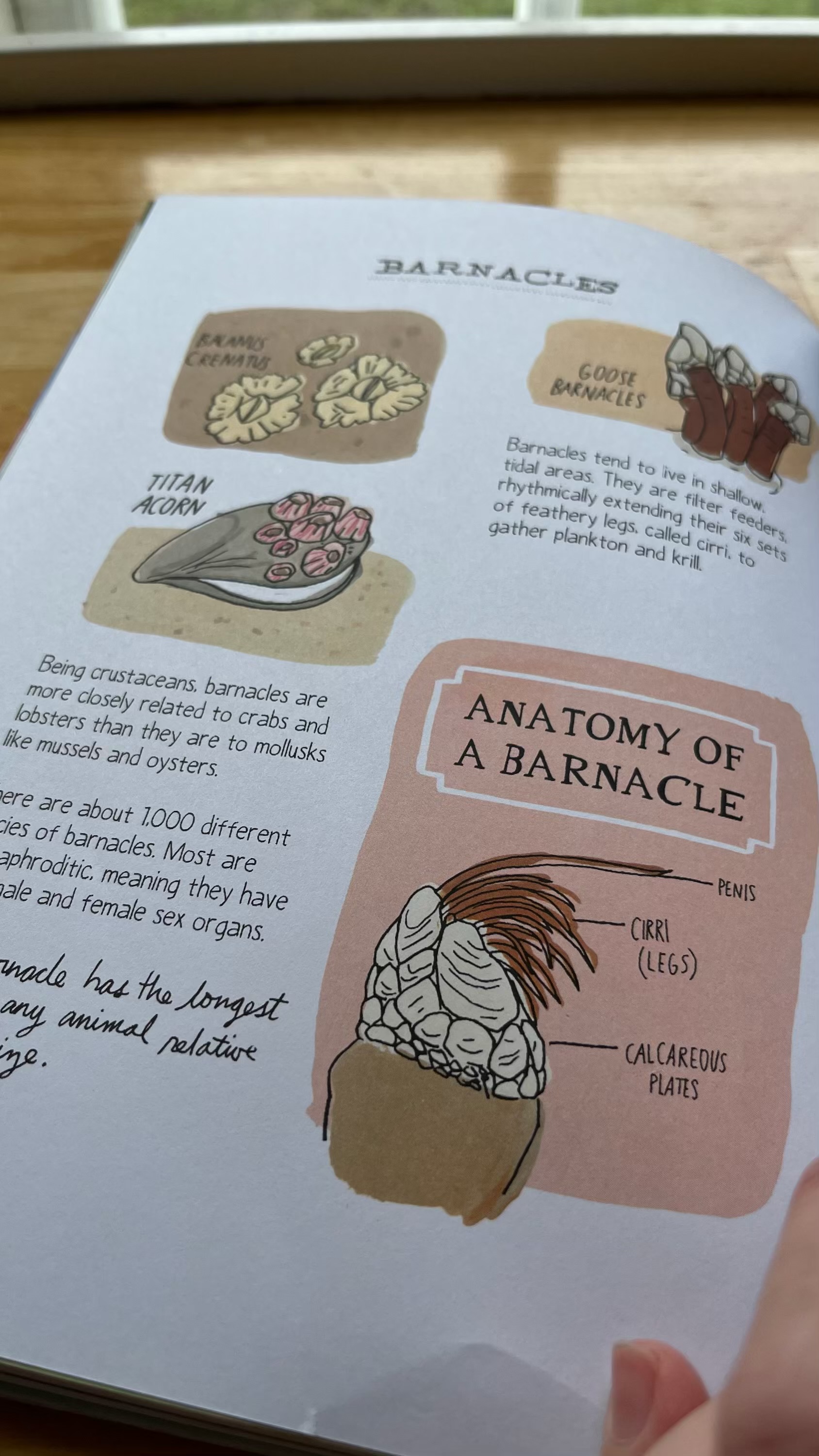
As with the rest of the series, Rothman focuses on specific animals rather than a generic conglomeration of sea creatures. She doesn’t give you “sea life,” but concrete examples of what it looks like to “sleep with the fishes.” A barnacle, for example, turns out not to be what it initially appears. Although fixed to rocks like a shell, it’s actually a crustacean, more closely related to crabs and lobsters than to mussels or oysters.
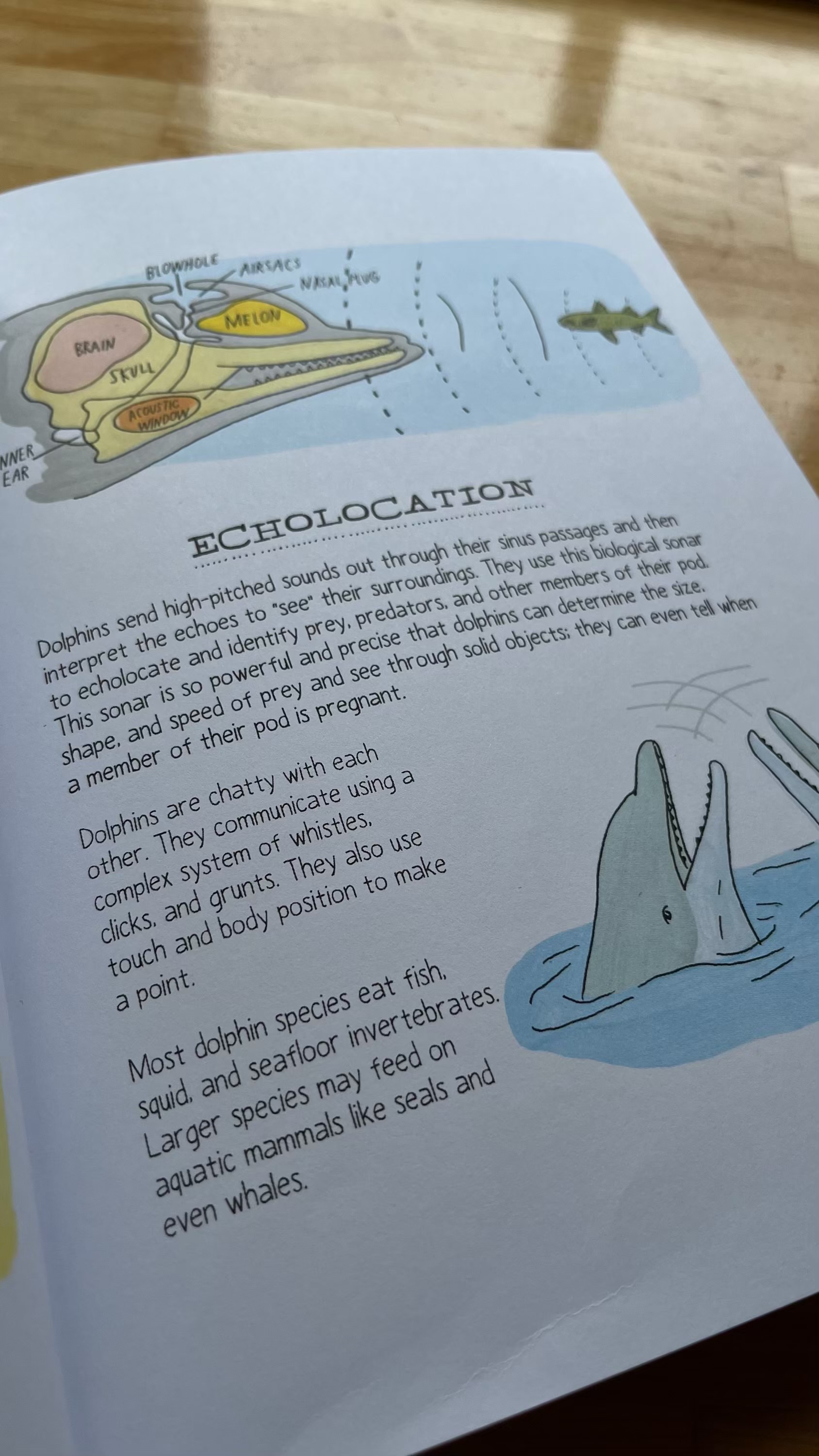
Many know that dolphins are intelligent, but they are also chatty creatures, using whistles, clicks, body position, and echolocation to communicate with each other.
She also illustrates the slight differences between dolphins and porpoises (details I have never known).
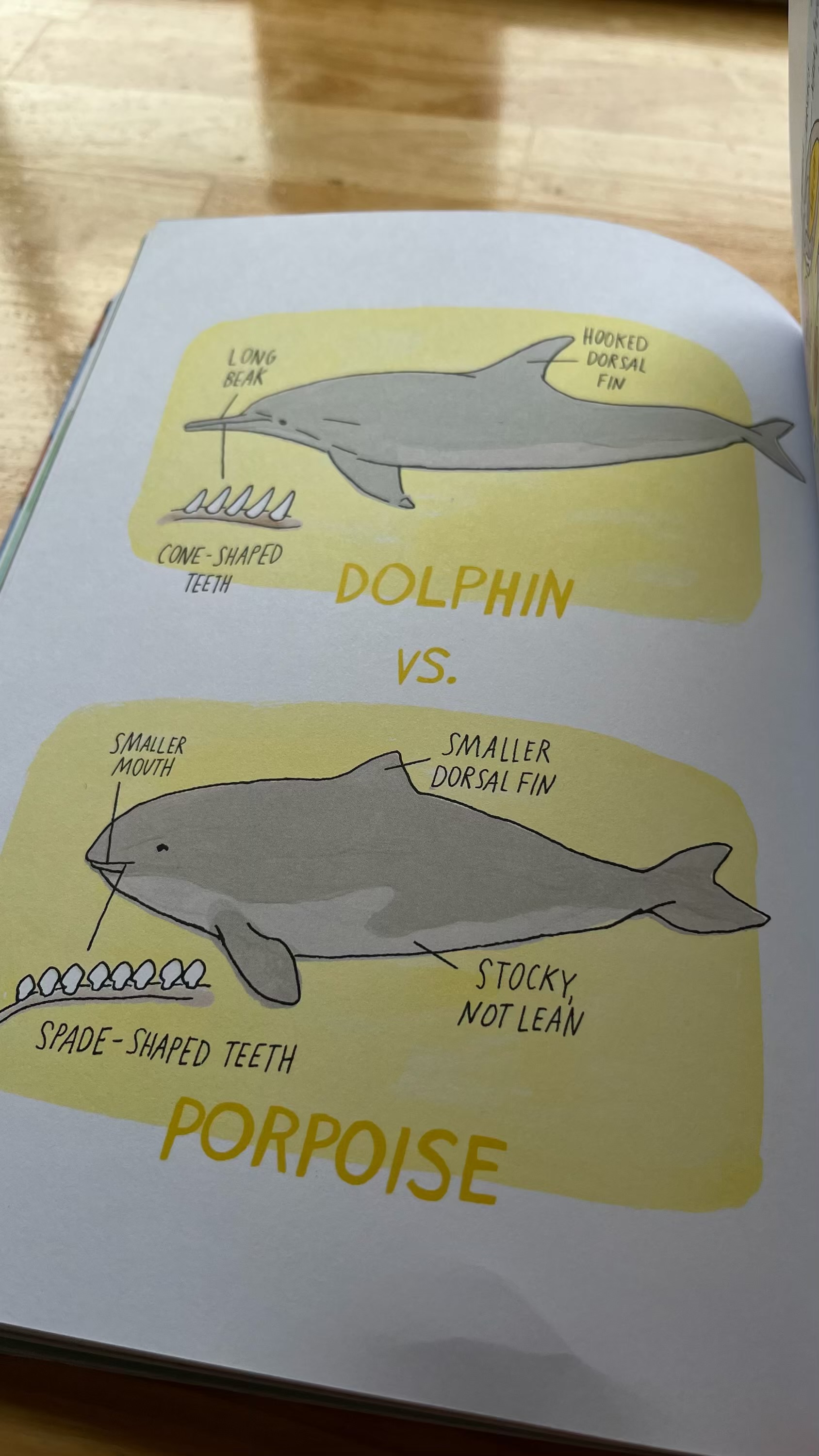
Rothman illustrates the anatomy of sea creatures such as seahorses, lobsters, crabs, shrimp, octopuses, and sharks. While each animal is given their own spread, it is Rothman’s attention to detail that helps both kids and adults learn what makes a sehorse unique. You learn how their bodies are structured, how they function, and why they differ. You learn about different kinds of seahorses, crabs, and the difference between octopuses and squids. Even something like how pearls form is explained in a way that is simple and easy to remember. Most entries are quite short, but they offer enough tidbits to peak your interest and to give you hooks to remember significant facts about these deep sea divers.
Illustrations and Learning Style
The illustrations do a lot of the work. There is not a single page that doesn’t have an illustration, which makes for repeated browsing for young kids and reading for older kids. The illustrations are, if I can put it this way (I am not artist, easy on the eyes. They do not overwhelm. This makes it especially useful for homeschooling because it makes the book accessible across every age level. While this wouldn’t be a book a teenager would go out and buy, it may just be one they would sit down and peruse for a while (in the event they are tired of their phones).
If there’s a drawback, it’s that some of the texts are written in cursive, which younger children will find difficult to read. Otherwise, these books, and this one in particular, are beautifully done.
Recommended?
Buy it on Amazon or from Storey Publishing!
.
Lagniappe
- Author/Illustrator: Julia Rothman
- Paperback: 208 pages
- Publisher: Storey Publishing (October 2020)
- Check out her Ocean Anatomy Activity book, sticker book (with 750 stickers), and 500-piece puzzle.
.
Related Reviews
Review Disclosure: I received this book free from Storey Publishing. The opinions I have expressed are my own, and I was not required to write a positive review. I am disclosing this in accordance with the Federal Trade Commission’s 16 CFR, Part 255 http://www.access.gpo.gov/nara/cfr/waisidx_03/16cfr255_03.html.
Amazon Affiliate Disclosure: I receive a percentage of revenue if you buy from Amazon on my blog (at no cost to you).

