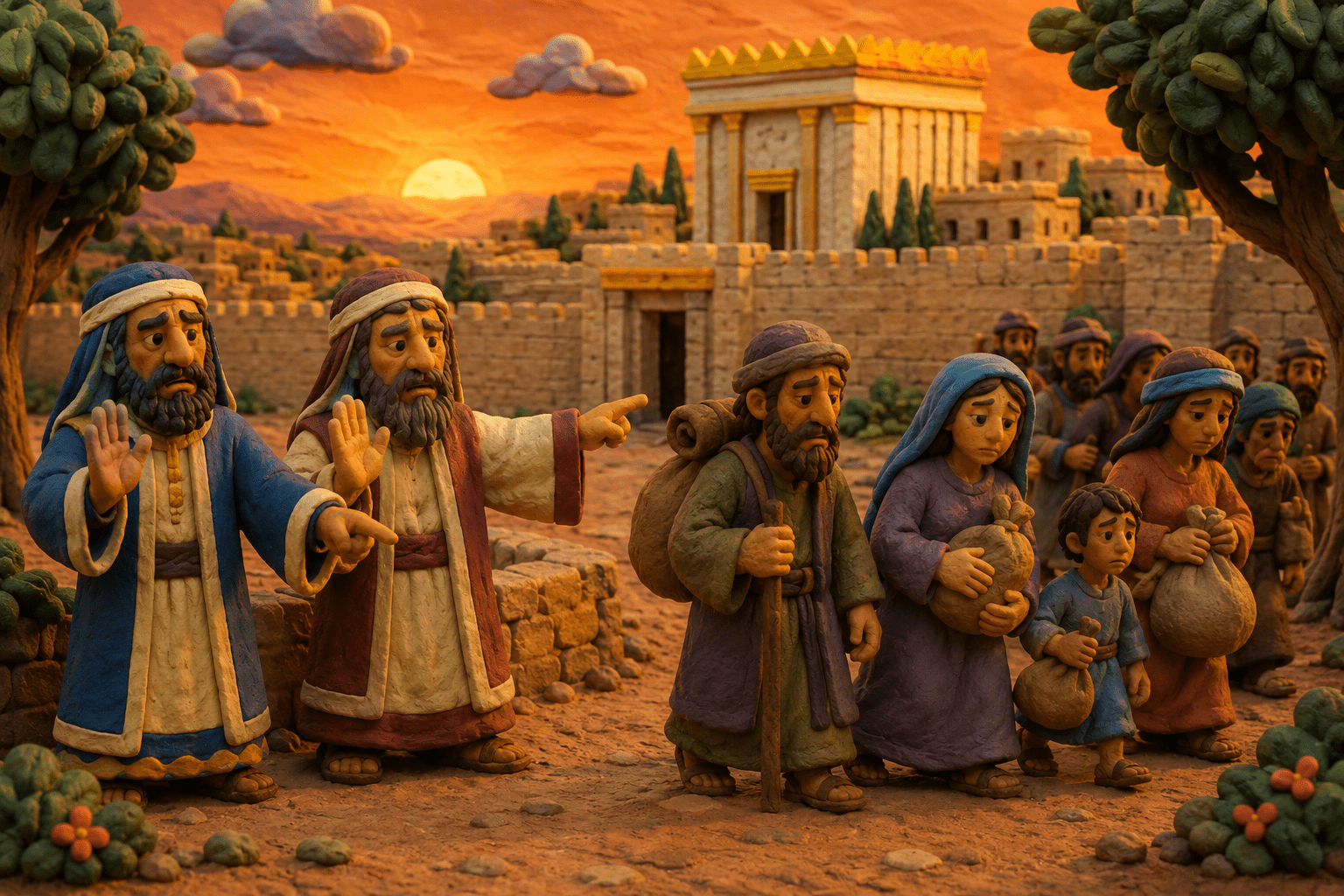

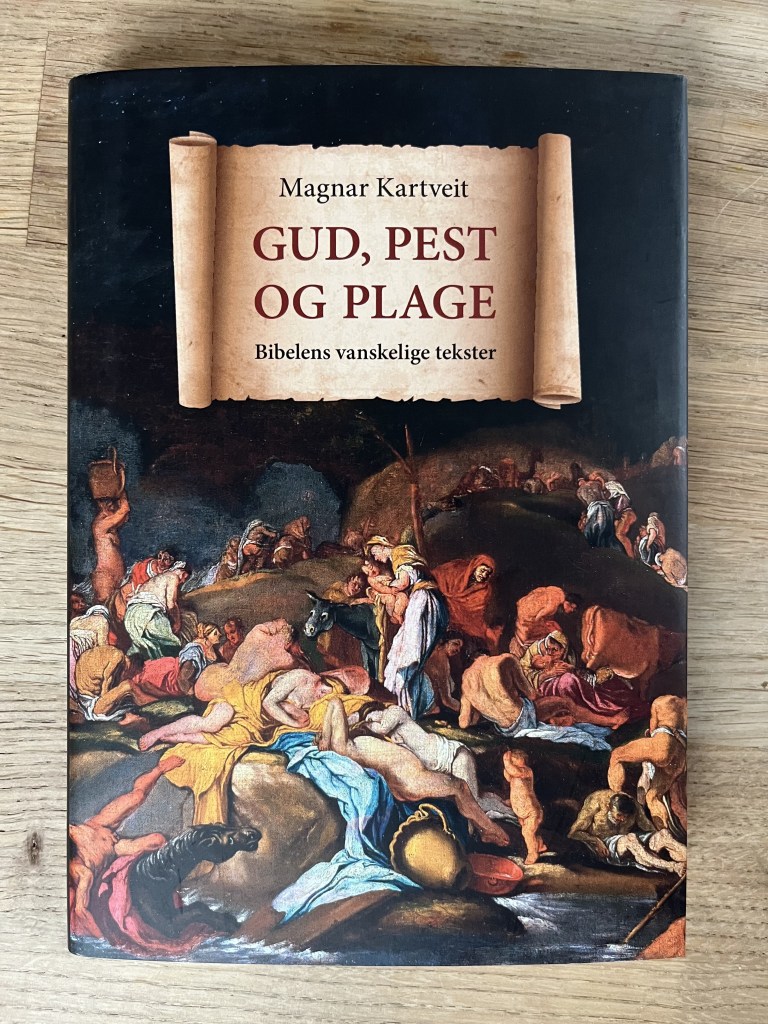
Here is are my extra thoughts on Magnar Kartveit’s third chapter “Forandring i Gudsbildet” in his book Gud, Pest og Plage.
Magnar Kartveit’s book is written in Norwegian, so his quotes below are (currently) left in Norwegian. My review is written in Norwegian as well, but these extra responses have been left in English. See my review of his book Gud, Pest of Plage here.
Kartveit believes the way God is portrayed changes as we move through the Bible. According to Kartveit, the Old Testament moves from seeing God as one among the gods to being the only God. Jeremiah and Ezekiel are opposed to one of the Ten Commandments (Exodus 20:5). Era and Nehemiah and they’re use of Deuteronomy 23:3 are opposed by Ruth.
Monotheism
First in Exodus 20:3–5, God is one of many gods, but he is the only God Israel should worship (henotheism). Later in history, Isaiah writes (Isa 45:5) that God is God alone (monotheism). God promises punishment to multiple generations of sinners (Exod 20:5–6), but Jeremiah and Ezekiel oppose that. Ezra and Nehemiah supposedly follow Deuteronomy 23:3 when they exclude foreigners from among them. The book of Ruth, according to Kartveit, opposes that idea as well.
While it is God who incites David to take a census of the Israelite army in 1 Samuel 24, in 1 Chronicles 21 God stands behind the good that happens and Satan the evil. God is one who commands conquest and war, but Isaiah, Micah, and Zechariah show us a God who commands peace: another change in how the OT presents God («forandring i Gudsbildet»).
How should we think about these “changes”?
Christopher Wright notes that this way of separating the periods of history when monotheism begins in the OT is a bit too clean. Monotheism didn’t begin in Isaiah. Texts about other gods and about Yahweh’s supremacy are seen in both Deuteronomy and Isaiah. It is startling that either Kartveit doesn’t know this, doesn’t believe it, or just refuses to give you all the evidence.
In Hebrew the term elohim refers to a spiritual being, which includes other gods (Ps 82:1; cf. Deut 32:8), God himself (Isa 45:5), and even the dead Samuel when he appears to the witch of Endor (1 Sam 28:13). All spiritual beings are elohim, but only God (in Hebrew, elohim) is Yahweh. As Michael Heiser writes in an important article refuting the idea of Israel’s transition from henotheism to monotheism, “The canonical authors considered Yahweh to be in a class by himself.” Paul says the same in 1 Corinthians 8:4–6. There is no change in “gudsbildet” here.

Below are some verses from the earlier Deuteronomy (chapter 32) which sound very similar to what was written later in Isaiah 45.
Gods of No Worth
Deut 32:17 They sacrificed to demons that were no gods,
to gods they had never known,
to new gods that had come recently,
whom your fathers had never dreaded….
Isa 41:21–23 Tell us what is to come hereafter,
that we may know that you are gods;
do good, or do harm,
that we may be dismayed and terrified.
24 Behold, you are nothing,
and your work is less than nothing;
an abomination is he who chooses you.
Even God admits there are other gods, only that they have no worth (which is why Israel should no bow down to them. According to Psalms 115:5–8, if they do bow down to them, they will become like them—deaf, blind, and mute. See Ps 135).
The Lord, God Alone
Deut 32:39 “‘See now that I, even I, am he,
and there is no god beside me;
I kill and I make alive;
I wound and I heal;
and there is none that can deliver out of my hand.”
Isa 45:5 I am the Lord, and there is no other,
besides me there is no God;
I equip you, though you do not know me,
In addition, you could read Deuteronomy 4:39; 10:14 and 17. They all agree with the theology of Isaiah. This monotheism has always been the Bible’s view of God.
I see two unfortunate options here. Kartveit has taught the Old Testament for thirty years and is a “supposed” authority on it according to the publisher. For him to miss that Deuteronomy and Isaiah both pick up themes of God as God alone and of the other gods being both real and worthless is either (1) poor scholarship or (2) dishonest scholarship. If it’s poor scholarship, how has he missed these texts when he has researched the OT for thirty years? If it’s dishonest, why?
If someone believes in the Documentary Hypothesis, the Bible becomes a mash-mash of texts from alternative viewpoints that do nothing but disagree. Some ancient person was smart enough to put these ancient texts together but not smart enough to edit them well enough to fool modern scholars.
Sins of the Fathers (Exod 20:5)
Kartveit believes the OT offers two competing pictures of God’s punishment: one kind where he punishes future generations for the parents’ sins (Exod 20:5) and another where he punishes each according to their own sin (Ezek 18:4; Jer 31:29–30). However, Kartveit never explains what Exodus 20:5 even means. He writes both that Ezekiel and Jeremiah opposed God’s command in Exod 20:5 and that God himself gave them this command (Ezekiel 18). Which is it? Does God oppose himself?
First, although he claims to focus on the historical contexts of the biblical texts, Kartveit does not do this. Other scholars have noted (Wright, Imes, Alexander) that Israelite households had up to three or four generations living in them. If a grandparent generation was wicked, the head of the household would lead the following generations into sin through his example. Note that God’s judgment is not directed toward everyone in the house but toward “those who hate me” at the end of v. 5. Kartveit here does not mention verse 6 and God’s generous and steadfast love to thousands of generations of those who love him and follow his commands (see his final chapter about, ironically, students taking an exam on Exod 20:1–5).
Secondly, in both Ezekiel 18:2 the problem is a proverb spoken among the people. It is not a repetition of the commandment in Exodus 20:5. In fact, Ezekiel 18 is an exposition of Exod 20:5–6! Those who do wickedly will be punished; the righteous shall live. This is basic biblical interpretation.
Then there is some interpretive oversight. Kartveit writes that the law in Exodus 20:5–6 is repeated in Deuteronomy 5:9–10. We read in Deut 24:16, “Fathers shall not be put to death because of their children, nor shall children be put to death because of their fathers. Each one shall be put to death for his own sin.”
Kartveit believes that “Moses in Deuteronomy [24:16] contradicts Moses in Exodus [20:5–6]; the principle of retribution from the Ten Commandments has been changed in several texts” («Moses i Femte Mosebok [24:16] går imot Moses i Andre Mosebok [20:5–6]; gjengjeldelsesprinsippet fra de ti bud er endret i flere tekster») (p. 34). But this would mean Deut 24:16 not only opposes Exod 20:5–6, but also Deut 5:9–10! It’s as if the original readers and listeners wouldn’t have caught that Deut disagrees with itself. These sorts of theories have been well argued against.
Resources against the Documentary Hypothesis:
- Genesis 1–15 (WBC) by Gordon Wenham;
- Genesis 1–11 (CSC) by Kenneth Mathews;
- From Paradise to the Promised Land by T. D. Alexander;
- Joshua Berman wrote an article about biblical grammar that marks the difference between early and late biblical Hebrew inspired by Aaron Hornkohl’s free book.
Ezra and Nehemiah
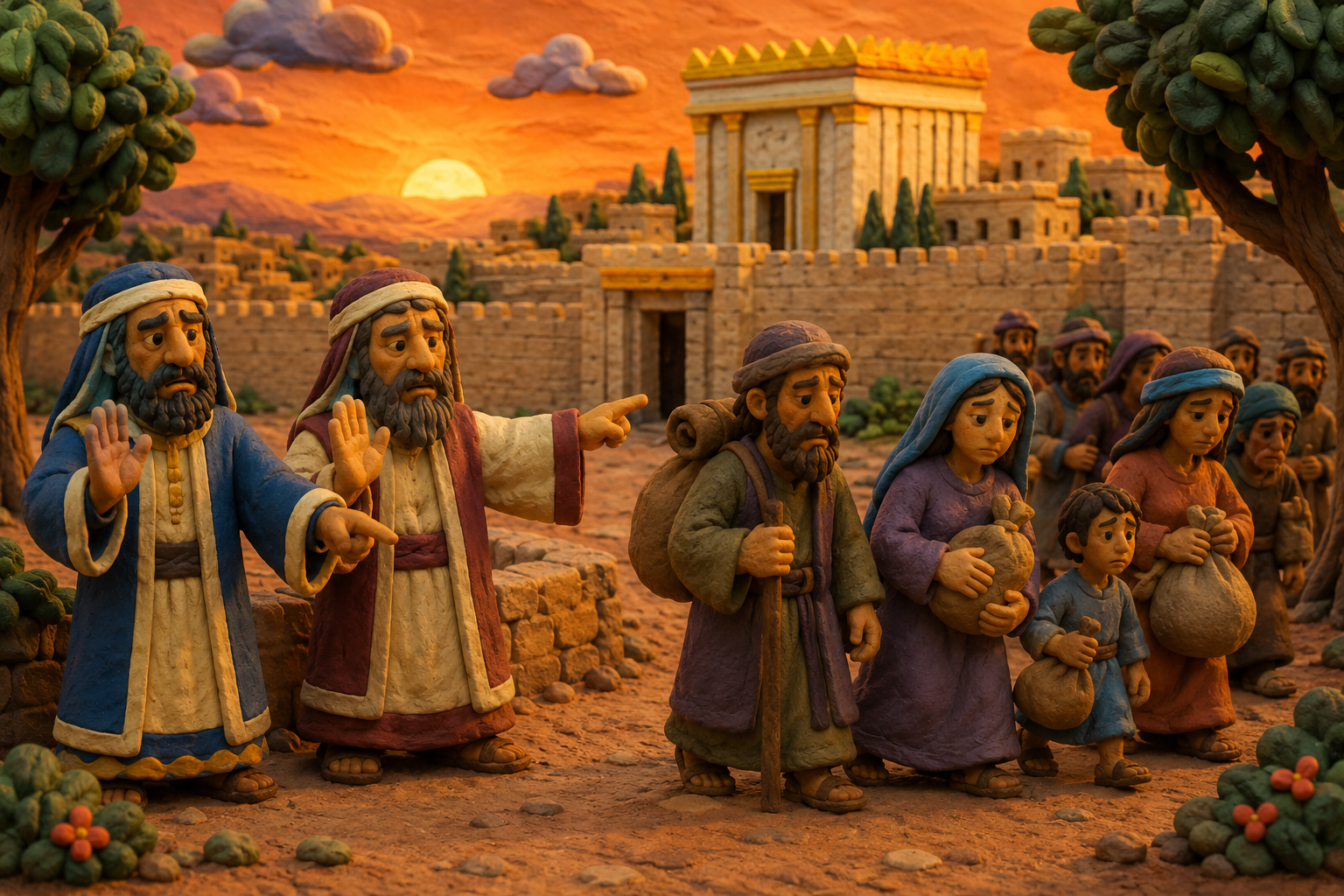
According to Kartveit, Ezra and Nehemiah follow Deut 23:3 when they make the Judean men divorce their foreign wives. First, that rule dealt with Moabites and Ammonites, which aren’t mentioned in Ezra and Nehemiah, even though Kartveit writes, “To determine who had to leave the city and the congregation around the temple, they used the rule given by Moses (Neh. 13:1–4; Ezra 10)” («For å bestemme hvem som måtte forlate byen og menigheten rundt tempelet, brukte de regelen hos Moses (Neh 13,1–4; Esra 10)») (p. 35). He also believes Ruth was written around the time of Ezra and Nehemiah as a response “against the purgings” («mot utrenskingene») of Ezra and Nehemiah (p. 37). According to Kartveit, the book of Ruth “made God’s people more inclusive than Moses proclaimed, and thereby also adjusted how God was viewed [or understood]” («gjorde Guds menighet mer inkluderende enn Moses forkynte, og dermed justerte den også bildet av Gud») (p. 37).
What actually happened?
Nehemiah writes in Neh 13:6 that verses 1–5 took place while he wasn’t even in Jerusalem. That means that when the men excluded the foreigners in 13:3, Nehemiah had nothing to do with that. It seems these men were overly zealous and responded to this law in a literal way. Were these people of “mixed descent”faithful believers in the Lord? We don’t know, but these Israelites separated themselves from them anyway. Neither Nehemiah nor Ezra were there to adjudicate.
The people in 13:3 who excluded the foreigners forgot about Ruth, the Moabitess who was included into the community because of her faith. As Dean Ullrich observes, those who excluded the foreigners in 13:3 forgot all about the foreigners who had been included into the community through their progression of faith “at the Passover after the completion of the temple’s foundation” (Ezra 6:21; cf. Neh 10:28; Exodus 12:43–49).
Without getting deeper into this, Dean Ulrich observes that the dismissed foreign women are called nasim nokriyôt (alien women). This term occurs nine times in Ezra-Nehemiah (Ezra 10:2, 10-11, 14, 17-18, 44; Neh. 13:26-27) but only one other time in the Hebrew Bible (1 Kgs 11:1). In that context, the nasim nokriyôt clearly influenced King Solomon to depart from his covenantal responsibility of leading God’s people in faithfulness to God’s law (Deut. 17:14-20).
Ullrich writes, “It seems evident, then, that the nasim nokriyôt in Ezra-Nehemiah neither shared the covenantal community’s faith in Yahweh nor showed interest in embracing that faith. Their unbelief adversely affected a holy community, presumably by leading the husbands astray as the idolatry of Solomon’s wives had done to him (Neh. 13:26). Religion, not race, was the concern” (91).
Ulrich continues, “Ezra 6:21 and Nehemiah 10:28 (HB 10:29), in accordance with Exodus 12:43–49, make allowance for the conversion of foreigners and their participation in the covenantal community. It seems unjustified, then, to say that Ezra and the writer of Ezra-Nehemiah wished to exclude Gentiles as such from the covenantal community” (92).
Ulrich and Donna and Thomas Petter point to mixed marriages that were permitted in the OT such as:
- the marriages of Joseph (Gen. 41:45),
- Moses and Zipporah (Exod. 2:21) and later the Cushite woman (Num 12:1),
- Mahlon (Ruth 4:10),
- Boaz and Ruth (Ruth 4:13),
- Bathsheba and Uriah the Hittite (2 Sam 11:3),
- Salmon and Rahab (Matt 1:5),
- and various Israelite soldiers (Deut. 21:10-14).
But there are also instances of “intermarriage [that] became the avenue for theological compromise and shipwrecked lives”:
- Esau marries a Canaanite woman (Gen. 26:34–35),
- Samson’s Philistine wife (Judg 14),
- King Solomon with his many foreign wives (1 Kgs 11:1-8),
- and King Ahab with Jezebel, the daughter of Ethbaal king of the Sidonians, who caused Ahab to serve Baal and bow in worship to him (16:31).
Was Ruth Written Against Ezra-Nehemiah?
While the majority of scholars (like Kartveit) believe Ruth is a polemic against Ezra-Nehemiah, Peter Lau lists four reasons why Ruth is not a polemic against Ezra-Nehemiah (22).
- The ban on intermarriage in Ezra–Nehemiah was against non-believing foreign women. Ruth was because she commits herself to Israel’s God (1:16–17; alluded to by Boaz in 2:12).
- The book’s structure and plot point to concerns and purposes greater than Ruth and her being a foreign woman. According to Lau, Naomi drives the plot.
- The book of Ruth has a very gentle tone, and it lacks a polemical and disputative tone. If this book were trying to promote interracial marriages, when the nearer kinsman-redeemer declines to marry Ruth (4:6), his reason ought to have been that Ruth was a Moabite. Then Boaz would come in and save the day as the inclusive Israelite. However, the kinsman-redeemer declined to marry Ruth so as not to impair his inheritance.
- One could flip the argument around. The narrative of Ruth could be interpreted to be critical of all intermarriage, particularly between Israelites and Moabites. The deaths of Mahlon and Chilion and their childless marriages could be interpreted as a form of divine punishment for marrying Moabite women (5 Mos 7,3; 23,3). If the author of Ruth wanted to promote the legitimacy of interracial marriages (against Ezra-Nehemiah), it seems odd that he would juxtapose these marriages with such tragic outcomes without further clarification. While this is likely not the true meaning of the text, one could interpret these events in a way that challenges the view that Ruth is purely inclusive toward intermarriage (22).
According to Lau, the primary theme of Ruth is “God’s providence and kindness in preserving the family that produced King David” (28). It is not about how God lets in all foreigners, for any foreigner who desires to be apart of God’s family must follow one condition: allegiance to Yahweh alone.
Despite being a Moabite, Ruth committed herself to Yahweh (1:16–17; 2:12), a commitment which allowed Boaz to marry her and for her to be included in Israel’s community. The law forbade intermarriage based on religious worship, not ethnicity.
Lau notes, Ruth’s vow of allegiance to Yahweh (1:16), however, tempers the book of Ruth’s relevance in the restoration period, since the issue was intermarriage with non-believing foreign women (Ezra 10; Neh 13:23–31)” (19).
There is no definitive evidence that the book of Ruth was written around when Ezra-Nehemiah were written. Good scholars like Peter Lau and Daniel Block have dated the book around the time of the monarchy.
Resources
Books
- Ezra-Nehemiah av Gregory Goswell
- Ezra-Nehemiah av Donna and Thomas Petter
- Ezra-Nehemiah av Gary Smith
- Judges/Ruth av Daniel Block
- Ruth av Peter Lau
- Unceasing Kindness av Peter Lau og Gregory Goswell
Article
Find my review and my notes on the other chapters here
- Bokanmeldelse/ Review
- Forandring i Gudsbildet (ch 3)
- Noahs Paradox (ch 4)
- Abraham skal ofre sin elskede sønn (ch 5)
- Guds vrede (ch 7)
- Yahweh eller Satan?
- Satans begynnelse og slutt (ch 8)
- Møter vi samme Gud i Det Gamle og Det Nye Testemente? (ch 15)

