
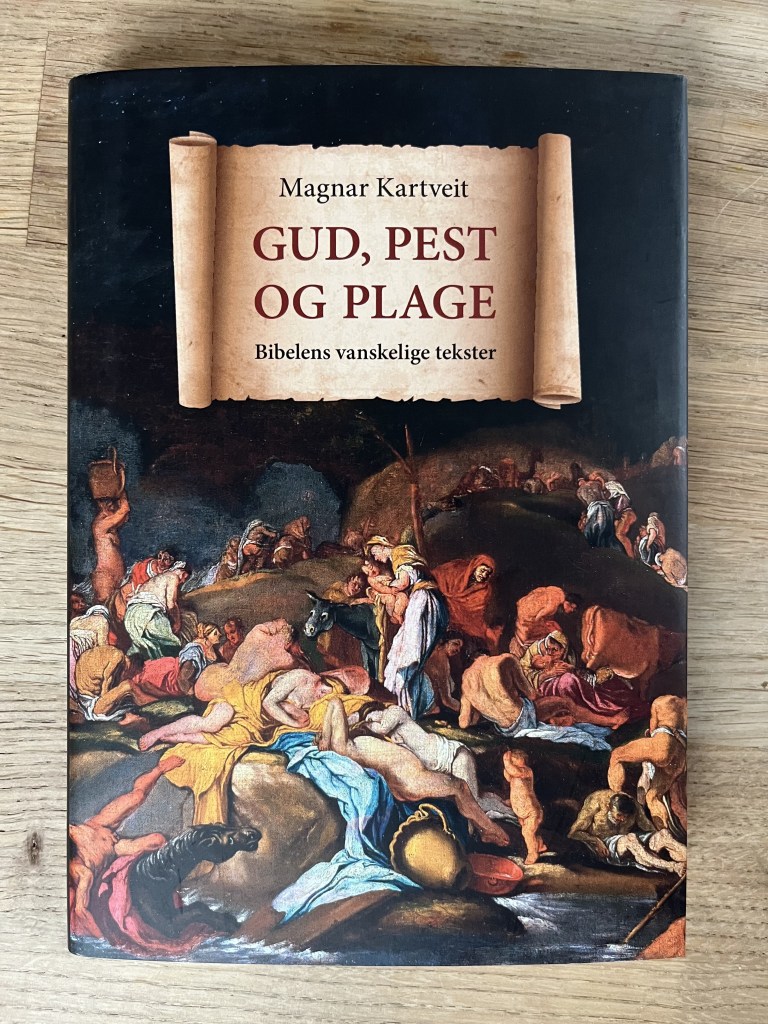
Here is are my extra thoughts on Magnar Kartveit’s chapter “Guds Vrede” in his book Gud, Pest og Plage.
Magnar Kartveit’s book is written in Norwegian, so his quotes below are (currently) left in Norwegian. My review is written in Norwegian as well, but these extra responses have been left in English. See my review of his book Gud, Pest of Plage here.
In this chapter, Kartveit begins by listing five instances of what he considers to involve God’s “blind” wrath (p. 79). It is texts like these that Kartveit wants to set aside («sette til side») (p. 80). But why?
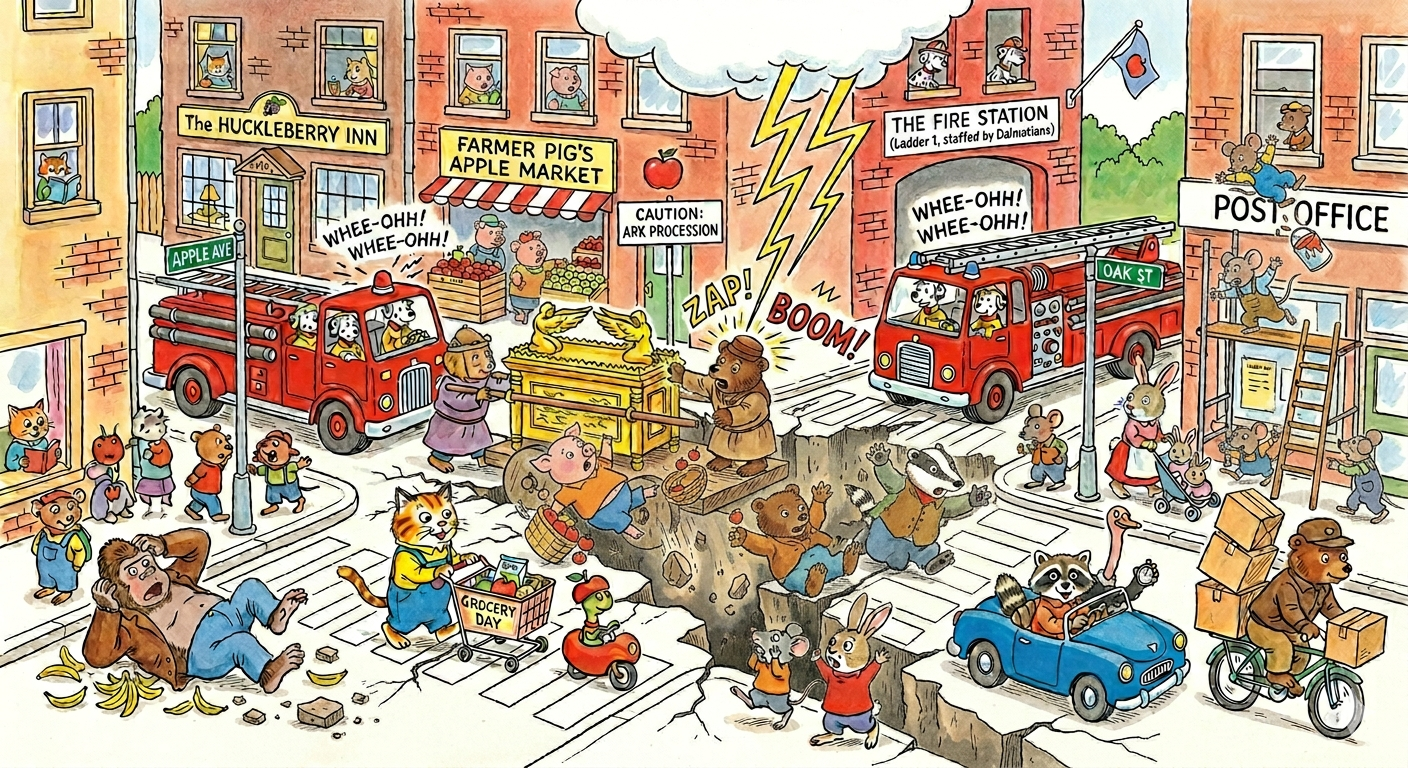
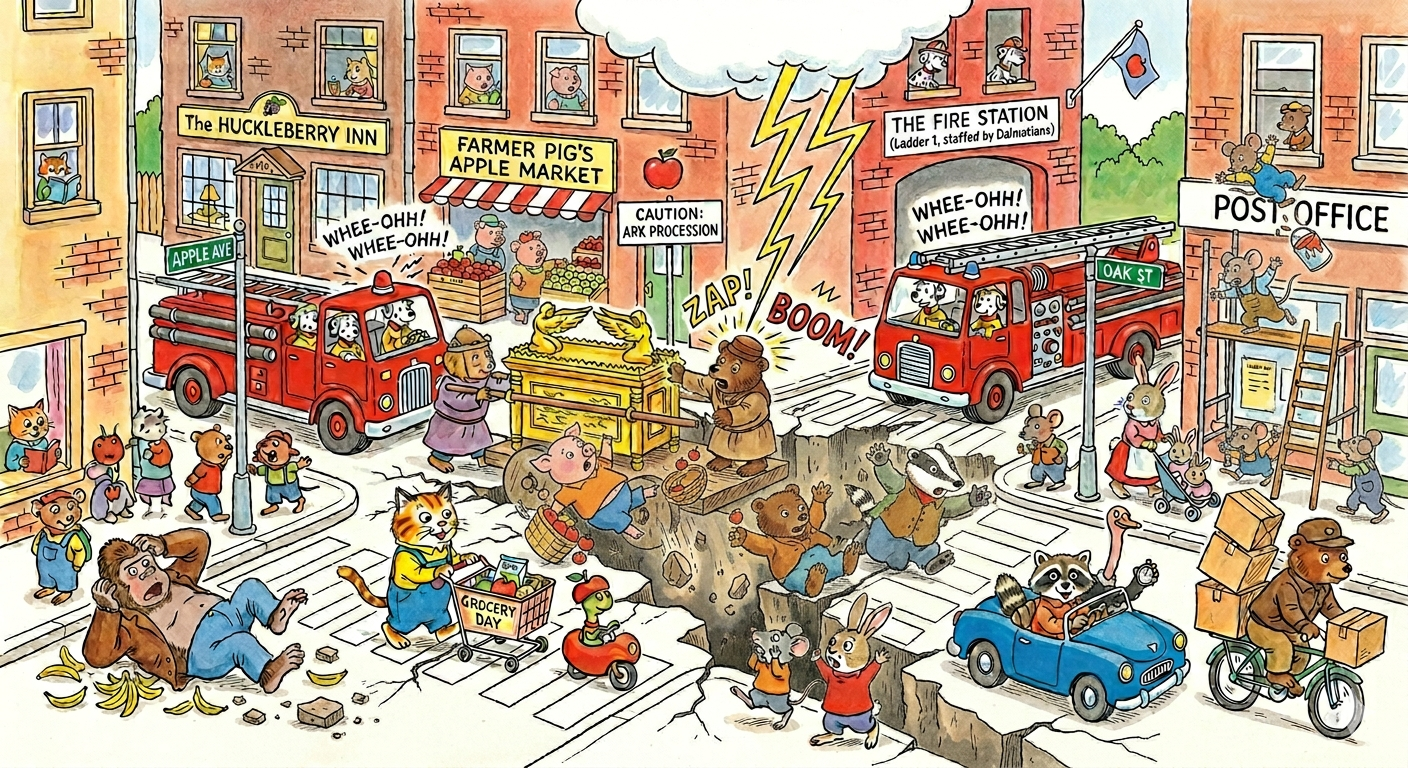
The first example is when Uzziah/Ussa touches the ark of the covenant and died. According to Kartveit, “To stretch out one’s hand and touch the ark of the covenant cannot be a sin, for it appears that Uzzah is trying to save the ark from falling to the ground. Uzzah did not sin, but God’s holiness cannot tolerate being touched.” («Å rekke ut hånden og ta i paktkisten kan ikke være en synd, for det ser ut som Ussa vil redde paktkisten fra å falle på bakken. Ussa syndet ikke, men Guds hellighet tåler ikke berøring») (p. 74).
Kartveit writes, “I sat pondering this message. God punishes sin, but what had Uzzah done? I heard nothing in the aforementioned devotional that could justify the Lord’s anger. Nor does the biblical text describe any action on Uzzah’s part that is identified as sin (2 Sam 6; 1 Chron 13).” («Jeg ble sittende og fundere over dette budskapet. Gud straffer synd, men hva hadde Ussa gjort? Jeg hørte ingenting i [førnevnte] andakten som kunne begrunne Herrens harme. Heller ikke teksten i Bibelen forteller om noen handling fra Ussas side som er omtalt som synd (2 Sam 6; 1 Kron 13)»).
In his other four examples he writes:
- 1. Samuelsbok 6:19 – The Lord kills 70 men in Beth Shemesh because they looked into the ark of the covenant.
Kartveit writes,
“Nor had they committed any sin; they had only looked at the ark of the covenant.”
«Heller ikke de har gjort noen synd; de har bare sett på paktkisten» (p. 74).
- 2. Mosebok 4,24–26
“The Lord comes against Moses at night to kill him. Zipporah circumcises Moses, and that saves him from being killed. God had compelled him to bring the people of Israel out of Egypt, and then he comes to kill him.”
«Herren kommer mot Moses om natten for å drepe ham. Sippora omskjærer Moses, og det redder ham fra å bli drept. Gud har nødet ham til å hente israelsfolket ut av Egypt, og deretter kommer han for å drepe ham» (p. 74).
- 2. Kongebok 1
“One hundred men are consumed by God’s fire because they were sent by King Ahaziah to the prophet Elijah.”
«Hundre menn blir fortært av Guds ild fordi de er sendt av kong Ahasja til profeten Elia» (p. 74).
- 4. Mosebok 16 – Korah, Datan og Abiram are swallowed by the earth because they stood up against Aaron and Moses.
“Are internal conflicts over authority and priestly rights sins that deserve the death penalty? If it is about securing Moses’ sole rule and Aaron’s priestly supremacy, it is completely unreasonable. None of these stories presents any sin against God that justifies the Lord’s anger.”
«Er interne strider om autoritet og presteretter synder som fortjener dødsstraff? Hvis det handler om å sikre Moses enestyre og Aron prestelig forrang, er det helt urimelig. Ingen av disse fortellingene presenterer noen synd mot Gud som begrunner Herrens harme» (s. 74).
That’s a big “if.” It seems like Kartveit doesn’t even try to explain the texts he presents. In this and the next chapter (ch 8) Kartveit compares 2 Samuel 24 and 1 Chronicles 21. He believes 1 Chron 21 “fixes” 2 Samuel 24 by having Satan, not the Lord, incite David to sin.
Kartveit writes, “The introduction of Satan is a fundamental change in the picture of God. It is thought-provoking that the Books of Chronicles did this. Ancient texts carried great authority, and it was a serious intervention in the tradition to adjust the portrayal of God so fundamentally. The author gives a hint of the direction the Bible took in its response to God’s blind wrath.” («Innføringen av Satan er en grunnleggende endring i bildet av Gud. Det er tankevekkende at Krønikebøkene gjorde dette. Gamle tekster hadde høy autoritet, og det var et alvorlig inngrep i tradisjonen å justere framstillingen av Gud så fundamentalt. Forfatteren gir et hint om hvilken vei Bibelen gikk i møte med Guds blinde vrede») (p. 79).
I will answer this chapter in two parts.
- I will work through each of Kartveit’s examples of God’s “unreasonable” («urimelig») og “blind wrath” («blinde vrede»);
- I will show the Chronicler didn’t fix 2 Samuel 24. It was not Satan who incited David to sin.
When God’s Wrath Brings Death
Uzzah/Ussa (2 Sam 6; 1 Chron 13) og Seventy Men in Beth Shemesh (1 Sam 6:19–20)
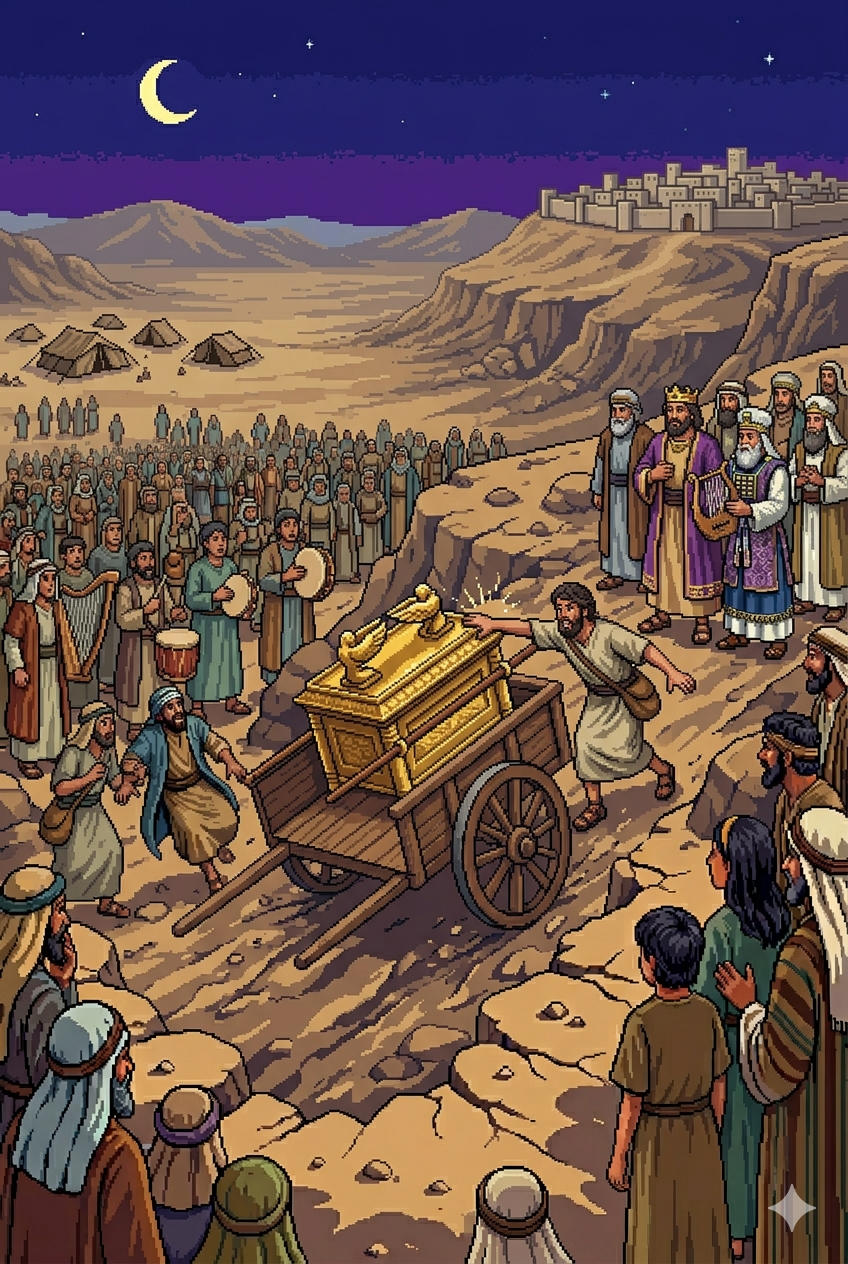
I will place both of these texts here because they deal with the same issue: a misuse of the ark of the covenant.
Why did Uzzah die when he touched the ark of the covenant? Why can’t God’s holiness tolerate the helpful hand of a caring man? Did God kill Uzzah or did he really die from a heart attack?
Regarding the 70 men at Beth Shemesh whom the Lord killed because they looked into the ark of the covenant (1 Sam 6), according to Kartveit, they had not “committed any sin; they had only looked at the ark of the covenant” («Heller ikke de har gjort noen synd; de har bare sett på paktkisten») (p. 79).
David was overjoyed to move the ark of the covenant from Beth-shemesh to Jerusalem, however this attempt is disastrous. First the ark is placed on a cart just as the Philistines had done previously (1 Sam 6:7). David’s idea was convenient, but he transgressed the Torah’s instructions.
- Only the Kohathites were given the privilege of carrying the ark (Num 4:2-4, 15, 25),
- and they must carry it on their shoulders (7:9)
- with poles (Ex 25:14–15).
- They were not allowed to touch the ark.
- The ark must be covered at all times when it is not in the Most Holy Place (Num. 4:5, 15).
- No one was allowed to look at it, look into it (1 Sam 6:19–20),
- or touch it (2 Sam 6:6).
Point #2 might sound strange, so here are two warnings against looking at either God in his holiness or the ark of the covenant:
- Exodus 19:21, “Warn the people so they do not force their way through to see the Lord and many of them perish.”
- Numbers 4:20, “The Kohathites must not go in to look at the holy things, even for a moment, or they will die.”
David admits his mistake in 1 Chron. 15:13: “It was because you, the Levites, did not bring it up the first time that the Lord our God broke out in anger against us.” Kartveit refers often to Chronicles in his book. Why did he not mention this text?
Only the High Priest was allowed to approach the throne of Yahweh on the day of atonement alone (besides when taking down the tabernacle for transportation) and only the Kohathites and Levites could carry the ark. Is it any surprise that Uzzah died for touching the ark?
Uzzah’s brother Eleazar (1 Sam 7:1; 2 Sam 6:3) was consecrated as priest (1 Sam 7:1), but should we assume he was a Levite? It seems most likely he was a regular person who was not a Levite and should not have been consecrated to be a priest. This is not the first time this has happened. In Judges 17,5 Micah the Ephraimite ordained one of his sons to be priest. The house of Abinadab didn’t know what they were doing, and they had no right to take care of the ark.
Even though God already warned his people through his Torah, us “moderns” may still gaffaw at how God would strike down Uzzah. Let me give an illustration. Everyone knows that power lines are dangerous, and to touch them is deadly. But imagine someone is driving, sees a broken power line in the road, and stops in order to move it for everyone’s protection. What will happen? Despite their concern for others, that person will be filled with 14,000 volts of electricity. God is holy, and sinners cannot stand in his presence outside of his terms. When the unclean Uzzah touches the ark, he did sin. He disobeyed numerous commands from God not to touch it. Bill Arnold writes, “To touch the ark is to impinge on God’s holiness, to draw too close and presume too much.”
This is the first of only two instances in 1-2 Samuel where the Lord’s anger is said to burn against someone. The second instance is 2 Sam. 24:1, where Yahweh’s anger burns against Israel. This is nothing new. God’s anger often burns against Israel in the Former Prophets (Josh. 7:1; 23:16; Judg. 2:14, 20; 3:8; 10:7; 2 Kings 13:3). But as Robert Chisholm observes, “this reference to an individual’s being the object of his anger is unique. In other cases it is the collective rebellion of the covenant community that prompts God’s anger, but in this case it is an individual action, suggesting its particularly grave nature.”
What About the 70 Men at Beth Shemesh?
Could it be so wrong that these men looked inside the ark? Read Numbers 4:5–6 again. No one outside of the Aaronic priesthood was allowed to see the outside of the ark. If seeing the outside of the ark was taken this seriously, how much worse would it be to see the inside of the ark? The Kohathites who transported the ark were not allowed to touch it. They were not allowed to look at it (Num 4:20). With the return of the ark from the Philistines, “some of the men of Beth Shemesh” did not try to cover and hide the ark. They set it up on a “large rock” for all to see before they “looked into the ark of the Lord.” These 70 men looked inside the ark, which means someone had to touch it to open it up. Robert Bergen writes, “This shameless disregard for the ark’s sanctity and the violation of its sacred space brought swift and direct judgment from Yahweh (103). In addition, David Firth writes, “When Israel ignores Yahweh’s holiness, the ark’s presence is a matter of grave danger… People can stand before Yahweh, but his holiness must be understood” (101, 103).
A “Roundabout” Way to Die? (Exod 4:24–26)
“The Lord comes against Moses at night to kill him. Zipporah circumcises Moses, and that saves him from being killed. God had compelled him to bring the people of Israel out of Egypt, and then he comes to kill him.” («Herren kommer mot Moses om natten for å drepe ham (2 Mos 4,24-26). Sippora omskjærer Moses, og det redder ham fra å bli drept. Gud har nødet ham til å hente israelsfolket ut av Egypt, og deretter kommer han for å drepe ham») (p. 74).
Who was God coming to kill? There are two options: Moses or Gershom.
T.D. Alexander, in his Exodus commentary, reasons that the blood of Moses’ son Gershom’s circumcision averts the death of Moses whom God was going to kill. How could Moses lead Israel to live under God’s covenant if Moses himself couldn’t follow God’s own instructions? This scene anticipates the redemption of God’s firstborn, Israel, through the blood of another. Even Yahweh’s own messenger “cannot be presumptuous regarding the continuation of his own life. Those who pronounce God’s judgment on others should also be aware of being judged by God” (109).
When did God tell Moses that he needed to circumcise his son? Moses knew his people’s history. When he went out “to his own people” (2 Mos 2,11), he saw an Egyptian striking a Hebrew “one of his people.” As a child Moses was taught by his parents the history of as Hebrews. He struck the Egyptian. Many today see this as an instance of Moses murdering another man, yet Stephen seems to see it differently in Acts 7:24–25 when he says, “When he [Moses] saw one of them being mistreated, he came to his rescue and avenged the oppressed man by striking down the Egyptian. He assumed his people would understand that God would give them deliverance through him, but they did not understand.”
If Moses knew this much, then he certainly had known about God’s covenant with Abraham and the sign of circumcision. He married Zipporah and had two sons named Gershom (Exod 2:22) and Eliezer (18:4). Stephen tells us Moses lived in the wilderness for forty years (Acts 7:30). How old were Gershom and Eliezer when Yahweh met with Moses? We don’t know, but it is very likely that they were adults by this time. Why had Moses never circumcised them?
Gershom
It could be that God came to kill Gershom. This sounds strange, but Genesis 17:14 says, “If any male is not circumcised in the flesh of his foreskin, that man will be cut off from his people; he has broken my covenant.”
Alexander writes, “In all likelihood, because Gershom was born in Midian, he had not been circumcised as a baby. Moses’ failure to circumcise his own son, as required by the covenant of circumcision previously inaugurated with the patriarch Abraham, placed Gershom outside the benefits of the covenant (Gen. 17:14). As the one who will deliver Israel, Moses must be committed to the very covenant that lies at the heart of God’s redemptive plans for the whole of humanity” (p. 107). Thankfully, “Zipporah’s actions indicate that she perceives the importance of the covenant. Here, as at the Passover, blood averts death” (p. 107).
Pharaoh would lose many Egyptians and eventually his own son because he didn’t listen to the words of Yahweh through Moses. Moses almost lost his own son because he didn’t listen to God’s own words to Abraham (Gen 17:10–14). Douglas Stuart writes, “Moses might have lost his own firstborn son, just as Pharaoh would later lose his (predicted immediately prior to the present passage, in 4:23). Zipporah’s intervention prevented that from happening” (156).
Perhaps there is some sense to God’s judgment in this scene too.
100 Men Burned (2 Kgs 1)
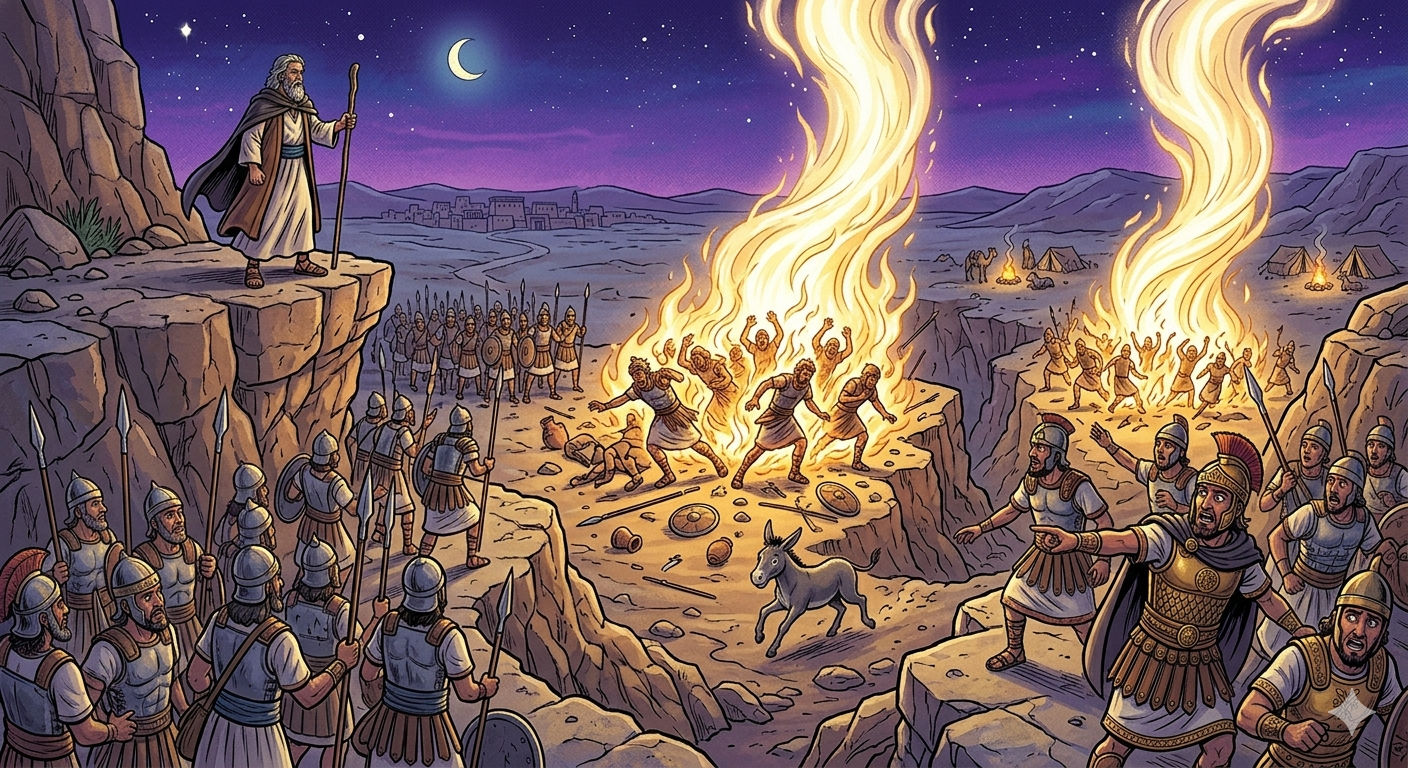
“It is also told that one hundred men are consumed by God’s fire because they were sent by King Ahaziah to the prophet Elijah (2 Kings 1).” («Det fortelles ogsà at hundre mann blir fortært av Guds ild fordi de er sendt av kong Ahasja til profeten Elia (2 Kong 1)»).
Ahaziah / Ahasja was King Ahab’s son, and was just as wicked and idolatrous as Ahab. The king of Israel was to represent the Lord to the people. Ahaziah became very sick, but instead of praying to the Lord, he prayed to Baal-zebub, a nothing god. So the Lord through Elijah declares to King Ahaziah’s messenger that King Ahaziah would die on his sickbed (2 Kong 1:6). Ahaziah didn’t like this, and sent his captain with fifty soldiers to command Elijah, God’s servant, to come down off the hill (probably Mt. Carmel).
Ahaziah doesn’t seek to invite Elijah but to intimidate him. Instead, fire comes down and consumes the captain and his fifty soldiers, proving Elijah’s word that he is God’s prophet (1:9–10, 12). Ahaziah doesn’t become fearful. Instead he shows himself to be like Pharaoh, one who doesn’t care for the lives of his people. Pharaoh never sent God’s people away until his country was demolished and everyone’s firstborn died. Here, Ahaziah keeps sending fifty men without a care for their survival.
Why is the problem put on God for sending down fire (or lightning) on these Israelite idolators who should have known better, rather than on the idolatrous king who didn’t care about his own soldiers?
Once You Check In, You Never Check Out (Num 16)
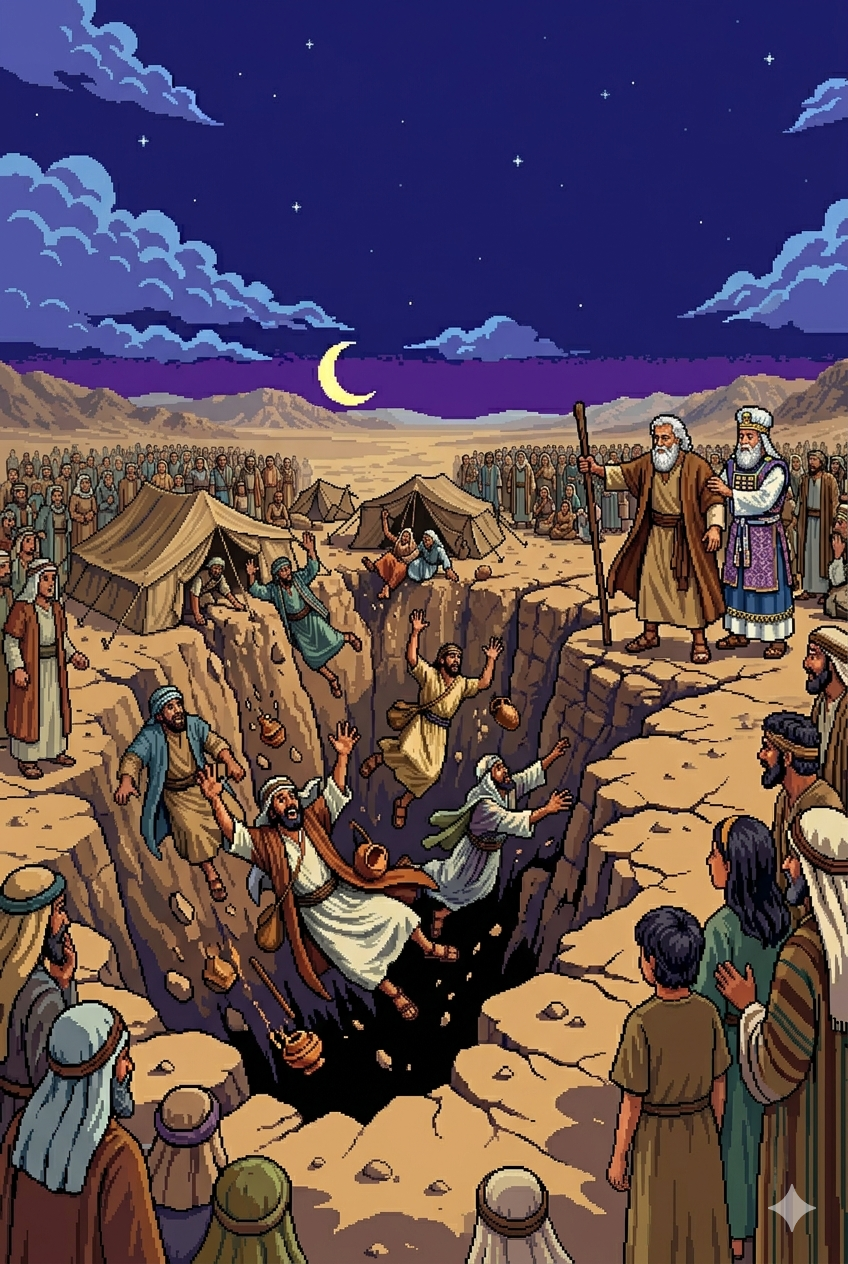
Korah, Dathan, and Abiram with their families rise up against Moses, and the Levite Korah also wants to become a priest (Numbers 16). The Lord opens the earth under them so they are swallowed up. Two hundred and fifty people who support them are consumed by fire from the Lord. Are internal conflicts about authority and priesthood rights sins that deserve the death penalty? “Kartveit writes, “If it is about securing Moses’ sole rule and Aaron’s priestly supremacy, it is completely unreasonable. None of these stories presents any sin against God that justifies the Lord’s anger” («Hvis det handler om å sikre Moses enestyre og Aron prestelig forrang, er det helt urimelig. Ingen av disse fortellingene presenterer noen synd mot Gud som begrunner Herrens harme») (p. 74).
But Kartveit ignores what is right in front of him.
The text clearly says that Korah and the rest “rebelled” (16,2) against Moses and Aaron. They “conspired against the Lord” and “complained” against Aaron (16,11). They are called “wicked” and will be consumed for their “sins” (16,26) for they “despised” the Lord (16,30).
They say, “You have gone too far! Everyone in the entire community is holy, and the Lord is among them. Why then do you exalt yourselves above the Lord’s assembly?” (v3, p 129–30). While God calls Israel a “kingdom of priests” and God’s “holy nation” in 2 Mos 19:6, it was also the Lord who exalted Moses and Aaron to be his representatives (2 Mos 3:18; 4:14). It was Moses aloe who went up Mt. Sinai to receive the Ten Commandments (19:8-9, 20) and who went up to intercede for Israel after they sinned with the golden calf (32:31; 33:12–34:28).
While Kartveit brings in insights from the Midrash at some points throughout his book, looking to the Midrash and ancient rabbis on this text would have helped him out a lot here. As L. Michael Morales notes, the Midrash identifies Dathan and Abiram with the two hostile Hebrews who challenged Moses’ authority in Egypt, asking him, ‘Who made you prince and judge over us?!’ (Exod. 2:14). About Dathan and Abiram ancient rabbis wrote: ‘Whatever you can hang on this wicked pair, hang it!’ (Yalk. Shim., Exodus 167). After the scouts returned from the promised land and brought back an evil report, and ‘each man said to his brother, “Let us return to Egypt,”’ ancient rabbis said they were Dathan and Abiram (Num. 14:4; Exod. Rab. 1.30), and they were also the “some” who hoarded manna (Exod. 16:20; Tan., T’tzaveh 11).
Morales writes about the egregious sin of Korah and his partners when he writes,
The nobility of the first generation of Israel in the wilderness – among the Levites, Reubenites, and the princes of Israel – have risen up in defiant revolt against YHWH’s designated leaders, Moses and Aaron. While the prerogatives of Aaron as high priest are the object of their envy, ‘they rise up’ (wayyāqumû) specifically ‘before Moses’ as the one who has established the new hierarchy – they slander him of power-mongering, denying his divine authority. (408)
Morales continues by noting how Korah and crew despise Yahweh:
The main focus, not only in this story, but in chapters 16–18, is on Aaron’s priesthood, his prerogatives as high priest; Moses is attacked – his singular role and authority – as founder of the cult, the one who has orchestrated the new government and institutions of the nation since the people’s arrival at Mount Sinai. Yet because of Moses’ role as mediator, the attack on him strikes at the very foundation and underpinnings of the Sinai covenant; everything YHWH has revealed and given to Israel has been through Moses – to undermine his authority is to denigrate the Torah itself, to discard Israel’s vocation, and to despise YHWH. (410)
In verses 30-31 Moses even says, “‘But if the Lord brings about something unprecedented, and the ground opens its mouth and swallows them along with all that belongs to them so that they go down alive into Sheol, then you will know that these men have despised the Lord.’ Just as he finished speaking all these words, the ground beneath them split open.”
This was the work of the Lord, and he had good reason to do it.
Some might wonder how God could judge the entire families of Korah, Dathan, and Abiram, “their wives, children, and infants” (Num 26:11). But Numbers 26:11 tells us “The sons of Korah, however, did not die.” This also explains why there are psalms “of the sons of Korah” (Pss 42; 44; 45; 84).
Resources
Books
- 1 & 2 Samuel by David Firth
- 1 & 2 Samuel by Mary Evans
- 1 & 2 Samuel by Robert Bergen
- Family Portraits by Randy McCracken
- Exodus by Christopher Wright
- Exodus Old and New by L. Michael Morales
- Echoes of Exodus by Roberts and Wilson
- 1 Kings by Dale Ralph Davis
- 2 Kings by Dale Ralph Davis
- Numbers 1–19 by L. Michael Morales
- Numbers 20–36 by L. Michael Morales
Find my review and my notes on the other chapters here
- Bokanmeldelse/ Review
- Forandring i Gudsbildet (ch 3)
- Noahs Paradox (ch 4)
- Abraham skal ofre sin elskede sønn (ch 5)
- Guds vrede (ch 7)
- Yahweh eller Satan?
- Satans begynnelse og slutt (ch 8)
- Møter vi samme Gud i Det Gamle og Det Nye Testemente? (ch 15)

