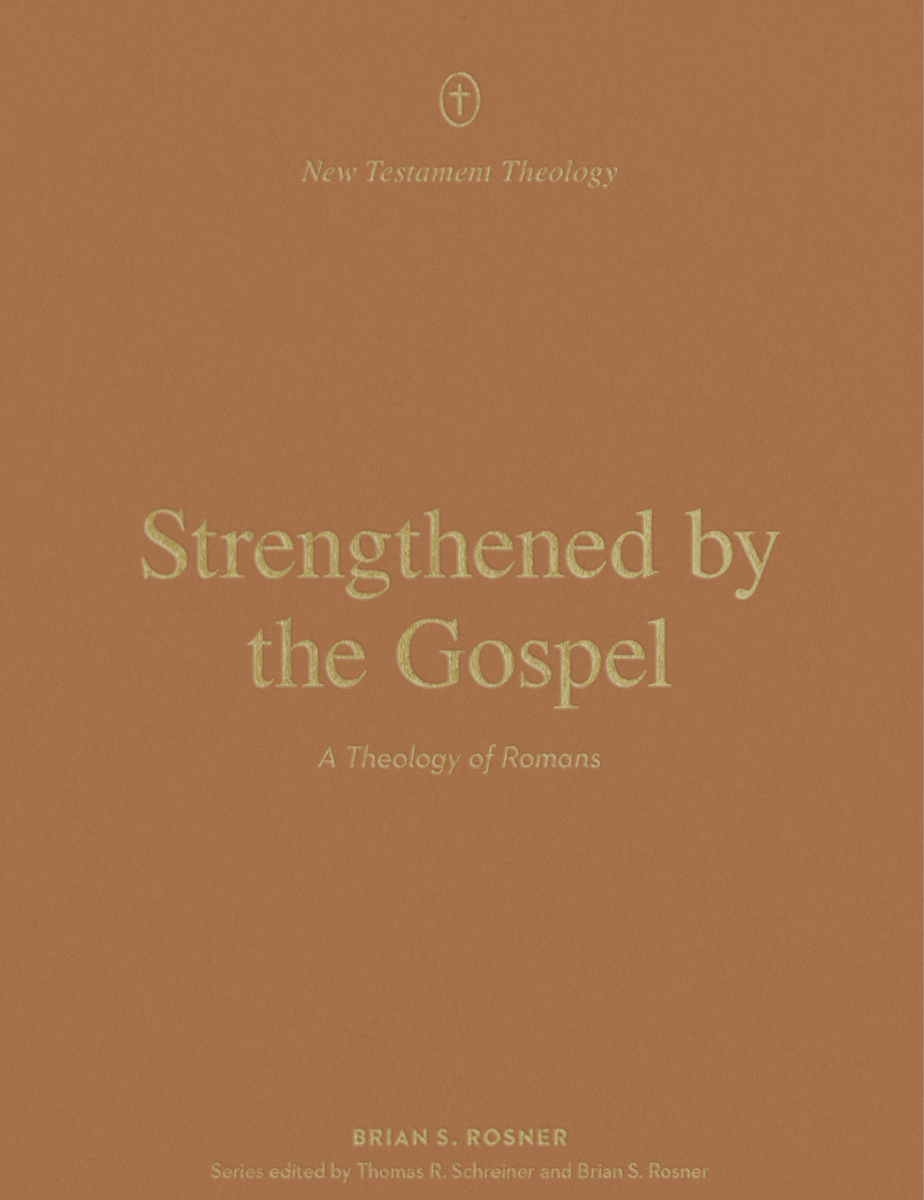

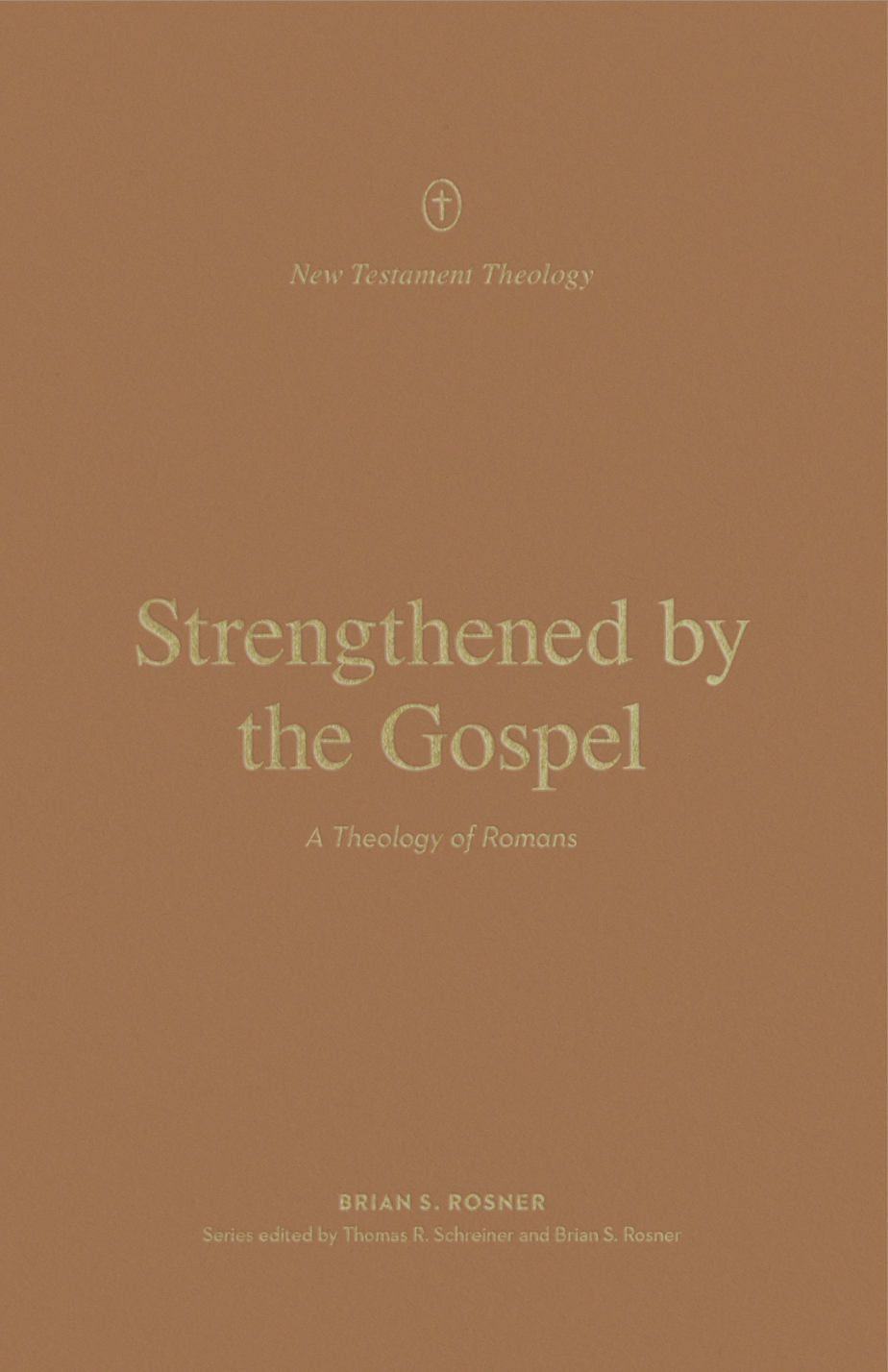
If there were ever a book that needed a theological overview, it would be Romans. Brian Rosner (author of Paul and the Law and co-author of the 1 Corinthians Pillar volume) has written a terrific overview of the book of Romans in just under, unexplainably so, 200 pages.
Brian S. Rosner is the principal of Ridley College in Melbourne, Australia. He is the author or editor of over a dozen books, and a New Testament scholar of international reputation.
When people talk about Romans, many think immediately of justification by faith (Romans 1–4), the power of sin and the failure of the law (6-7), the work of the Holy Spirit over the law (8), God and Israel (9–11), or church unity (12–15). But each of those topics is only one brick in the wall. But Rosner points us to the opening and closing sections of Romans (1:1–15; 15:14–16:27) in order for us to understand Paul’s (written) intentions. According to Rosner, “Paul wrote Romans not only to defend his apostolic authority and to enlist the support of the Roman Christians for his mission but also to strengthen his readers with a full presentation of his gospel” (8).
Paul’s two key purposes:
- Missionary Purpose
- In order to gain the Roman church’s support for his mission to Spain (15:23–24), he comprehensively presents his gospel so they understand his message and mission;
- Apologetic Purpose
- Paul defends his apostleship and gospel against misunderstandings and opposition, especially in light of the anticipated challenges he may face in Jerusalem (15:25–33).
Rosner shows us a Paul who cares as a pastor-shepherd. This letter was neither his theological manifesto nor a systematic theology. Paul wrote to strengthen believers by proclaiming the gospel in its fullness. In order to show this, Rosner offers a biblical-theological reading of Romans that presents the letter as a coherent whole centered on “the gospel of God.”
Rosner ends his introduction by looking at the importance of the placement of Romans within the New Testament canon.
Rosner surveys Romans within fourteen chapters, covering the gospel themes of the gospel (1); guilt (2); bondage (3); justification (4); faith (5); fulfillment (6); Christ (7); grace (8); Spirit (9); Israel (10); sanctification (11); community (12); witness (13); and hope (14).
Rosner gives us a cumulative reading of Romans. No theme is isolated from the rest of the book. Paul doesn’t have a “junk drawer” where he dumps the extra bits (the lagniappe, as we say in South Louisiana). To consider one example of a theme, Romans 1:18–3:20 is where Paul talks about the universal nature of sin on all people. But he doesn’t stop talking about sin when we get to 3:21. We later learn sin entered through Adam’s transgression (5:12), it effects the entire cosmos itself (8:19–22), and we can be assured of its future defeat (16:20). Paul treats specific sins, their effects, and the solution throughout the letter as well. While Rosner can’t write about each and every subtheme (or very many at all), because of the nature of biblical theology he keeps them in mind to show the web of Paul’s thinking in this letter.
Rosner allows for nuance on the meaning of “the righteousness of God” (ch 1) to include God’s righteous character, his righteous action to save sinners, and the effect: sinners are declared righteous and given a new standing before God, depending on context. Regarding faith (ch 5), in agreement with both Moo and Barclay, Rosner writes, “A related point is that the grace of God demands and produces lives of obedience in the sense that ‘it is given in expectation of a response,’ and this response is also facilitated and enabled by God’s grace” (78). God’s grace, which is received by faith, “demands and produces lives of obedience” (76).
This same topic gets picked up again in chapters 11–13, wherein Rosner “explore[s] Paul’s vision of the Christian life as an essential part of his gospel” (147). If we are sinners saved by God’s grace, what keeps us from continuing in sin? Rosner, in agreement with Will Timmins, takes the view that what Paul writes in Romans 7 is aimed at the Christian’s life: “Sin impairs our ability to accomplish what is good (7:15, 18, 19), and we cannot obey the law (7:16, 18, 19, 21). Sin living within believers (7:17, 20) affects all of our bodily members (7:23). This is the universal human condition, and one that Christians perceive and experience” (150). But he continues, “Romans 8… expounds the work of the Spirit in our lives” (151). When read together, “Romans 7 and 8 strike the healthy balance between the already and not yet of Christian existence” (151). But now we have a change of master, that from being under sin to being under—no, in union with—Christ.
The Chocolate Milks
Rosner does exactly what he sets out to do. He has written an integrative, biblical-theological account of the main themes in Romans. He shows how Romans is not a stuffy letter typed out by some boring professor dude hoping to make tenure. He presents Romans as a coherent theological whole by Christ’s apostle to the gentiles, one sent to explain not mere theory, but the gospel given in order that lives may be truly transformed. Romans helps fill out our understanding of how we ought to live after our divine heart-swap surgery.
Depending on the kinds of books you read, Rosner’s book is mildly technical (In this case, Rosner looks at specific terms, where they show up in the letter, and includes transliterations of Greek terms). But he doesn’t burden you with deep dives into the many intense debates. He takes small dips that help you survey the territory before landing on his interpretation, which is perhaps more often both/and over an either/or approach. For example, regarding the question over whether Paul thinks of human beings in individual or corporate terms in Romans, Rosner concludes by writing, “For Paul, there is no individual outside of community; equally, there is no community without individuals at the heart of the community’s ongoing life” (53).
Recommended?
This is a terrific resource for a brief but mature look at the cohesiveness of Romans. Some may be disappointed that each chapter’s short length does not allow for a closer look at the finer points of Paul’s meanings. However, the point of the book (and this series) is to offer a biblical-theological overview that is easily accessible to pastors, teachers, and even laypeople. And with that, I believe Rosner has succeeded in making Romans clear without making it shallow—something many larger, more technical treatments struggle to do.
Buy it from Amazon or Crossway!
Lagniappe
- Author: Brian S. Rosner
- Hardcover: 240 pages
- Publisher: Crossway (October 2025)
- Read the Chapter 1
Check Out These Resources
-
Books
-
Articles by Piotrowski
Review Disclosure: I received this book free from Crossway. The opinions I have expressed are my own, and I was not required to write a positive review. I am disclosing this in accordance with the Federal Trade Commission’s 16 CFR, Part 255 http://www.access.gpo.gov/nara/cfr/waisidx_03/16cfr255_03.html.
Amazon Affiliate Disclosure: As an Amazon Associate I earn from qualifying purchases.
 spoiledmilks