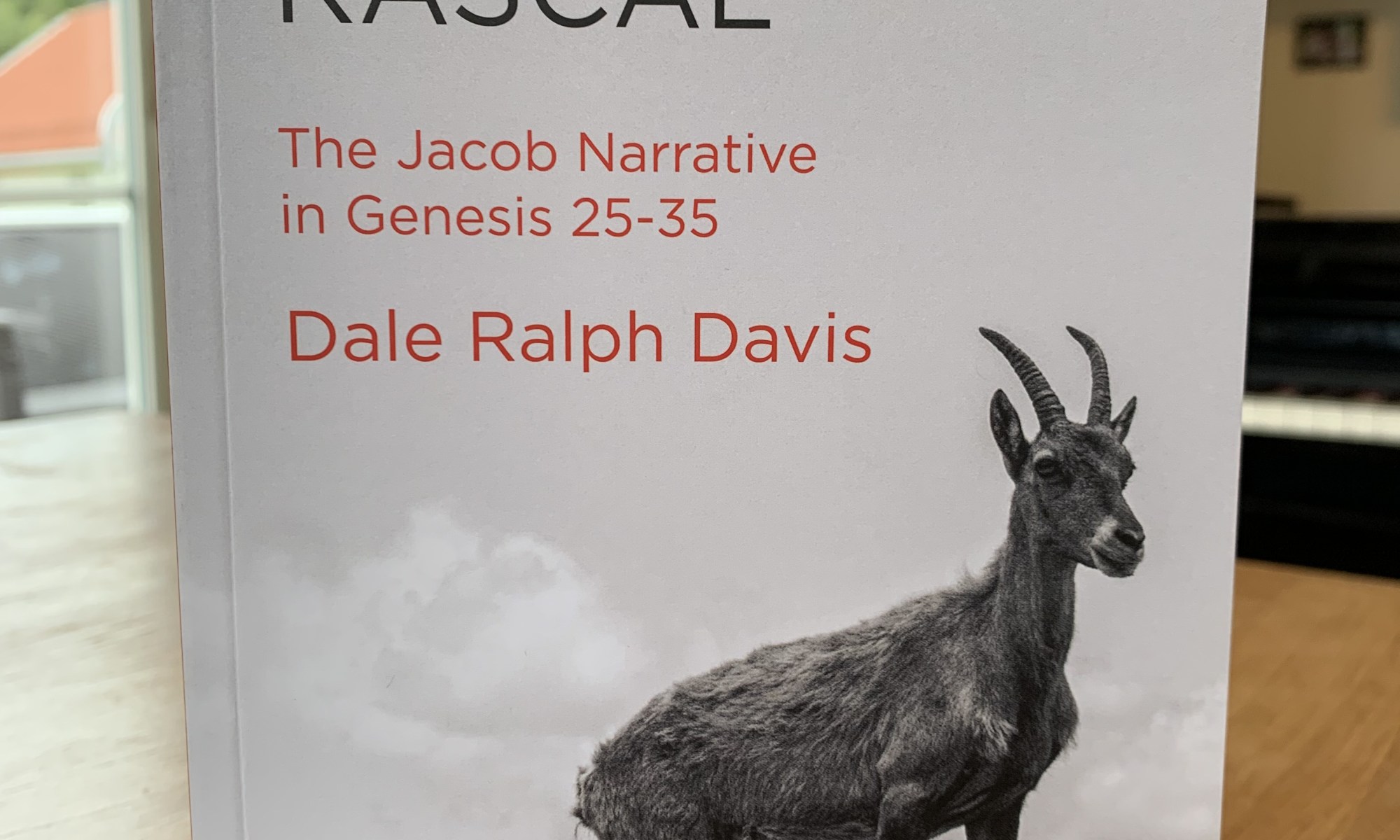


Somehow Dale Ralph Davis has been roped into it again. He has written commentaries on Joshua, Judges, 1–2 Samuel, 1–2 Kings, Daniel, Micah, two volumes on Luke, four volumes on Psalms 1–51 (see my list below), a book on Abraham (Gen 12–25), and now a book on Jacob’s story in Genesis 25–35.
This volume is written like the one on Abraham (Faith of Our Father), only it’s about 30 pages shorter. There are a few authors whose books I review where I feel like I’m cheating a little bit. They have written so many books that are quality good books that I almost feel like I shouldn’t need to convince you to buy all of their books! But alas, here I am. Not everyone has heard of Davis, so I am doing my small part to put his books out there. He is by no flawless, but his books are enjoyable and helpful.
Davis takes Genesis 25–35 and divvies them up into 14 chapters in his book. One thing I like about Davis is how he can simply exposit a section of Scripture. It is like how a good sermon is done (and these were originally sermons for a Bible conference—though they have been rewritten and changed up a bit for this book).
Genesis 25:19–34
For example, in Genesis 25:19–34 (beginning with the generations of Isaac, v19), Davis divides this passage into four parts:
- The typical difficulties of God’s people (vv. 19–21);
- The surprising announcement of God’s decision (vv. 22–23);
- The natural folly of God’s servants (vv. 27–28);*
- The casual attitude towards God’s gifts (vv. 29–34).
Then in each section Davis presents the characters as the real people they were. They had real thoughts and feelings, real worries, real concerns, and a real God whom they served really imperfectly. He notes how Rebekah’s response about the jostling babies in her womb is difficult to translate from Hebrew. He suggests, “One wonders if the pain affected her coherence” (16). That is to say, instead of believing that the text is corrupt here and needs to be amended by the LXX and other manuscripts (as if some editor made a mistake somewhere down the line), he looks at a human reason for the weird grammar. Rebekah was distressed over the twins in her womb.
This is similar reasoning with the “corrupt” grammar in Ezekiel 1. In that chapter, Ezekiel sees a grand vision of God on his grand throne-chariot, cherubim flying everywhere, and wheels within wheels. The Hebrew is quite messy, and many have speculated as to why that is. However, the grammar is much cleaner in Ezekiel 10, when Ezekiel writes about this vision again. It is as if he has had time to think about it from when it first happened. If I had experienced a vision like that, I would have a hard time writing clearly too! So Ezekiel 1 is messy, while Ezekiel 10, recounting the same vision, is clear. We don’t always speak clearly in our distress.
That said, Davis skillfully makes important points with “boring” facts. 25:20 tells us Isaac was forty years old when he married Rebekah. The next verses tell us Rebekah was childless, but Isaac prayed for her. The Lord answered his prayer, and she became pregnant. This all happens within one verse, so it can seem as if this took place within their first years of marriage. Verse 26 tells us that Isaac was 60 years old when the boys were born, so in fact he and Rebekah experienced 20 years of barrenness. God’s family, chosen to bring blessing to the world through their offspring, didn’t have any children for twenty years!
On the other hand, Ishmael’s non-chosen line is impressive! Davis writes that “Ishmael’s line has fertility coming out of its ears”! (15). He continues by observing, “How often it seems that the prospects for the people of God in this world are pretty hopeless,” as well as how often God begins his work with next to nothing and “continues it in repeated episodes of apparent hopelessness” (15).
Davis adds illustrations that help make the point. His illustrations are good, but they often deal with people and events pre-1950, whether that be former presidents, generals, wars, or movie actors. For my part, since I wasn’t as familiar with the people mentioned, I needed to pay closer attention to the illustration to understand Davis’ point.
Davis also easily brings us to the New Testament without making it feel forced. When noting Isaac’s favoring of Esau over Jacob, Davis notes that some interpreters want us to keep our eyes “on what ‘preaches Christ’ in an Old Testament text and not get caught up in moralistic points” (18). But he suggests that there are some (in fact, many) passages that are meant to make moralistic points. Verses like these are “meant as a warning to covenant people to avoid such folly in their own households” (18). They should spur us on to prayer that we would beg God not to let us make terrible mistakes like these.
*I only don’t know why Davis didn’t include verses 24–26 into one of the sections (section 3 makes the most sense). His only comments on these three verses are that “the twins’ births are recorded” and earlier that 25:26 tells us Isaac was sixty years old when the boys were born (17).
The Chocolate Milks
Besides the above, Davis has a penchant for bringing out so much gold from the text. He shows how faithful God is to his covenant people. Davis writes, “The covenant God remains faithful in spite of the slop and messes of the covenant people” (55). This is how God is. He is faithful to theobros like Jacob who score “high on theology but low on sensitivity” (58). Davis believes that later when Jacob’s name is changed to Israel, his character doesn’t change. A name change can “point to a coming change in circumstances (Gen. 17:5), even though that may be years ahead” (97). And since Jacob knew Esau wanted to meet him, this name change “functions as the provision of [God’s] assurance” (97).
The Spoiled Milks
This book is a good example of good exposition kept short. My critique isn’t that the book is short (though a few chapters really could have been longer), but it’s that there were too many illustrations. I know pastors generally have a hard time thinking up good illustrations, and Davis is helpful here is how to use illustrations to help illuminate your point. The illustrations throughout the book are usually never more than a paragraph long, although sometimes they are a long paragraph. But I would have preferred more exposition in place of some of the illustrations, especially in chapters 3–5 (Gen 26:34–28:9; 28:10–22; 29:1–30). Chapter 3 (Gen 26:34–28:9) already covers a lot of text (57 verses), yet he gives just under seven pages to these verses. He uses only three illustrations, but this chapter just covered too much information.
Chapter 9 (Gen 32:1–21) as well didn’t have much “Jacob” information. Most of the eight pages here focus on illustrations and supporting passages in the Bible than they do on the text of Genesis itself. The information was good and did support the points. I am just disappointed that there was not a greater focus on the text of Genesis here.
Recommended?
There are two kinds of Davis. There are his more “official” commentaries (Joshua, Judges, Samuel, Kings, Daniel, Micah, Luke), and then there are his more devotional volumes (these on Genesis and the Psalms). If you are expecting one of Davis’ deeper volumes, this one will feel pretty thin. That doesn’t mean it isn’t good. Davis is always offers a good and insightful read. But since these are based on expository sermons, there is a lot that isn’t covered.
That said, Davis’ commentary is filled with little nuggets of encouragement, such as how God works in the lives of these very fallen people. Davis reminds us that even when we feel like we are plodding through OT narratives, we can find ourselves in these characters. These sections of Scripture “depict situations in which God’s people find themselves, situations roughly similar to our own, and seeing God’s call and provision in the Bible-situation is a tremendous encouragement to us in ours” (71). If God worked in the lives of his fallen covenant people, will he not do the same in our own lives, we who wear his Son’s name, even though we are fallen, imperfect covenant people as well?
Lagniappe
- Authors: Dale Ralph Davis
- Paperback: 144 pages
- Publisher: Christian Focus (September 9, 2022)
- The Writings of Davis
- Genesis 12–25 (Abraham)
- Genesis 25–35 (Jacob)
- Joshua
- Judges
- 1 Samuel
- 2 Samuel
- 1 Kings
- 2 Kings
- Daniel
- Micah
- Luke 1–13
- Luke 14–24
- The Righteousness in the Muck of Life: Psalms 1–12 (review)
- Slogging Along in the Paths of Righteousness: Psalms 13-24 (review)
- In the Presence of my Enemies: Psalms 25–37
- My Exceeding Joy: Psalms 38–51
- And the Word Became Fresh: How to Preach From OT Narrative Texts
Buy it on Amazon!
Review Disclosure: I received this book free from Christian Focus. The opinions I have expressed are my own, and I was not required to write a positive review. I am disclosing this in accordance with the Federal Trade Commission’s 16 CFR, Part 255 http://www.access.gpo.gov/nara/cfr/waisidx_03/16cfr255_03.html.
Amazon Affiliate Disclosure: As an Amazon Associate I earn from qualifying purchases.
 spoiledmilks
❤️ Nice Post.
Nice and interesting blog ❤️ I hope you also follow mine and WE GROW TOGETHER. 👋🇪🇦
LikeLiked by 1 person
Thank you!
LikeLike