
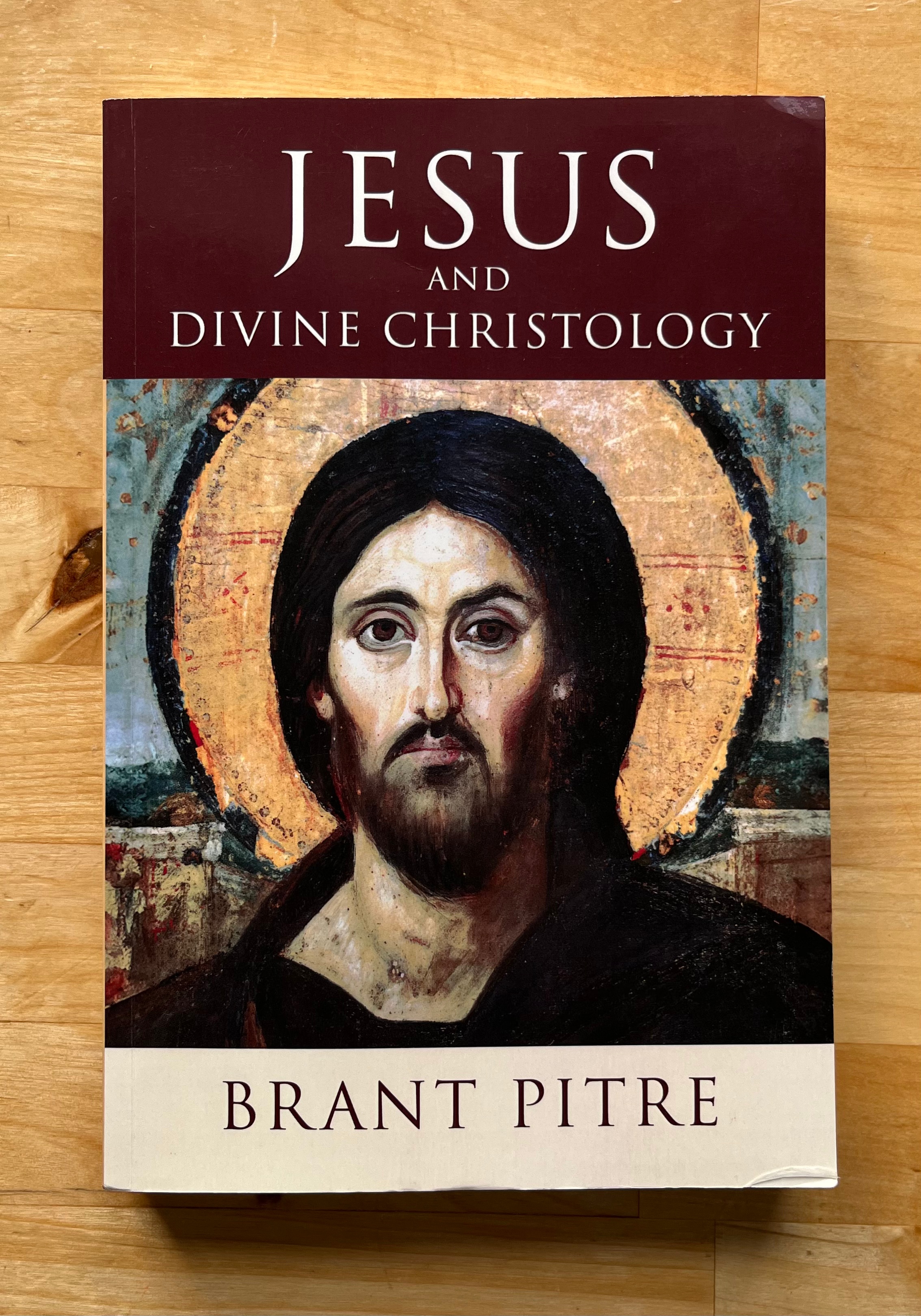
In Jesus and Divine Christology, Brant Pitre argues that Jesus not only understood he was divine, but that he made that belief known. The question then naturally follow: Where does Jesus say, “I am God”? And why have so many scholars missed it?
According to Pitre, the quest for the historical Jesus was “often explicitly driven by the theological aim of liberating readers from the ancient Christian doctrine, formulated above all the ecumenical councils of Nicaea (325 CE) and Chalcedon (451 CE), that Jesus of Nazareth was both fully human and fully divine” (2). In other words, the project did not begin from a neutral standpoint. Albert Schweitzer even claimed that this doctrine had to be dismantled before the “real,” purely human Jesus could be recovered.
But that raises a problem. Many scholars admit that Jesus’ earliest followers believed he was divine, even though Jesus never directly said so. Some argue that belief only came after the resurrection or perhaps after Jesus’ ascension. As Pitre writes though, Jesus raised others from the dead too, “yet, there is no evidence that any of them were ever considered to be divine beings as a result” (11). Likewise, Moses and Elijah were associated with heavenly exaltation but were never considered divine. Why then did the disciples come to believe in Jesus’ divinity so early?
Pitre’s answer is simple: “The best explanation for why the earliest Jewish followers of Jesus believed he was divine shortly after his death is because Jesus himself spoke and acted as if he were divine during his lifetime” (12, emphasis mine).
Summary of Argument
Pitre builds his case across four chapters, working through all four Gospels. He examines Jesus’ epiphany miracles, his “divinity riddles,” the apocalyptic secret, and finally the historical basis for why Jesus was crucified: blasphemy.
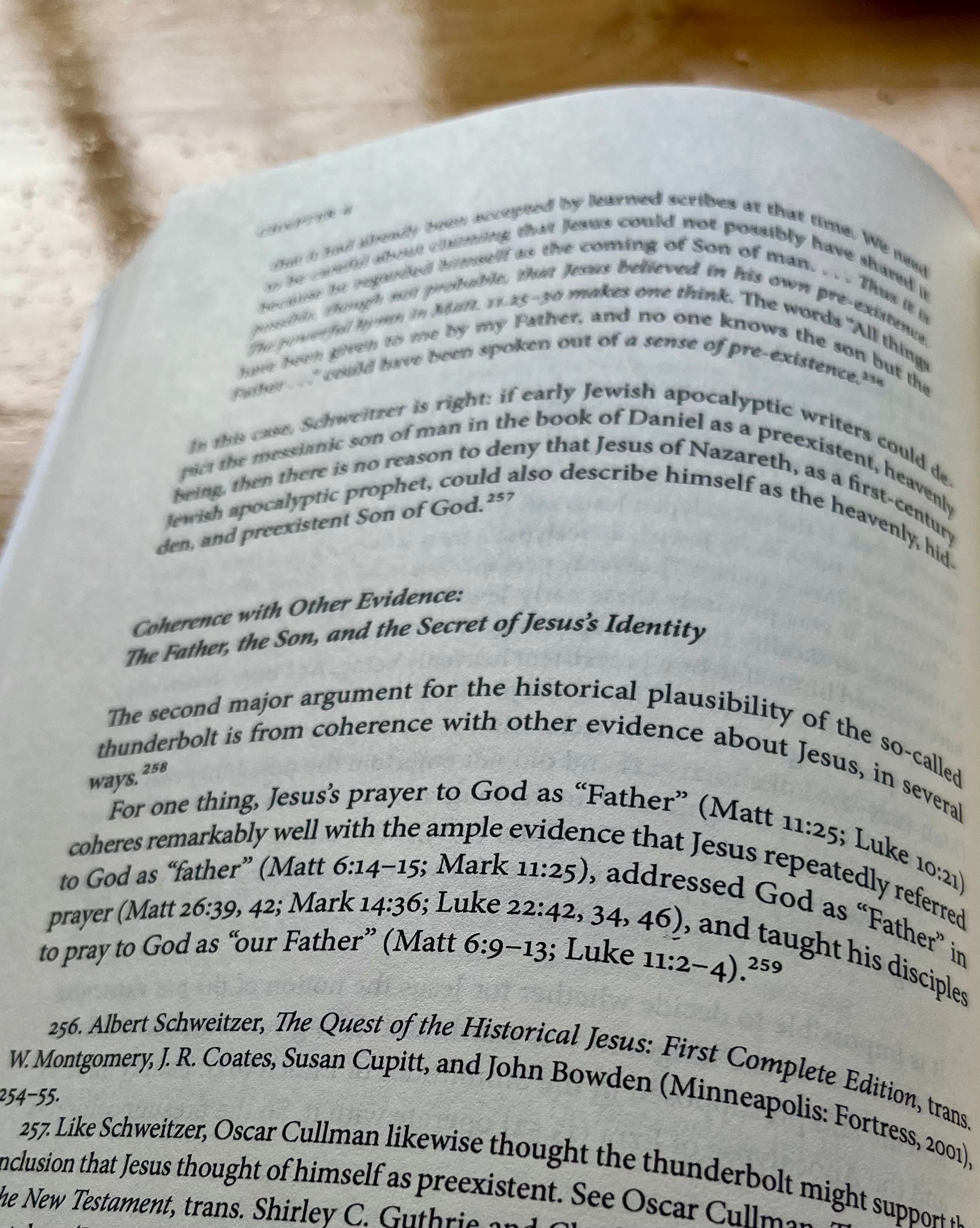
To argue for the historicity of Jesus’ sayings, Pitre uses the triple-context approach from E. P. Sanders. According to this method, authentic material about Jesus should:
- fit within first-century Judaism
- cohere with other evidence about Jesus
- and explain developments in the early Church.
Pitre shows that Jesus’ words and actions meet all three of these criteria.
The approach also works in reverse. If a new purported gospel had Jesus pulling out a flip phone and saying, “Peter, Dude, I’m God!” it would fail every criterion. No one in the first-century had the materials to make a flip-phone (p1), it doesn’t match up with anything Jesus did or said in the four Gospels (p2), and we don’t find it in the early church (or anywhere before 1996, p3).
The Chocolate Milks
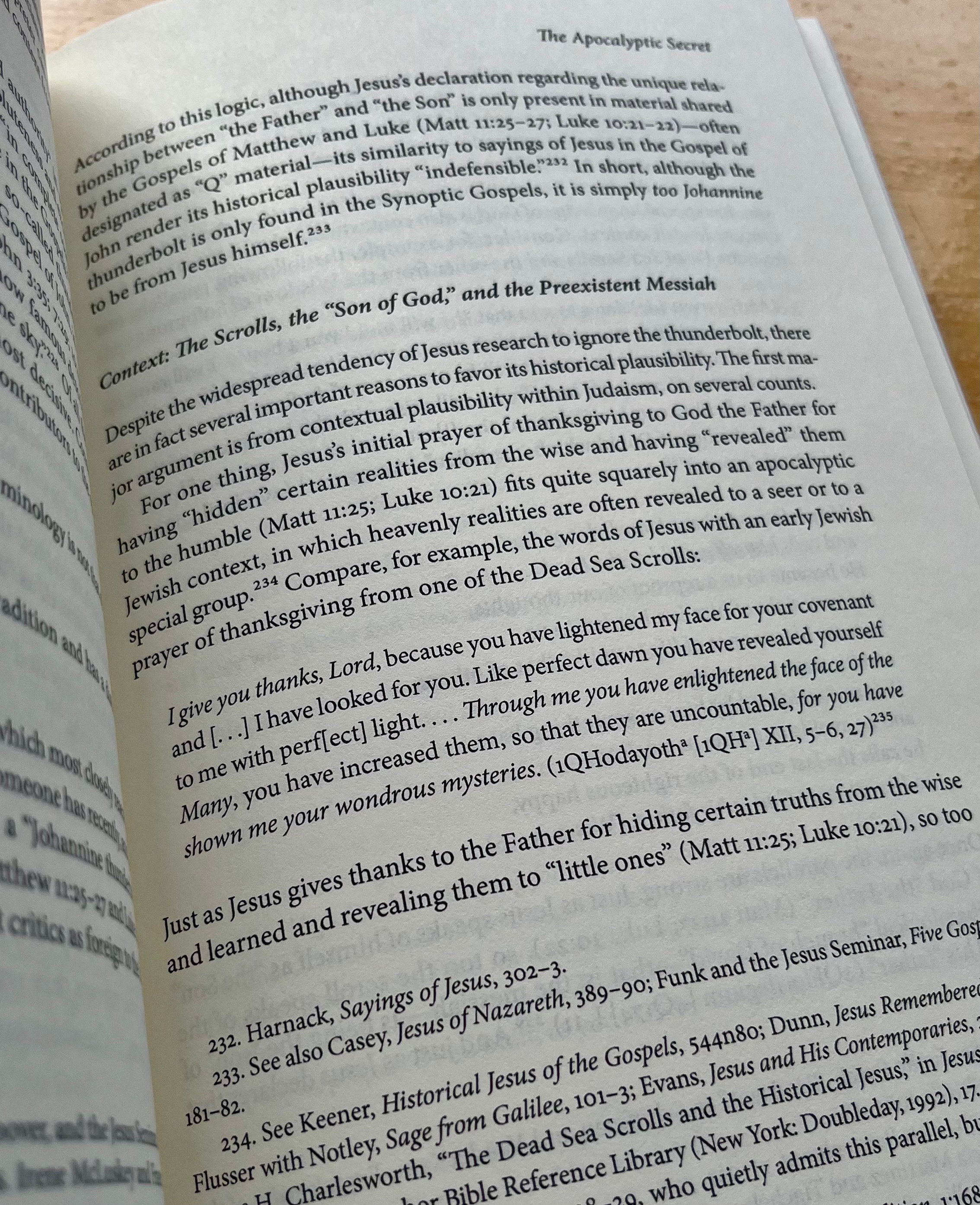
One of the most compelling parts of the book is how Pitre shows Jesus spoke riddle-like parables (111) “to both reveal and conceal the mystery of his divinity” (112). Drawing on Josephus and Philo of Alexandria, Pitre shows what first-century Jews believed was orthodox, how Jesus placed himself into Jewish monotheism, and how the NT authors built on that view.
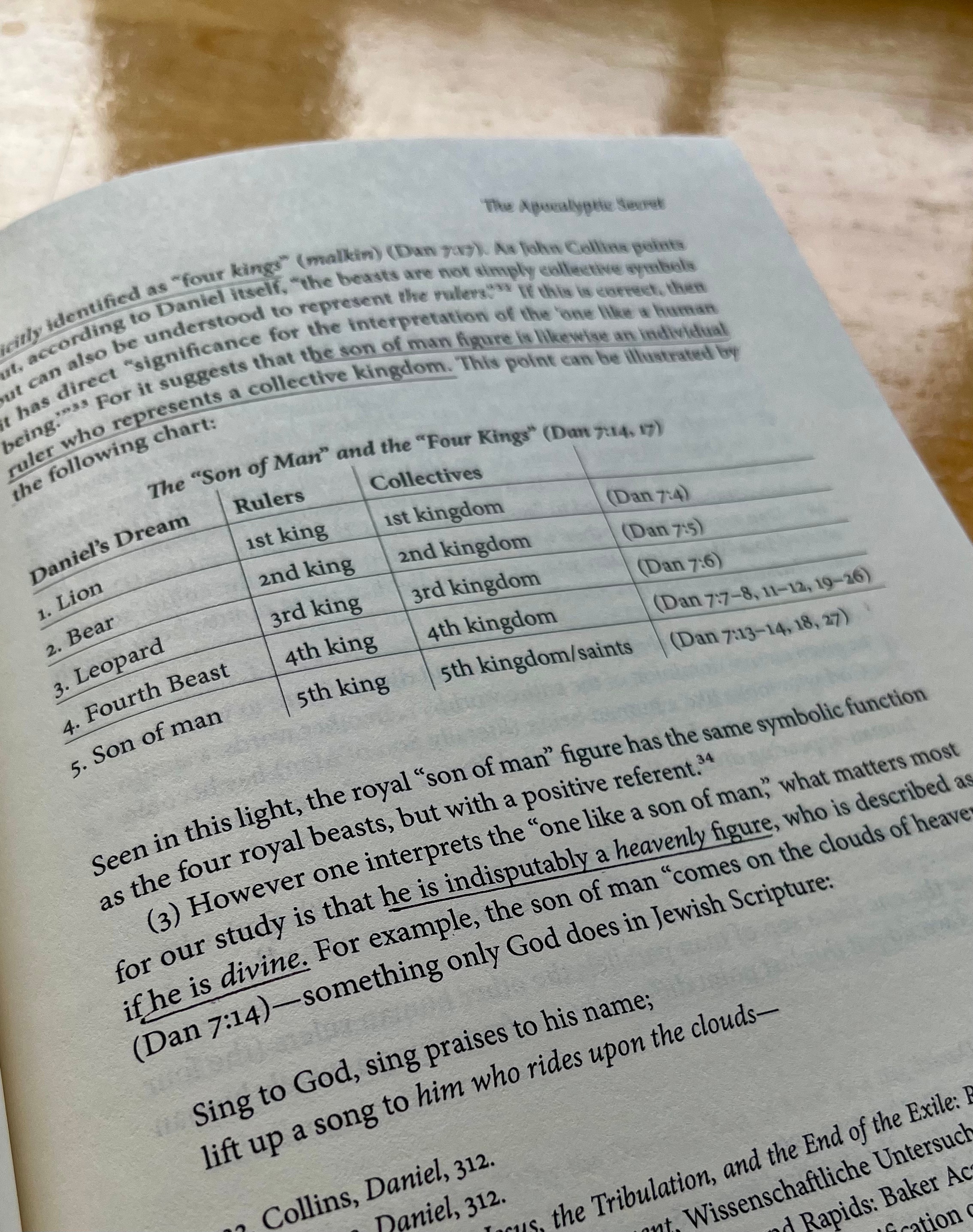
His discussion of the “Son of Man” is especially strong. While some emphasize its ordinary meaning (“human”) in Book of Ezekiel, Pitre highlights its more exalted sense in Book of Daniel 7:13–14. Using texts like 1 Enoch, he argues that many Jews saw this figure as divine or heavenly. Taken together with Jesus’ actions, the title strongly points toward an implicit claim to divinity.
Crucified for Blasphemy
Pitre’s argument peaks in his discussion of Jesus’ trial in chapter 5. In Mark 14, Jesus identifies himself “with two figures in Jewish Scripture: the King who sits at the ‘right hand’ of God in heaven (Ps 110:1–2) and the heavenly ‘son of man’ who comes on ‘the clouds’ (Dan 7:14; cf. Matt 26:64; Mark 14:62)” (301).
The High Priest Caiaphas’ response of tearing his garments shows he understood this as blasphemy. Pitre notes that this act signaled horror at blasphemy and is especially striking since Leviticus 21:10 forbade the high priest from doing tearing his garments (cf. (2 Kgs 18:31–19:1 and 2 Kgs 5:7). As Pitre writes, “Such horror is easily explained if Jesus is claiming to be a heavenly messiah who is somewho equal to God” (305). This is why Jesus was crucified.
The Spoiled Milks
The repeated sections weighing arguments for and against historicity feel repetitive and slow the book’s pacing. That said, these sections give evidence that such passages from the Gospels do accurately convey the historicity of Jesus’ words and actions as understood within first-century Judaism.
Recommended?
Pitre succeeds in making his case: it makes perfect sense that Jesus made divine claims for himself and was crucified, not for claiming to be the messiah (which wasn’t worthy of the death penalty), but for blasphemy in declaring himself divine and equal with God. As Pitre writes (drawing on Joseph Klausner), “the ‘smoke’ of early high Christology had its origins in the ‘fire’ of the words and deeds of Jesus” (39).
There is one God, the Father, and one Lord, Jesus Christ, and Jesus’s words led the apostles to understand (cf. 1:6; 9:5) and declare immediately after his ascension that this Christ is the Lord (Acts 1:21, 24; 2:20, 25, 32).
Buy it on Amazon / Eerdmans / Adlibris!
Lagniappe
- Series: Two Horizons New Testament Commentary
- Author: F. Scott Spencer
- Paperback: 860 pages
- Publisher: Eerdmans (April 30, 2019)
Review Disclosure: I received this book free from Eerdmans. The opinions I have expressed are my own, and I was not required to write a positive review. I am disclosing this in accordance with the Federal Trade Commission’s 16 CFR, Part 255 http://www.access.gpo.gov/nara/cfr/waisidx_03/16cfr255_03.html.
Amazon Affiliate Disclosure: As an Amazon Associate I earn from qualifying purchases.
 spoiledmilks