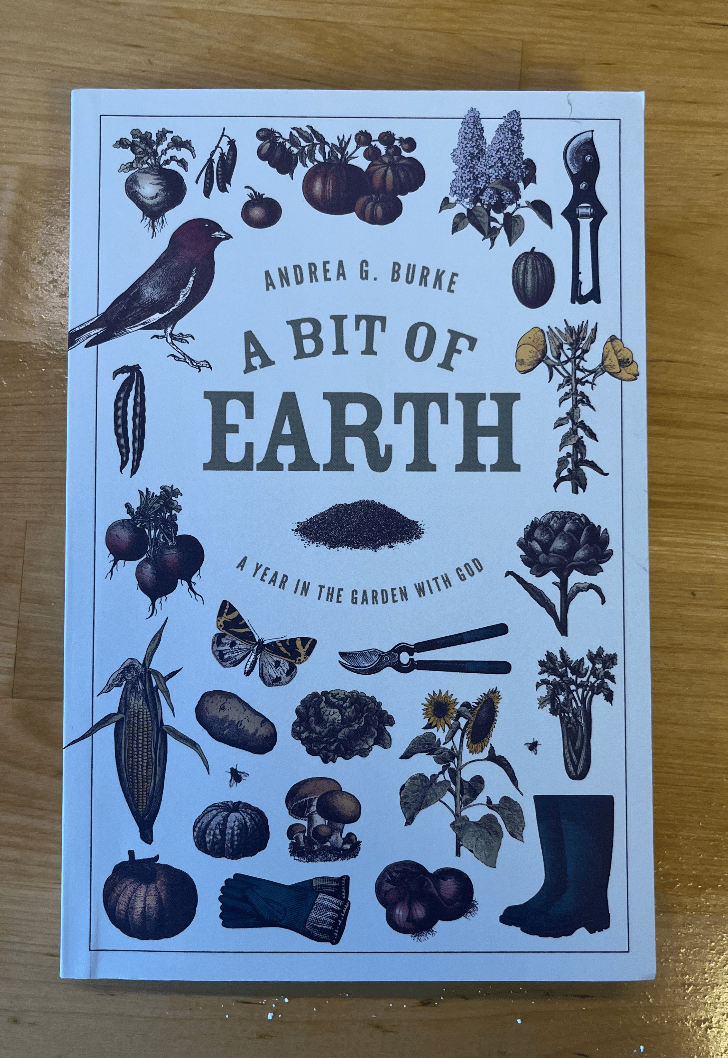

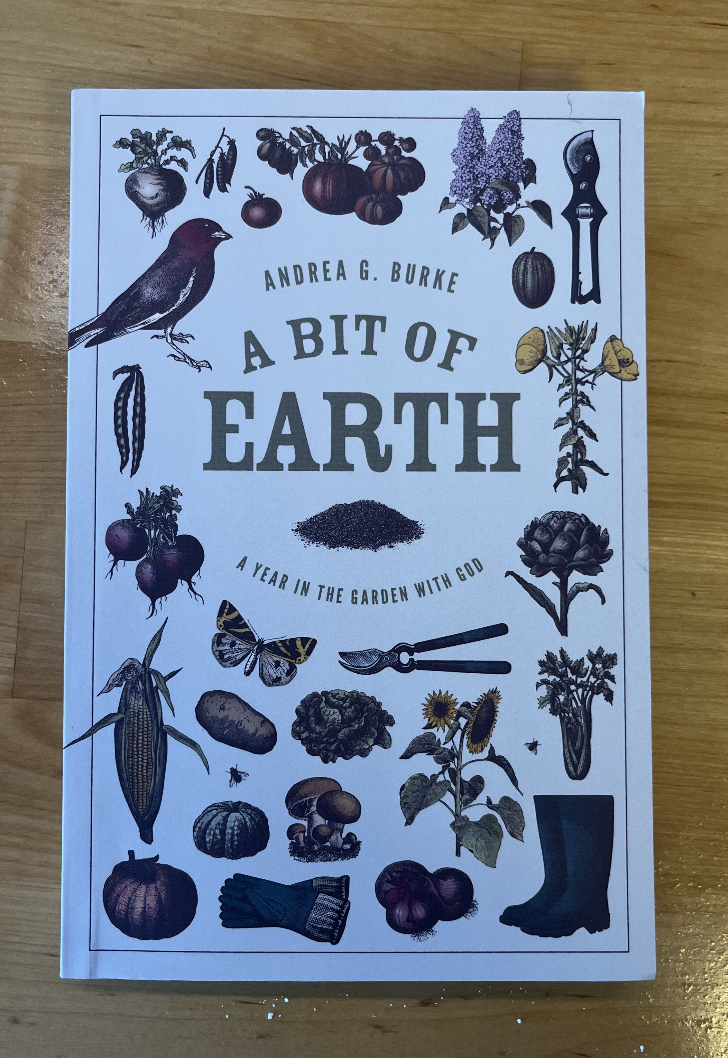
I am no green thumb. I struggle with remembering the names of plants and trees (no to mention in two languages). The thought of rotating plants, remembering the seeds, when to plant, where to plant, and what vegetables you should avoid planting together bores me (and quite overwhelms my brain). Why would I pick up Andrea Burke’s book on planting vegetables in the dirt? Because it’s God’s dirt, and planting teaches us about God.
Burke divides her book according to the four seasons. And she chooses to begin with the Debbie Downer. Death. Also known as, winter. I grew up in Louisiana, so winter means putting a hoodie on for a few weeks out of the year. Norway is a different story. And when winter comes, people huddle inside.
Burke writes of winter, “The geese fly south and the grass fades, and I’m reminded that the things of this earth do not last. Will not last. Creation is established and moves in a certain cadence of hope mixed with longing, repeating itself over and over again.” The summer trees clapped their hands, then turned brown, then lost their leaves. Nothing grows; everything dies. Yet even vegetables in mid-winter have something to teach us about God. Burke observes, “If everything in creation is designed to reveal the nature of God, then certainly, even garlic has something to teach me” (11). Garlic was made to “send their long hands down into the deeper depths, the more hidden places, the quieter, sleeping hollows where water, nutrients, and stability can be anchored. There where the Spirit of God already knows how to bring life, hovering over the depths and waters and darkness” (11). Winter is where we can rest from so much of our striving, and draw roots in order to grow for the coming year.
The striving
“And then there were the weeds.
Lord, have mercy, the weeds.”
Burke lets us know that weeds show up in every season of gardening. And although “worldly philosophers will write about gardens and the nasty work of weeding… they simply fail to see how this very work is of the common graces of nature. God is teaching us through his creation if only we are be humble enough to learn” (81–82). We must be vigilant about pulling the weeds when they first come up, or they will take over your garden. This annoying plant shows up all throughout God’s creation, including every season of our lives. They begin as small sins, perhaps bad or annoying habits. But if we don’t take care of them, if we don’t nip them in the bud, they will grow, sometimes slowly without or noticing, sometimes more quickly than we could have imagined.
But not all is so dour!
Burke acknowledges that we do not do this work on our own. She likens us to children who eagerly follow our Father around, watching how his hands work the dirt so that we may learn and do the same. God is working out the details of our lives. He knows our soil and what will make us strong. He prunes us, sometimes “pressed against parts of me I hold dear” (144). Our Father is not shy about using his pruning hook, but it is always for our good, just as our work of weeding is always for the good of our garden (and ultimately us and our family).
Recommended?
There is much more that could be written about this book (which I did write, before my first draft was mysteriously deleted). Where I fail at giving poetic illustrations, Burke succeeds. She is a delight to read. Her knowledge of vegetables and herbs is vast, and she seamlessly weaves this onto the Lord’s year-round dirt-work in creation and in our own earthly bodies.
Buy it on Amazon or from Baker Publishing!
Lagniappe
- Author: Andrea Burke
- Paperback: 272 pages
- Publisher: Baker Publishing (July 2024)
Review Disclosure: I received this book free from Baker Publishing. The opinions I have expressed are my own, and I was not required to write a positive review. I am disclosing this in accordance with the Federal Trade Commission’s 16 CFR, Part 255 http://www.access.gpo.gov/nara/cfr/waisidx_03/16cfr255_03.html.
Amazon Affiliate Disclosure: As an Amazon Associate I earn from qualifying purchases.
 spoiledmilks