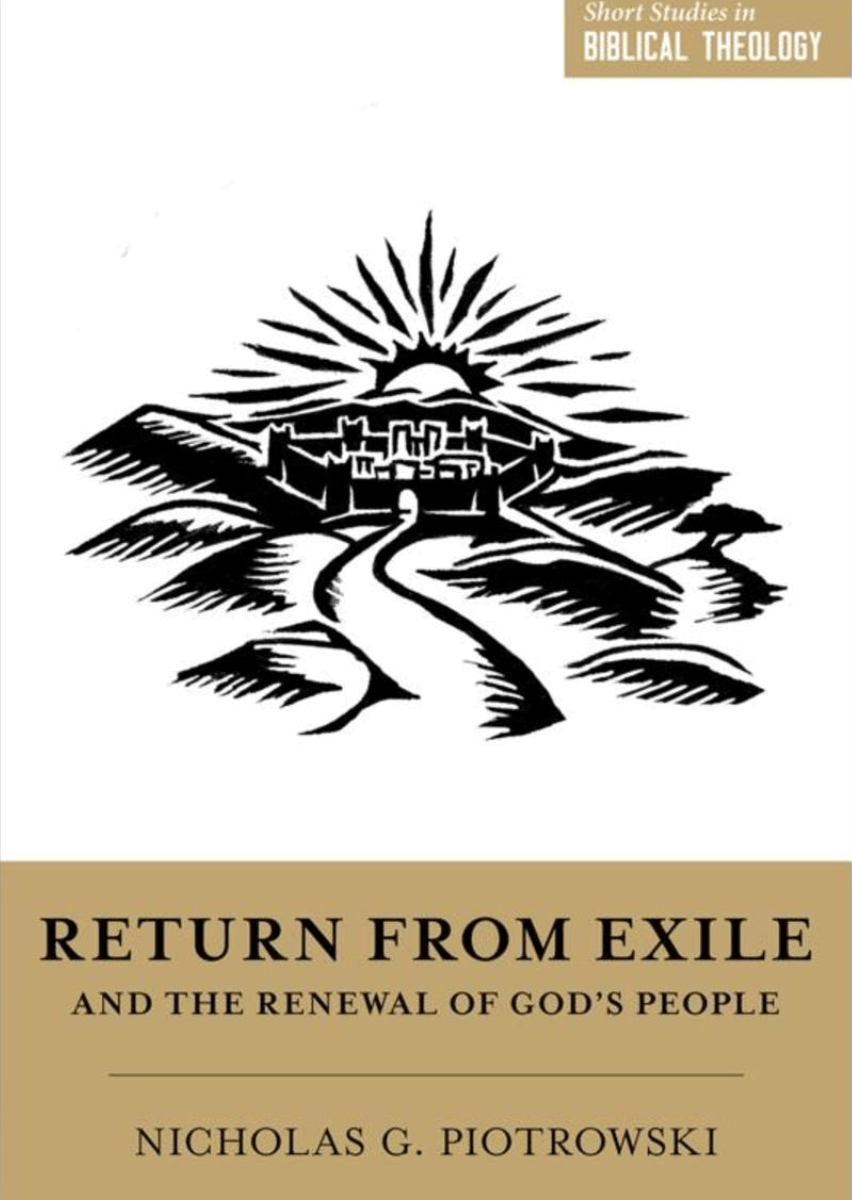

The Short Studies in Biblical Theology (SSBT) series is a personal favorite of mine. While leaner than the New Studies in Biblical Theology (NSBT) volumes, it offers the grand sweep of a theme without burying the reader in all the details. As a father of five that is refreshing!
Nicholas G. Piotrowski is the president of Indianapolis Theological Seminary where he also teaches hermeneutics and New Testament courses.
Piotrowski takes on one of the most vital threads in the Bible’s structure: exile. While many associate exile solely with the Babylonian captivity, Piotrowski argues it actually begins in Genesis 3. He divides the book into two movements: Part 1 follows the trajectory from Eden to the deportation from the Land (Exile and Death); Part 2 traces the prophetic hopes through the resurrection of Jesus to the church’s mission as the Lamb’s followers (Return and Resurrection).
The Logic of Death
Piotrowski begins by reframing God’s warning that Adam and Eve would “surely die” the day they disobeyed (Gen 2:17). Since they didn’t literally die, we often assume their death was merely spiritual or delayed (5:5). Piotrowski suggests a more profound theo-logic: Exile is death. So the Bible begins with a conception of death that is metaphorical. (Or, perhaps, it is the true meaning of death?) To be sent away from the presence of God, the source of life, is to enter the realm of the dead. Physical death (Gen 5:5) is simply the eventual outworking of that fact.
Book Summary
Chapter one takes a closer look at the exile of Genesis 3 in the wake of God’s blessings of Gen 1–2. Chapter two looks at the aftermath of paradise lost seen in the rest of Genesis. Then God’s saving work in the exodus and the establishment of the priesthood and temple serve to bring humanity back into God’s presence (ch 3). Israel finally enters the Promised Land, which is presented as a “new Eden,” the place where God’s people could rest and enjoy God’s presence (ch 4). The Assyrian exile and, particularly, the Babylonian exile, represent the death of the nation of Israel (ch 5).
Next, Piotrowski shows how the Psalms and prophets reuse imagery from creation “to show how the return from exile will ultimately include people from all nations” (ch 6). Jesus’s ministry shows the beginning of the end of exile (ch 7). His death serves as the ultimate exile from God’s presence with his new life opening the way for all to come to God (ch 8). With the outpouring of the Spirit on God’s people, the church, the resurrected ones brought out of exile (John 3; Ezek 36–37), is the Spirit-filled temple and God’s dwelling place on earth (ch 9). Piotrowski ends with Revelation and how it leads us out of exile into God’s presence (ch 10).
Cardinal Points
Throughout the book, Piotrowski shows the importance of the mundane geographical markers east and west. Moving eastward often symbolizes one’s removal from God’s presence, and heading west often symbolizes the opposite. Adam and Eve were sent out of the garden toward the east, as the angel stood guard at the east of the garden. The peoples move farther eastward until Genesis 11. Abram moves westward toward the land God will show him (Gen 12:5). Consider the High Priest, for example. As Piotrowski writes, “Only he gets to go in, only once per year, only from the east, and only with a substitutionary sacrifice of atonement” (47). Simple directions like these being to mean something to us once someone shows us the right interpretive key.
Recommended?
This is an incredible, accessible study on an important substructural thread of the Bible while keeping the focus on the church today. Highly recommended!
Buy it from Amazon or Crossway!
Lagniappe
- Author: Nicholas G. Piotrowski
- Hardcover: 224 pages
- Publisher: Crossway (March 2025)
- Read the Chapter 1
Check Out These Resources
-
Books
- Rebels and Exiles — Matthew Harmon
- Exodus New and Old — L. Michael Morales
- Who Shall Ascend the Mountain of the Lord? — L. Michael Morales
-
Articles by Piotrowski
Review Disclosure: I received this book free from Crossway. The opinions I have expressed are my own, and I was not required to write a positive review. I am disclosing this in accordance with the Federal Trade Commission’s 16 CFR, Part 255 http://www.access.gpo.gov/nara/cfr/waisidx_03/16cfr255_03.html.
Amazon Affiliate Disclosure: As an Amazon Associate I earn from qualifying purchases.
 spoiledmilks