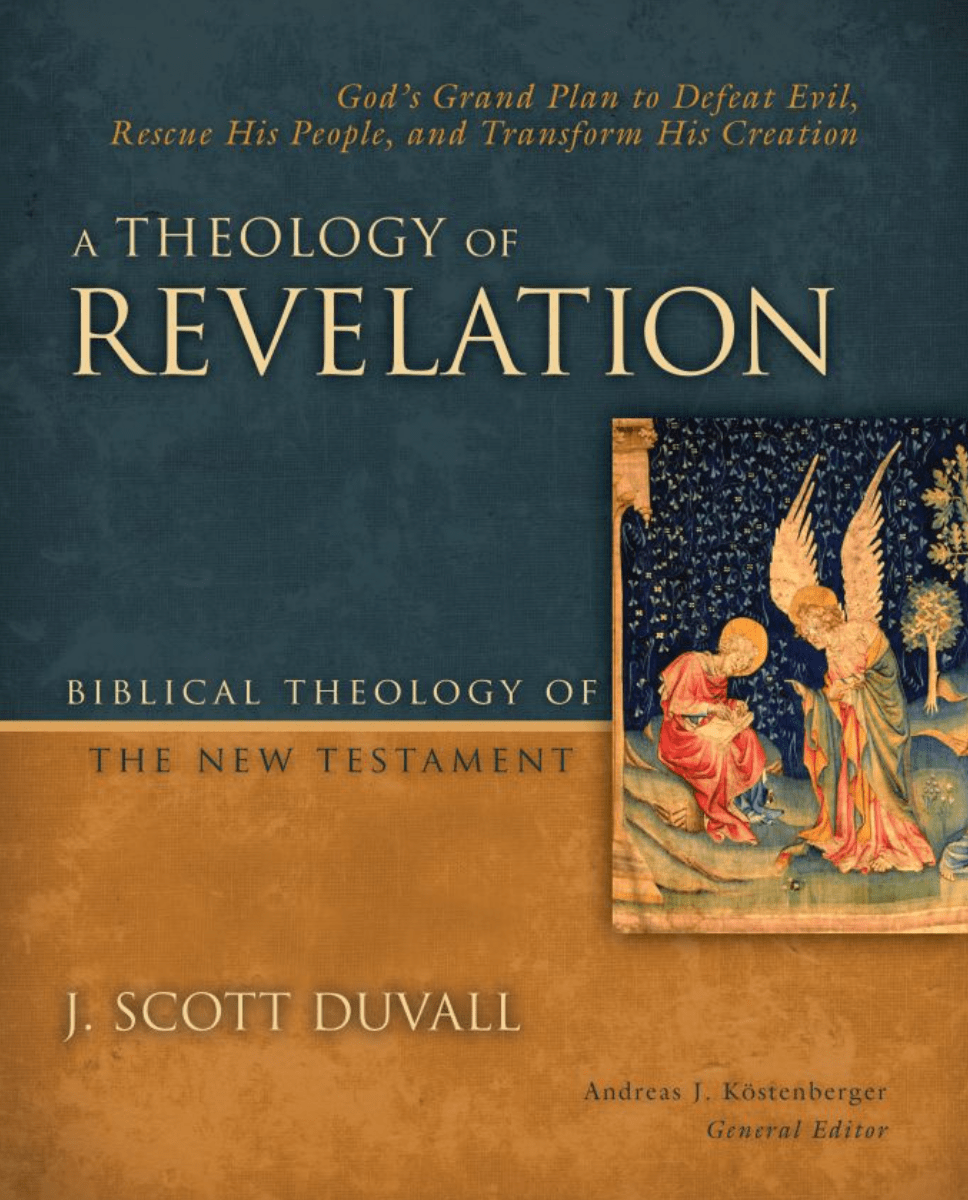

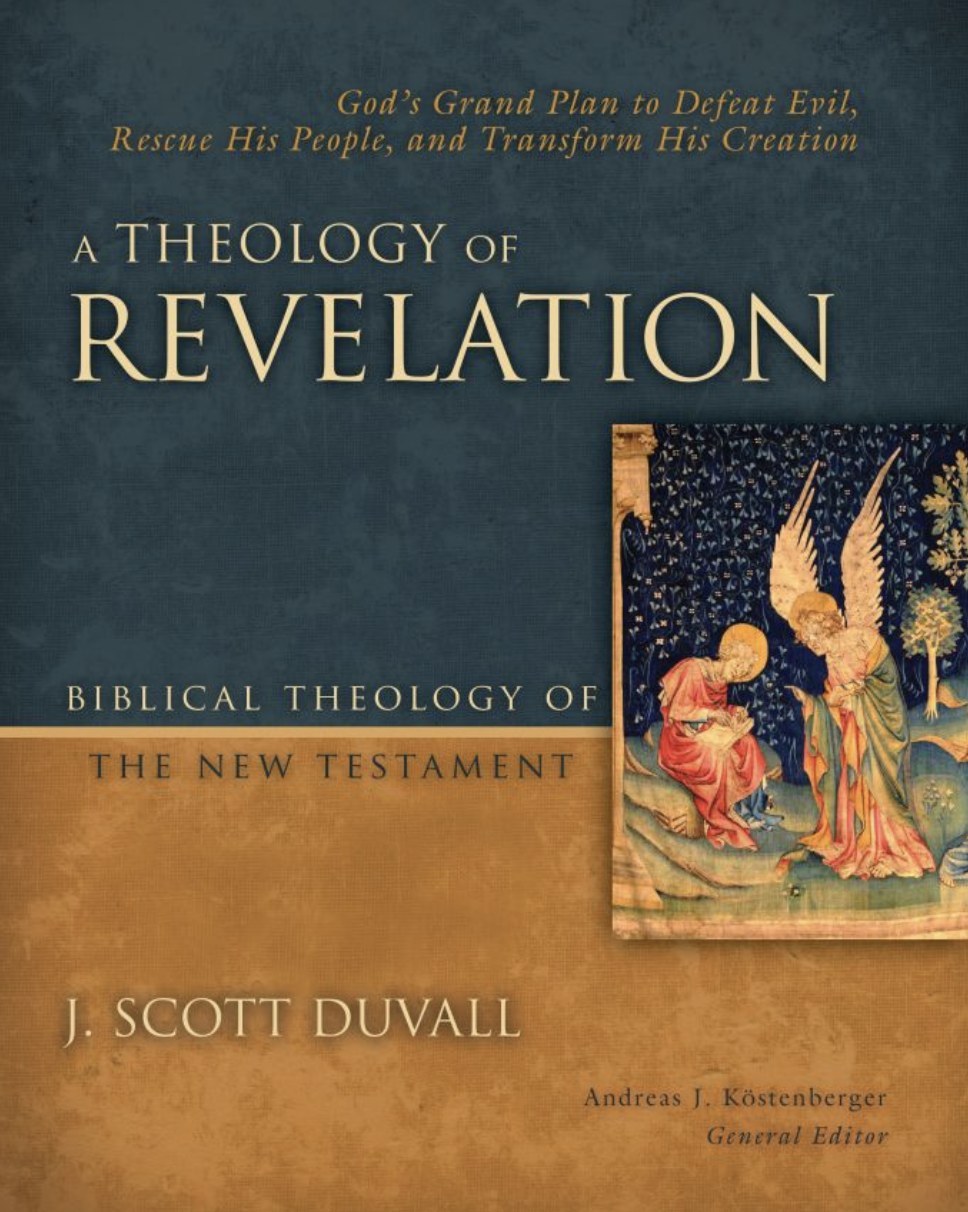
Revelation is an astounding, profound, and discombobulating book. What do the seals, trumpets, and bowls signify? Do they signify the same or different events? What (or who) are the locusts? Who (or what) are the two witnesses? And don’t get me started on the eagle-winged woman who flies into the wilderness away from the river-spewing serpent. As the canonical capstone of the Bible, we should expect this book to allude back to both Testaments, which means that the better know our Bibles, the better we will understand Revelation.
J. Scott Duvall is professor of New Testament at Ouachita Baptist University.
As for the structure of the book, the Table of Contents is at odds with Duvall’s own description of the book. According to Duvall, Part One covers historical matters (chs. 2–4). Part Two (chs. 5–11) dives into the literary-theological foundations, such as Revelation’s genre, John’s grammar, his use of the OT, the literary structure, etc. Part Three (chs. 12–20) covers the major themes of Revelation.
Following the Table of Contents, Part One contains only chapter one, which covers introductory material. The other three parts are pushed off one number, and the final chapter is contained within Part Five.
Part Two: Historical Matters
Duvall surveys arguments for and against the apostle John as the author of Revelation, covering what we can surmise from the text itself, as well as how the church fathers argued for and against John. While evidence isn’t conclusive, many including Duvall, see John the apostle as the author to be the simplest and most satisfactory solution (25).
Regarding when Revelation was written, the two options are early (AD 69) or late (AD 95). While favoring the late date due to certain verses in Revelation and early church tradition, Duvall sides with Beale that one can affirm either option without it affecting the main interpretation of the book.
Duvall gives a very helpful overview of the historical circumstances and cultural values surrounding Revelation. Economic prosperity was tied to idolatry and, like in Laodicea, complacency. Duvall writes, “Participating in the Roman economic system also meant joining in Rome’s idolatrous religious practices” (49). The added cultural pressure to submit and cater to Roman power would tempt believers to compromise.
John’s purpose, then, is to answer the question: “Who is the Lord over all?” Revelation offers us a vision of hope that critiques anti-Christ empires as well as the church. Revelation both comforts suffering believed and calls those who compromise to repentance.
Part Three covers literary-theological foundations for the theology of Revelation. Duvall covers aspects such as canonicity, the use of the OT, and the different lenses used to interpret Revelation. Many have commented on John’s peculiar grammar. Duvall offers a number of factors, such as John being multilingual, allowing John “to communicate effectively as he saw fit” (92). Additionally, “the role of Old Testament allusions, the influence of the LXX, the ‘abnormal’ subject matter of prophetic-apocalyptic, and his theological/spiritual and social contexts would best account for his grammatical idiosyncrasies” (92). Regardless, “John’s Greek… ‘falls within the range of acceptable first-century Greek’” (92).
Regarding how the message is given, Revelation communicates through symbols, signs, visions, and sounds: “I, John, am the one who heard and saw these things. And when I had heard and seen them…” (Rev 22:8). Duvall notes, “Forms of the verb ἀκούω (‘I hear’) occur almost fifty times in Revelation and emphasize its auditory nature. In addition, messengers speak, choruses sing and recite, prophetic instructions are given, instruments play, voices voice and sound abounds in the Apocalypse” (97). After highlighting how Revelation is immersed in colors and numerical patterns, Duval observes that “John’s symbolic language, including his use of colors and numbers, clarifies his story and enhances its rhetorical power and realism, while theologically reminding the reader that God is in control and his victory over evil is certain” (101).
But how ought one interpret Revelation, and how does Duvall do so? Duvall rejects the highly literalistic approach of classical Dispensationalism, but he does favor a modified futurism view that sees the final events of history (i.e., the Lord’s return, final judgment, and new creation) as still lying in the future. Regarding how to interpret Revelation, Duvall combines perspectives into an eclectic approach. In addition to the elements of futurism I just mentioned, he leans on preterism for the original historical context, because Revelation was relevant to the first-century churches; and idealism for theological themes like spiritual warfare and comfort. Regarding the timing of the millennium, Duvall aims to help shape your overall theology of Revelation and its core message about God’s sovereignty and the call to faithful discipleship, rather than solving the chronological labyrinth of Revelation 20.
Part Four covers nine theological themes. For example, discipleship in Revelation “often assumes a context of trials and suffering” (413). John points us to two sources of suffering: human and demonic, and helps us understand why God’s people should expect trials. As we see with the seven churches, not everyone experiences the same amount of trials nor the same degree of intensity. Still, “trials and tribulations are a common course for followers of the Lamb” (414). But the reason why believers experience suffering is due to a clash of kingdoms. Our “actions and words show an allegiance to God and the Lamb over against the kingdoms of this world” (416). We are to reject sorcery and murder, deception and lying. We must reject anti-Christian attitudes, and when we don’t, we must repent while the offer still stands.
Recommended?
Yes, Duvall’s book is a gold mine for laymen, seminary students, teachers, and pastors. Duvall has written a few books already on Revelation, so he has thought long and hard about this book. He has given us an evangelical, scholarly understanding of the book of Revelation that is faithful to the canon of Scripture without making this into another commentary. He leaves some interpretations open so that those from different views can still incorporate the main themes and insights. This is a brilliant book, on par with the other volumes in this series.
Buy it on Amazon or from Zondervan Academic!
Lagniappe
- Series: Biblical Theology of the New Testament
- Author: J. Scott Duvall
- Paperback: 608 pages
- Publisher: Zondervan Academic (March 2025)
- Read the introduction + chapter one
Review Disclosure: I received this book free from Zondervan Academic. The opinions I have expressed are my own, and I was not required to write a positive review. I am disclosing this in accordance with the Federal Trade Commission’s 16 CFR, Part 255 http://www.access.gpo.gov/nara/cfr/waisidx_03/16cfr255_03.html.
Amazon Affiliate Disclosure: As an Amazon Associate I earn from qualifying purchases.
 spoiledmilks