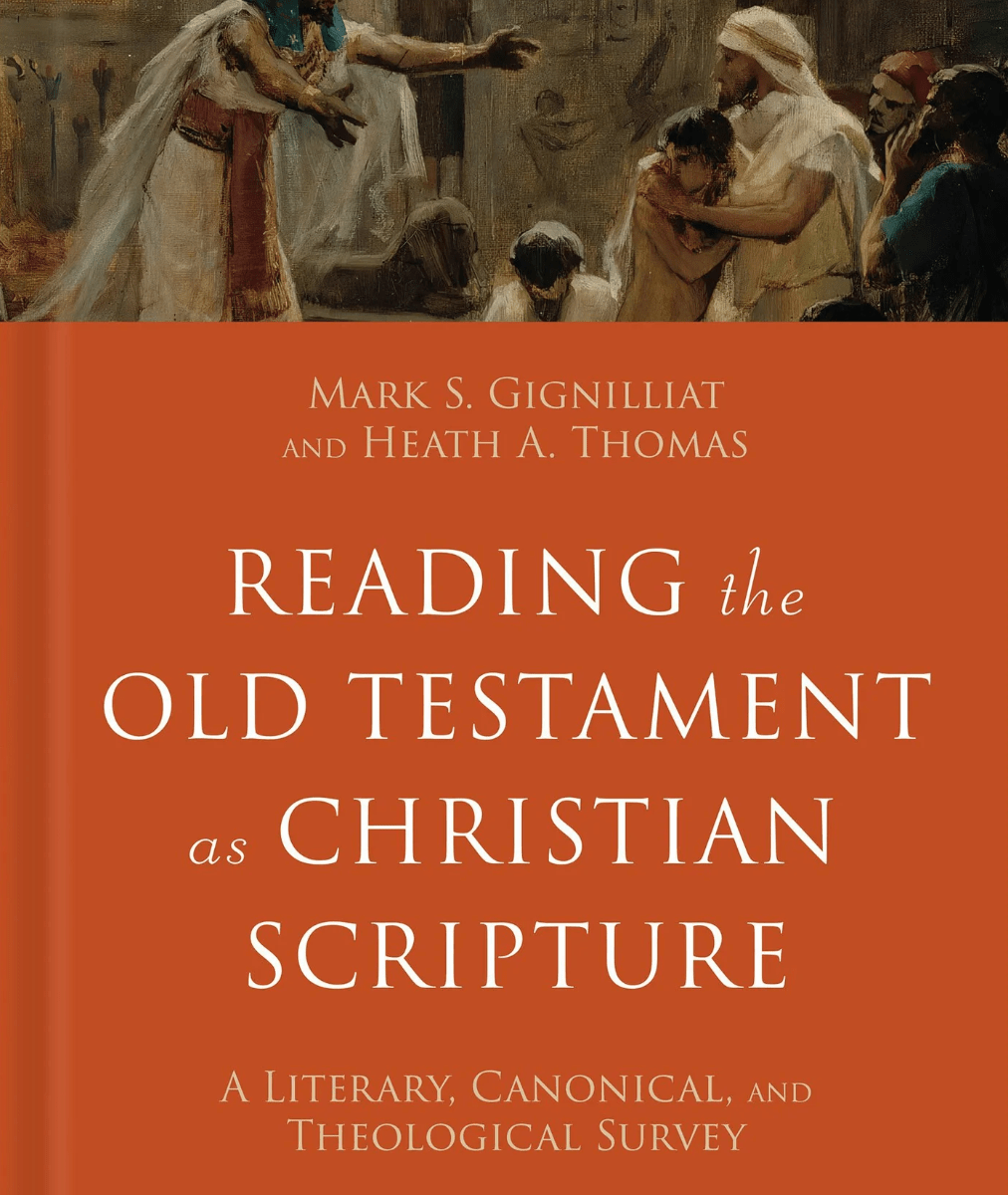

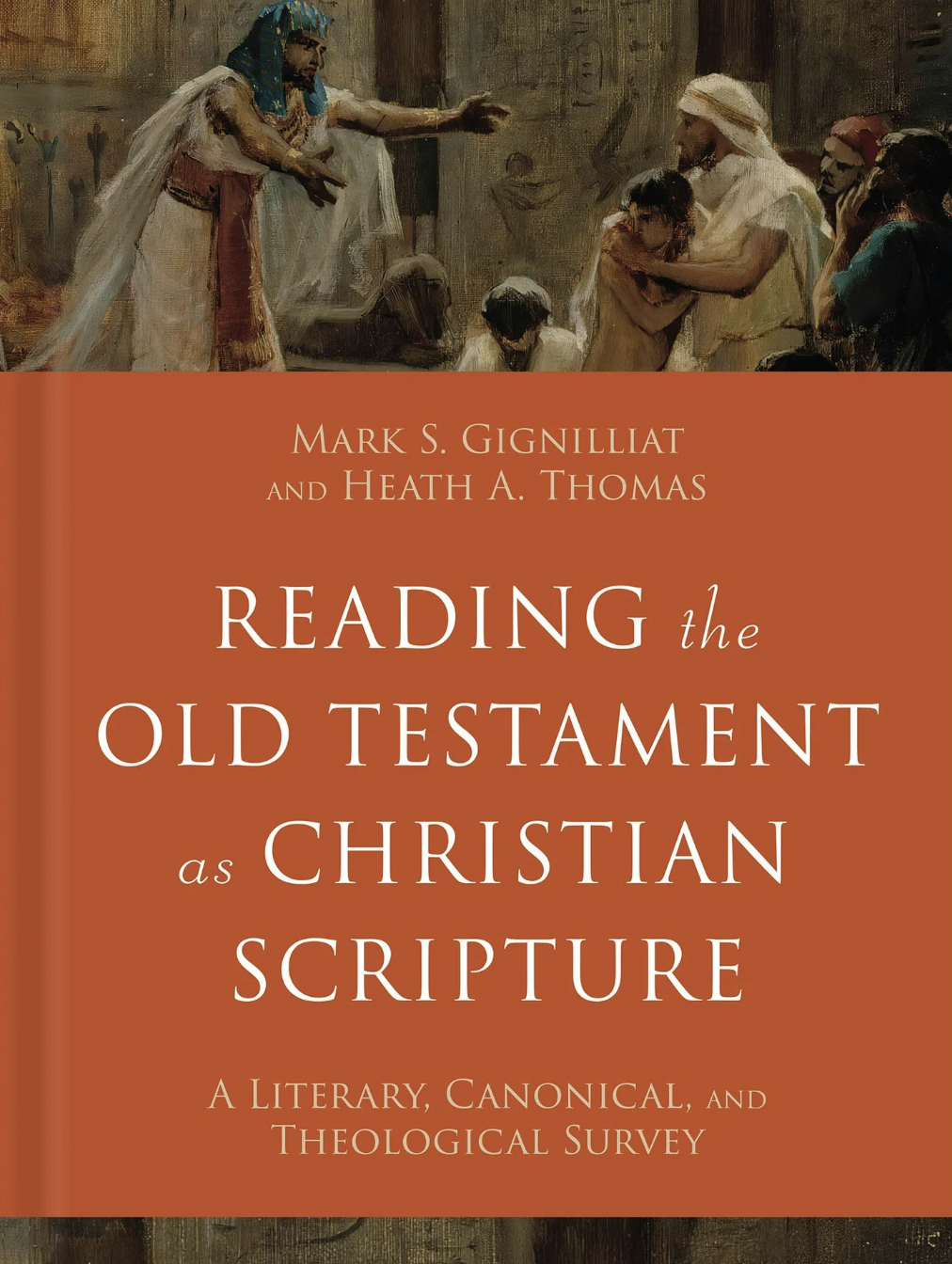
Mark Gignilliat and Heath Thomas’s Reading the Old Testament as Christian Scripture: A Literary, Canonical, and Theological Introduction is a great volume in the Reading Christian Scripture Series. The authors guide us through the Old Testament with a Christ-centered focus. They traces the single redemptive plan of God through the Old Testament’s narrative.
While other Old Testament introductions use literary, historical/critical, and/or theological methodologies, the authors apply a consistent biblical-theological method that links the Old Testament’s covenants, institutions, and narratives together, often showing their fulfillment in Jesus. The historical approach often treats the biblical texts as having “meaning” that fits only into that particular moment in time. However, as the authors argue, “we have our Bibles because their contents were recognized and received as sacred Scripture. This confession shapes how we read and receive the Old Testament.”
In twenty-eight chapters, the authors cover the whole Old Testament. His first chapter covers the concept of the Old Testament as Christian Scripture. The remaining chapters cover the Old Testament books, with three chapters devoted to introductions of the major sections of the Old Testament (following the Hebrew order, Pentateuch/Law, Prophets, and the Writings, that is, the Torah, Nevi’im, and Ketuvim—TaNaK).
In their first chapter, the authors admit that the Old Testament is a challenge. Are the “sacrificial mechanics” of Leviticus actually useful? However, we Christians can easily be too familiar with our favorite verses or with the stories we believe we know. But the Old Testament is “a literary bullhorn… needed to rouse us from our religious slumbers…. It startles. It shocks. It comforts and confounds. It confronts our blindness and deafness with large and startling pictures.”
The authors prefer to refer to the “Old Testament” as such instead of the “Hebrew Bible.” The use of the term “old” means that something new has come to replace it. The history of God’s dealings with his people, from Adam and Eve, to Abraham, Moses, and Israel on Sinai, and the many lousy kings Judah and Israel had, to the exile, has been written down. The old covenant had come to an end, and as Isaiah promised, something new would break forth (Isa 48:6).
Both the Old and New Testaments reveal to us “God’s revelation of himself by the Spirit in the Son.” The Old Testament has a particular way of speaking, and this continues on today as a witness to the one God whom we Christians call the Father, Son, and Holy Spirit. We do not have the New Testament without the Old.
As the authors write, “The Old Testament is ‘old’ because its material form and ‘coming to be’ had to end in anticipation of a new moment of God’s self-unveiling. But it is precisely in its ‘oldness’ that it continues to shape the way Christians understand our triune God and his redemptive mission for the universe.”
After this they explain why they follow the Hebrew (TaNaK) order, the relationship between the Old Testament and history, and explains their five types of sidebars:
- Canonical Connections—linking narratives and the Testaments,
- Theological Issues—links to Christian theology,
- Reception History—examples of how texts have been understood,
- Historical Matters—textual background, and
- Literary Notes—highlight a text’s literary quality.
Overall Thoughts
I largely enjoyed and appreciated this book. I really enjoy biblical theology, how it connects characters, events, books, and the Testaments together, points to Jesus, and offers application to us today. Throughout his book, the authors draw many rightful connections to Jesus, and they aren’t afraid to do it. They show typological connections, such as that between Noah and the ark and Moses in his ark-basket, both covered with pitch, both flowing as life-saving vessels through the waters of death. They show us how to read and understand the Old Testament without jumping to allegory (or using it as a last resort).
That said, they do read, for example, the Song of Songs as both literally about human sexuality and canonically about God’s love for his bride, the church, in Christ. The human love throughout the book reflects and points us to divine love. The ultimate destiny of all created love is to participate in the love of God. The Song of Songs affirms the goodness of creation, love, and sex, while setting the most intense human relationship in the larger canonical story of God’s covenant(s) with humanity.
Recommended?
The authors do a wonderful job showing how the Old Testament serves as Scripture for Christians, always pointing us to Christ. They show us the value of both Testaments for our lives, for it is in both that God’s faithfulness to his people is on display. From a biblical-theological perspective, this would be the first Old Testament introduction I would pull from my shelf.
Pair this with Ansberry’s volume on the wisdom books and the Psalms and Tully’s volume on the Prophets in this same series. If you want to dip into Old Testament introductions that take a different perspective, pair this with the volumes by Hill and Walton (literary/historical perspective), Hess (historical/theological/critical), or Van Pelt and Duncan (Covenant Theology). Gignilliat’s volume is similar in some ways to Stephen Dempster’s Dominion and Dynasty.
Buy it on Amazon or from Baker Academic!
Lagniappe
- Series: Reading Christian Scripture
- Author: Mark S. Gignilliat
- Paperback: 448 pages
- Publisher: Baker Academic (March 2025)
Review Disclosure: I received this book free from Baker Academic. The opinions I have expressed are my own, and I was not required to write a positive review. I am disclosing this in accordance with the Federal Trade Commission’s 16 CFR, Part 255 http://www.access.gpo.gov/nara/cfr/waisidx_03/16cfr255_03.html.
Amazon Affiliate Disclosure: As an Amazon Associate I earn from qualifying purchases.
 spoiledmilks