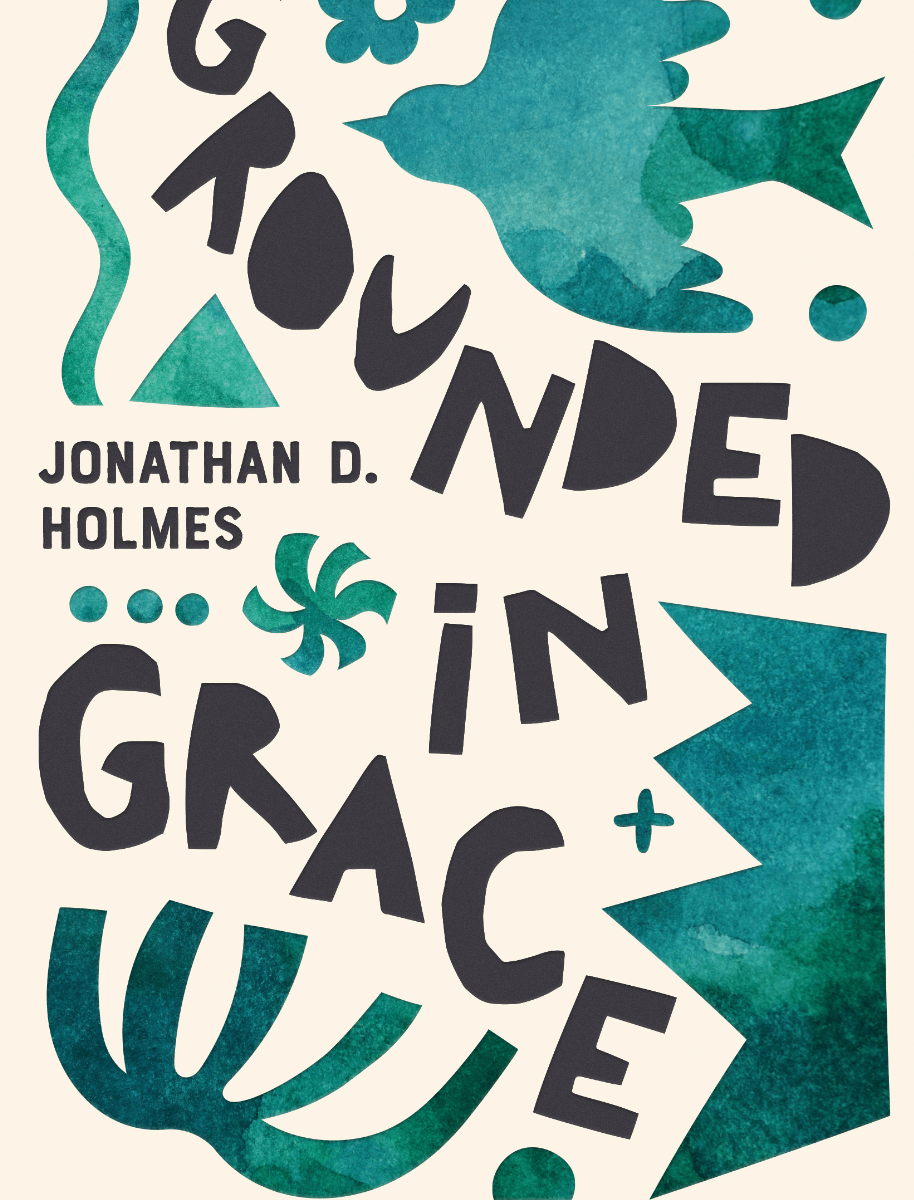

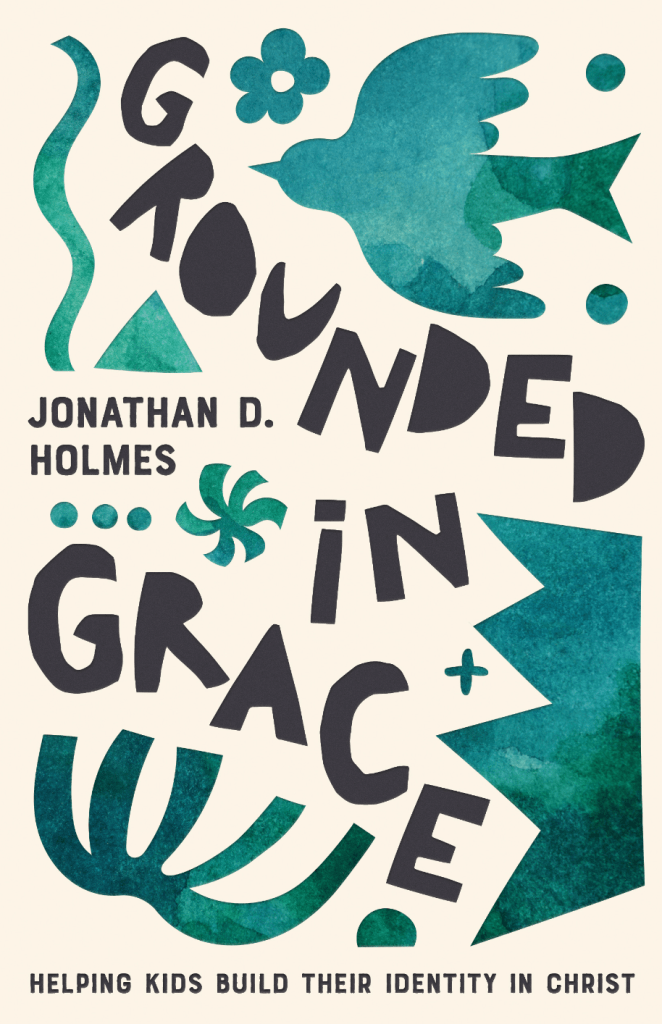
In his most recent book, Jonathan Holmes focuses on helping kids build up their own identity in Christ. Holmes is the founder and Executive Director of Fieldstone Counseling. He also serves as the Pastor of Counseling for Parkside Church Bainbridge and Green. He sets up his book in three parts. Part 1 looks at identity formation. Children and teenagers are encouraged to stand out and be unique, but they are then made fun of for being different. They are told to live their own truth, but if someone else’s truth contradicts yours then that person is toxic and dangerous. Don’t care what other people think (“you do you”), except that you “need” their approval.
Teenagers often struggle with identity. What is it that makes me me? What do I do? What do I like? What kind of person will I become? Holmes’ hope is that this book will help parents, as well as youth workers, Sunday school teachers, Christian school workers, and Christian counselors, understand the challenges their kids face “related to developing, maintaining, and resting in their identity” (5).
The traditional way children formed identity was that a son would follow in his father’s footsteps, working whatever job his father worked. Girls would grow up to be married, have many children, and work around the house. In modern identity, “[y]our inner voice is now the decisive factor of determining who you are and what you want to be” (7). This is a shift that began taking place in the 1600-1700s with Enlightenment thinkers like Descartes and Locke.
Both the traditional and modern ways of forming our identities have benefits and drawbacks. Rather than offering to our children an identity that is to be earned (the traditional way) or what that is to be created (the modern way), Holmes points us to a third way: our identity lies in Christ. Rather than looking down deeply into ourselves to discover who we are, the gospel turns that on its head. We should first lose our lives, and in doing so we find our identity in Christ.
After examining the modern identity and the modern world that pushes such a crushing, fragile illusion, the next two parts look at two ways teenagers build their identity: doing (Part 2) and feeling (Part 3). Part 2 covers academics, athletics, and good works (or moralism), and Part 3 covers gender and sexuality.
Holmes reminds you not to “divorce theology from practice” (24). Otherwise, when we parents focus shaping our children’s identities, we will rest on our own power and wisdom instead of the Lord’s. We cannot save our children. We can only use the resources God gives us to show how appealing the gospel is. This includes prayer, and praying that the Lord would open the eyes of our children to see him for who he truly is.
Teenagers will try to replace God’s gracious acceptance with the need to constantly earn worth through their achievements. They will trust in their own works instead of Christ’s work for them. Their self-worth may be influenced by athletic identity, which can lead to performance anxiety and despair if they suffer an injury.
It is not only teens but parents who may need to reexamine their own priorities. Are they as in love with Jesus as they are sports? Would they be content if their teen quit the football team (and the hope of that college scholarship) in order to become a pastor?
Holmes offers grace-based responses in each of these chapters. How do parents congratulate their child’s efforts without tying their love to the results? Parents must model success and failure to their children. They must talk about sin and God’s daily mercy and grace toward us in Christ. Parents must show God’s kindness to their children, that there is more to life than money, stuff, work, and that people around us matter.
In chapter six, Holmes equips parents to navigate gender conversations through a better understanding of gender dysphoria. He offers practical counsel on how to affirm their child’s value, while patiently walking through confusion without condemnation, all the while pointing that child to Christ.
The same can be said of chapter seven. Holmes addresses the influence and pressure from media and culture regarding sexuality, and he encourages parents to walk patiently with their children through this confusing time. Parents should invite their children into an ongoing conversation with God’s positive view of sexuality as we read about it in Scripture. Only God, not a label or a desire, defines us.
The book ends with a conclusion, reminding parents of the significant sway they have over their children’s lives. We need to teach and live out to our children both our only hope and their only hope in life and death. The fact that we are not our own, but belong—body and soul, in life and in death—to our faithful Savior, Jesus Christ.
Recommended?
Parents need to be flexible and faithful to the gospel. They need to spend time with their children so they can truly know them. They can learn all the strategies they want, but they will very well have to change and adapt those strategies according to each of their children and their particular personalities, strengths and weaknesses, stages of life, and so on. And they need wisdom to apply the timeless gospel message to their children whom they know. Jonathan Holmes’ book is an excellent resource to take along in the journey of parenthood.
Lagniappe
- Author: Jonathan Holmes
- Paperback: 120 pages
- Publisher: New Growth Press (September 2024)
Find it on Amazon and the New Growth Press!
Review Disclosure: I received this book free from New Growth Press. The opinions I have expressed are my own, and I was not required to write a positive review. I am disclosing this in accordance with the Federal Trade Commission’s 16 CFR, Part 255 http://www.access.gpo.gov/nara/cfr/waisidx_03/16cfr255_03.html.
Amazon Affiliate Disclosure: As an Amazon Associate I earn from qualifying purchases.
 spoiledmilks