

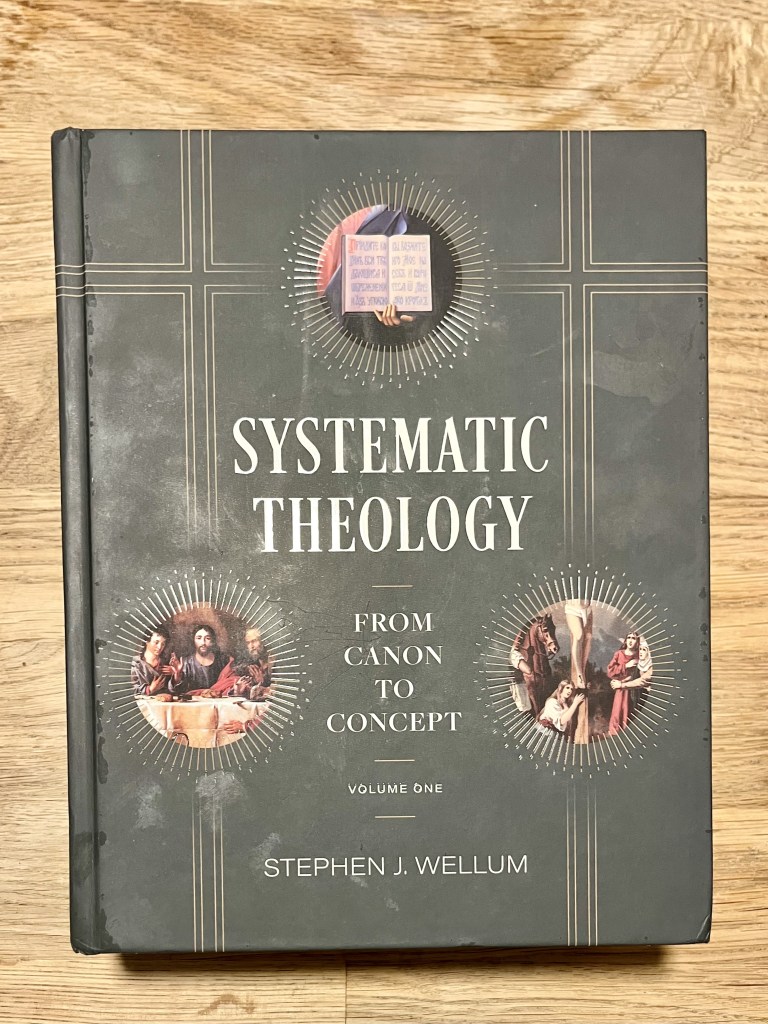
Stephen Wellum, Professor of Christian Theology at SBTS and Editor of The Southern Baptist Journal of Theology, has written an incredible book on systematic theology. This is the first volume of two. While there are many good works out there already (e.g., those by Herman Bavinck), what makes this volume stand out is that it is (1) written from a Baptist perspective and (2) the Bible is read through Wellum (and Gentry’s) way of putting the Bible together through the covenants structure (progressive covenantalism).
Some like Charles Hodge and the more recent Wayne Grudem believe that the way to know what the Bible teaches us today is for us to gather and interpret all the Bible passages on different topics and summarize their teachings clearly. Then we will know what to believe about each topic. However, as Wellum notes, “Scripture is not a theological dictionary or a storehouse of propositions and facts, although it is thoroughly propositional. Instead, Scripture is first-order God-given language that is compared of many literary forms that require careful interpretation, and it is an unfolding revelation given to us over time” (9).
He compares his classical view (God’s Word is infallible and inerrant) with the Neo-Orthodox view put forth by Karl Barth and examples of his influences seen in Grenz, Boyd, Sparks, and Enns. He ends by critiquing those views, understanding that “all views that do not identify God’s word with Scripture” cannot appeal to Scripture “as an an objective, final authority” (149).
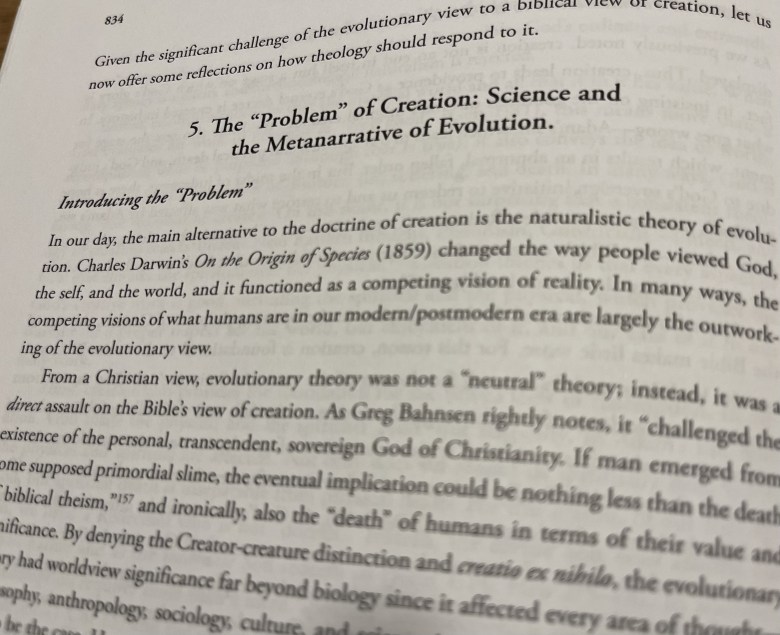
This first volume is divided into four parts. Wellum begins with a 150-page Prolegomena (introduction) in Part One. The purposes of systematic theology is (1) to know God and (2) to enable the church to understand God’s word so as to live faithful, obedient lives under Christ, (3) and “to enable the church to witness to and defend the truth of the gospel” (29). Wellum surveys the last four centuries of intellectual history to help us know how to do theology today by avoiding the pitfalls of the past. We ought to base our theology on the triune God who speaks. Wellum shows his method in doing all this. He shows how to be “biblically warranted in our theological conclusions” and how to move from the biblical text (canon) to theological formulation (concept).
In Part Two Wellum discusses our triune God who speaks, who is both the foundation and possibility for theology as a normative discipline. Wellum discusses divine revelation (God and his word) before theology proper (God), but he assumes a theology proper represented by pro-Nicene trinitarianism and the Reformed tradition. He discusses natural and special revelation, the basis for why we should receive Scripture as God’s written word, and Scripture’s inspiration, clarity, and canonicity (to name a few topics).
In Part Three Wellum discusses his and Peter Gentry’s understanding of how to put the Bible together—referred to as progressive covenantalism (PC). PC is similar to 1689 Federalism with some minor differences and emphases. He summarizes the Bible’s plot movements (ch 13) before discussing how God’s kingdom comes through his covenants with humanity. The covenants are not random acts of grace by a god who can’t seem to get his people in order. They are “the backbone to the Bible’s entire storyline, the relational reality and architectural structure that moves history forward according to God’s design and final plan for humanity and all creation” (432). This chapter is a great summary of Wellum and Gentry’s larger book Kingdom Through Covenant. Wellum shows the point and purpose of each covenant and how they each point us forward to Jesus and his inaugurated kingdom.
Chapter 15 was an excellent chapter where Wellum shows how PC differs and quite possibly offers a better explanation of the Bible than both Dispensational theology (DT) and Covenant theology (CT). He summarizes both DT and CT and their varieties, discusses CT’s understanding of the covenants of works and grace, and then critiques them from a Baptist PC perspective.
Part Four begins the doctrinal formulation that comes from the entirety of Scripture, and where Wellum starts is where Scripture begins: “the glory of the triune God who has always existed in the self-sufficiency of his own being as Father, Son, and Holy Spirit” (535). He opens with the contemporary discussion, current problems and trends with how people conceive God (ch 16) before he moves into the theological overview (ch 17). Here Wellum discusses the God as the divine-covenant Lord and the significance it makes for a worldview that God is absolute and infinite, holy and transcendent, personal and triune. After this holistic look at God, Wellum then moves into discussing God’s specific attributes. Both because of all Wellum has carefully made clear so far and because of his faithful diligence to the Bible’s storyline, a discussion about God’s attributes, which can often seem very ethereal and detached from the Bible and our world, was much easier for me to read and enjoy.
Because Wellum follows the Bible’s storyline so carefully, his theology is intratextual instead of extratextual. It “arises out of the Bible’s own presentation and covenantal framework” (xvii). Being “true to the Bible’s own structures and categories” makes it possible for us to develop a proper theological method so that the Bible can function as our “authoritative ‘lens’ by which we look at the world” (xvii).
The promised but-yet-still-future second volume will cover the doctrines of humanity and sin, the person and work of Christ, salvation, the church, and last things. These will be seen through a classical theistic, trinitarian, Reformed perspective, and more of Wellum’s Baptistic perspective will be clearly seen. It might take you until its publication date before you finish reading this book! I don’t want to put you off though. Yes, this is long, but taken a few pages at a time you can both finish the book and remember more of it, which means you can actually put these teachings into practice.
Recommended?
This simply is a fantastic work. While Grudem has long held pride of place as a recent systematic theology from a Baptist standpoint, and while it is helpful (I’ve reviewed it here), Wellum’s ST is much better. He works with the text, the structure of the Bible, and church history, while explaining the purpose of doing theology at all. Why should we care about any of this? How does this help the average church goer today? Wellum clearly lays out why theology matters. Wellum, to use a friend’s illustration, makes theology comparable more to eating ice cream than visiting the dentist. Highly Recommended.
Buy it on Amazon or from B&H Academic!
More Books by Wellum:
- Christ Alone
- God’s Kingdom Through God’s Covenants
- God the Son Incarnate
- Kingdom Through Covenant
- The Person of Christ
- Progressive Covenantalism
Lagniappe
- Author: Stephen J. Wellum
- Paperback: 1008 pages
- Publisher: B&H Academic (February 15, 2024)
Review Disclosure: I received this book free from B&H Academic. The opinions I have expressed are my own, and I was not required to write a positive review. I am disclosing this in accordance with the Federal Trade Commission’s 16 CFR, Part 255 http://www.access.gpo.gov/nara/cfr/waisidx_03/16cfr255_03.html.
Amazon Affiliate Disclosure: As an Amazon Associate I earn from qualifying purchases.
 spoiledmilks