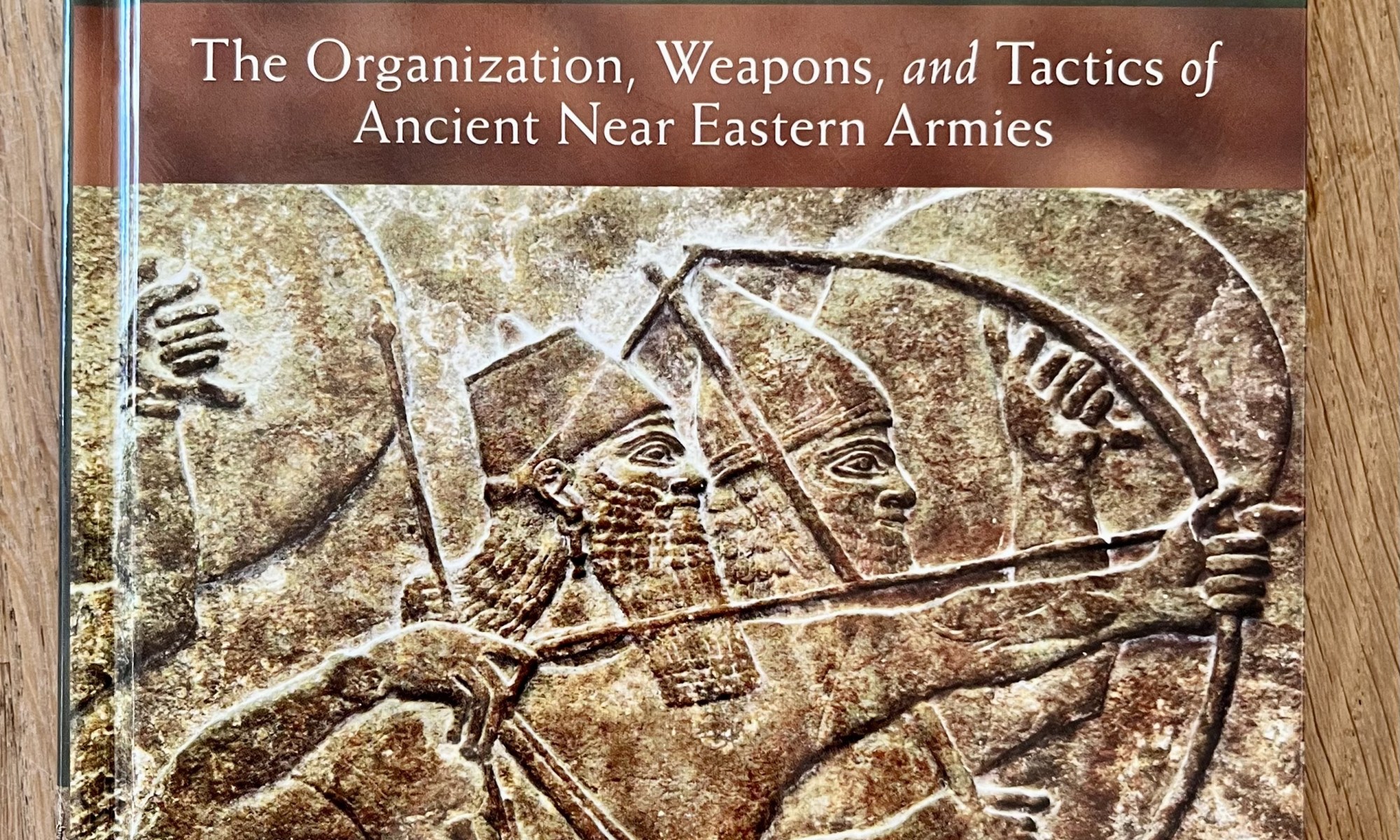


Boyd Seevers—Professor of Old Testament studies at the University of Northwestern St. Paul—has written a much needed book on the war tactics and practices of both Israel and the surrounding Ancient Near Eastern armies. Why is this “much needed”? How have you read Joshua or Samuel and wondered what in the world is going on? Is this okay? Why are some battles described at length (e.g., Joshua 6), while others are only touched upon (e.g., David’s conquests in 2 Sam 8:1–14)? These battles shaped Israel as a nation. The battle of Jericho was made by an army of wilderness wanderers whose fighting males had just very recently undergone circumcision.
Seevers notes that “when battles—even significant battles—did not fit the author’s theological purpose, they received little or no mention” (20). He gives the example of the great battle of Carchemish that “changed the balance of power in the entire ancient Near East at that time” (20). Despite its massive importance in history we get only a mere hint of it in 2 Kings 23:29, “In his days Pharaoh Neco king of Egypt went up to the king of Assyria to the river Euphrates. King Josiah went to meet him, and Pharaoh Neco killed him at Megiddo, as soon as he saw him.”
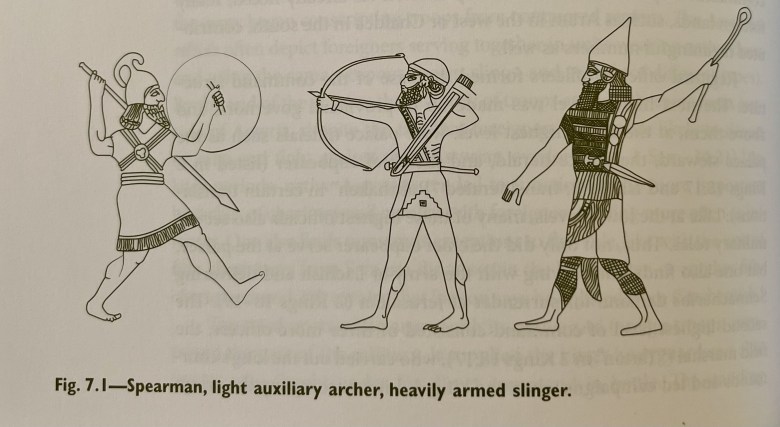
Seevers’ purpose with this book is to describe the military practices of David, Joshua, and other Israelites (chs. 1–2), as well as those of the Egyptians (chs. 3–4), Philistines (ch. 5), Assyrians (chs. 6–7), Babylonians (ch. 8), and Persians (ch. 9). Seevers uses numerous figures from archaeological evidence such as seals, reliefs, and other artifacts to accomplish this task.
The first chapter allotted to each new nation begins with a piece of historical fiction about a soldier fighting in one of his nation’s major battles. Seevers then offers historical background to the nation, the authority of its king, their beliefs in their gods, as well as how they organized their military, used weapons, and the sorts of tactics they followed. Seevers’s understanding of Israel’s seasons and times of harvest help make sense of some biblical texts too that we moderns are far removed from.

This book has much more information than I expected. First, Seevers, having studied and written his dissertation on this topic (1998), is able to explain Israel’s use of swords, bows, spears, and armor such as shields and helmets. How accurate and damaging was the use of a sling? Seevers points to the Roman historian Livy who “wrote of Greek slingers who ‘would wound not merely the heads of their enemies but any part of the face at which they might have aimed’” (62). As well, the Roman writer Vegetius “wrote that archers should practice with targets six hundred feet away, and competent slingers could outrange archers” (62).
What I was impressed at was how much information he had on Egypt, Philistia, Assyria, Babylon, and Persia. All of these but Philistia were massive nations with a lot of power, I just didn’t expect that we could get enough information to make a book out of it all. Within these chapters Seevers also includes how these nations interacted with, threatened, fought again, or defeated Israel, giving more insight into the biblical text.

The Spoiled Milks
If anything, I didn’t care for the historical fiction bits. I found they were too long and focused more on the inward thoughts of the particular soldier than it did the kinds of historical and tactical details offered by the rest of the book.
Recommended?
If you are into historical backgrounds and how war fought and understood in the ancient Near East, you would probably enjoy this book. Some may want to know mainly about Israel, but I should remind you that the majority of the book (chs. 3–9) focuses on the other nations. Israel is really only covered in the first two chapters. The biblical historian who wants to gain more information about these surrounding ANE nations will appreciate this book. Seevers has had access to to a lot of archaeological finds, artifacts, and texts that many people either aren’t privy to or just aren’t interested in. Having it all written down here is convenient for the reader, especially with his help in showing how these nations interacted with ancient Israel.
Lagniappe
- Author: Boyd Seevers
- Paperback: 328 pages
- Publisher: Kregel Academic (November 14, 2013)
- Read chapter 5—Philistia
Buy it from Amazon or Kregel Academic!
Disclosure: I received this book free from Kregel Academic. The opinions I have expressed are my own, and I was not required to write a positive review. I am disclosing this in accordance with the Federal Trade Commission’s 16 CFR, Part 255 http://www.access.gpo.gov/nara/cfr/waisidx_03/16cfr255_03.html.
 spoiledmilks
Thanks for the review Spencer. I have only read the first 2 chapters so far and I was disappointed with the historical fiction aspect. Hopefully, I’ll get more out of the other chapters.
LikeLiked by 1 person
Yes, indeed. I skimmed a few bit mostly skipped them.
LikeLike