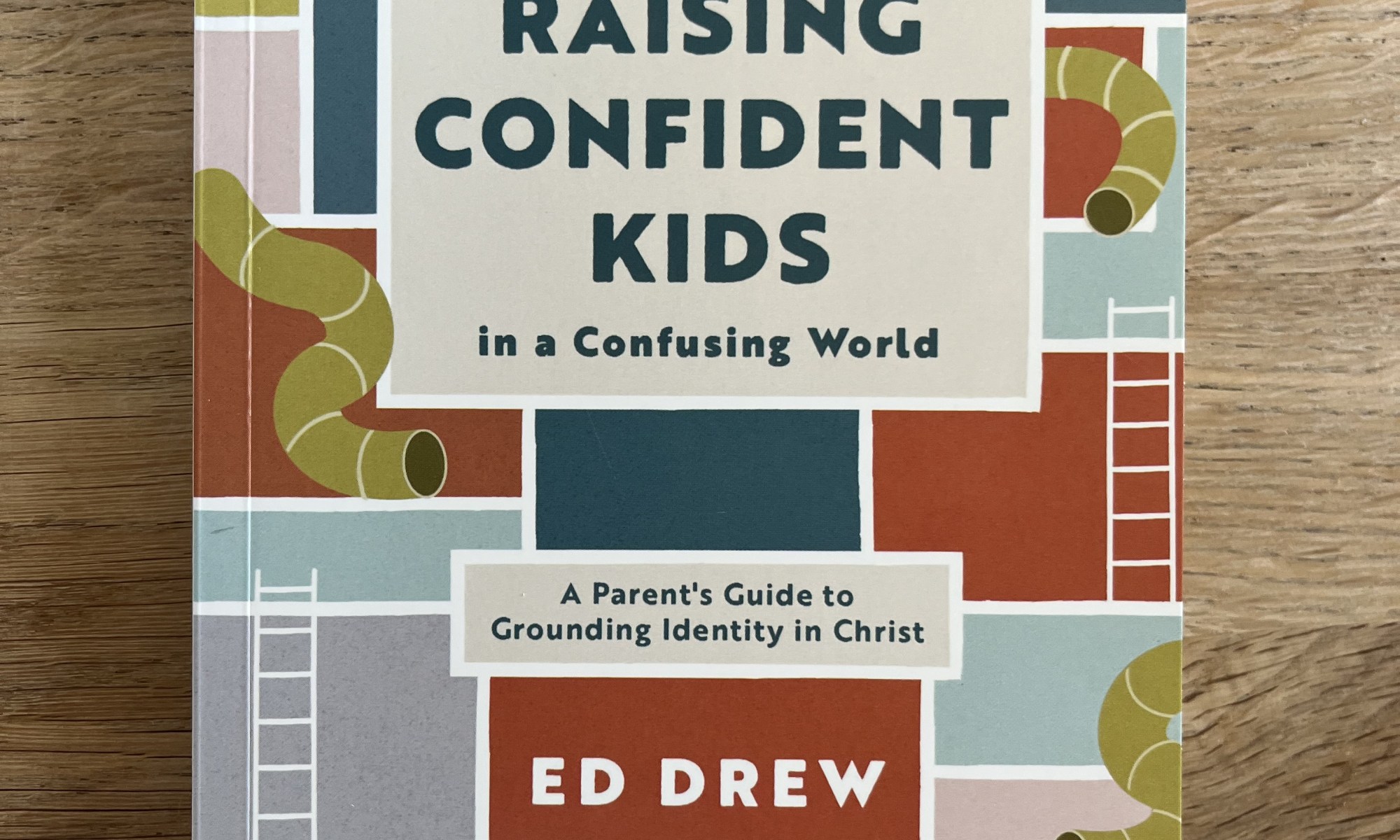

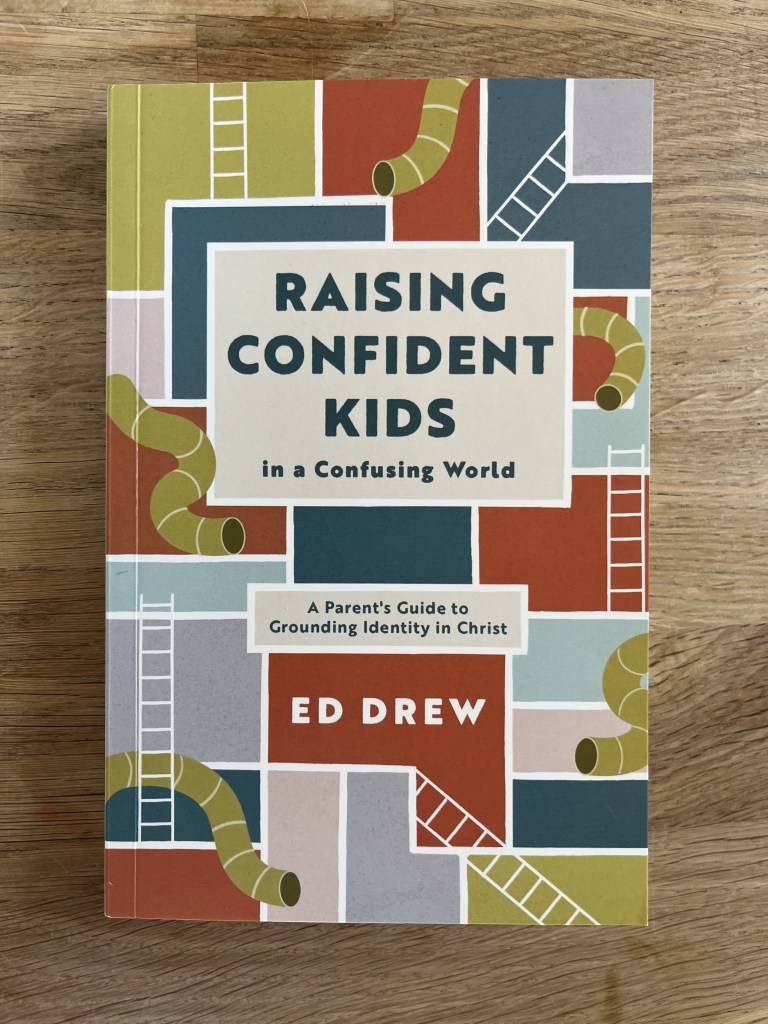
As all parents know, raising kids is not easy. Each kid has its own personality, likes and dislikes, fears and joys. Mixed together with the rush of life and there is a lot to keep track of! How do we love and serve these noisy gifts God has given us to grow up into mature confident adults who, hopefully, love and follow Jesus? Ed Drew—the Ministry Director of Faith in Kids, which resources children’s ministry in the local church—has written Raising Confident Kids in a Confusing World—A Parents Guide to Grounding Identity in Christ. The world a is a confusing place and takes a lot of wisdom to navigate.
At one point or another in our lives, we all want to know who we are. What will we become? Who will we be? A common question kids are asked is, “What do you want to be when you grow up?” If it only it were that simple. Now kids are being taught they can choose their gender and their sexuality. They are taught to make their own paths. Follow their hearts. Declare to everyone, “This is me!” But am I the same person I was a few years ago? What if their thoughts and feelings down’t match up? What if who or what they want to be hurts others? What if there were a better way?
Children are neither defined by those they are surrounded by nor are they a blank sheet of paper. The answer that gives confidence, joy, and freedom is that they are sheep. Then we can point to a—no—the good Shepherd who cares for them and tells them who they are. If we achieve nothing else in life but teaching them Jesus, that is worth it. On their worst days when they are “canceled” or bullied by other kids at schooled, we want them to know that there is one who will always stand by them no matter where they are in life. Besides that being us parents, doing the best we can, that is always Jesus. Clearly this entails that they are followers of Jesus, something which seems to be assumed in this book. Or isn’t clearly defined. It almost sounds that we can just tell our kids that they are sheep whether we know if they believe in Jesus or not.
One day our kids will grow up and leave home. They will have the option of attending or not attending church. What will they choose when you are not around? They will “need to be certain… that Jesus Christ and his people are part of the fabric of their identity” (21).
Here’s what this book isn’t: it is not full of silver bullets to make sure your kids grow up as happy Christians. Instead, Drew wants us to teach our kids that they belong to God, and so they can be confident in who they are because of him. We need to think through how we parent so that we can always point to how God sees them. We want that to be “the fundamental basis of everything they are and do” (22). If your children are not followers of Jesus, you can still teach that God is Creator and Savior and has created them for a purpose. They are his image-bearers. But if they do believe in Jesus, then that will make this book a bit easier to implement.
Drew reminds us that our children hear what we say and then see how we live. They are breathing our family culture. They see what vies for our attention. They notice how we deal with our problems, what we do, and to whom we go. We will not do this perfectly, but we have the Shepherd with us and his Spirit in us. Drew points us to what children need the most (Jesus, ch 2). He, not a bunch of rules on what is right and wrong, makes them holy (although then rules do help guide them). He points us to God’s precious love for us and for our children (ch 3). What is perhaps the number #1 way your kids will learn about God’s precious love for them (after the Bible)? From experiencing how precious they are to you. They will learn God’s love through how you love them. We teach them that in Christ they are forgiven (ch 4). They are sinners and they will sin, but there is always more grace. Instead of getting frustrated and impatient, we need to take the sinful acts (or the mistakes) as opportunities for restoration.
Chapter five focuses on heart change, which is done through Christ’s work. Our children are not puppies, and we want them to be more than just civilized. We want to help them see their heart and why they respond to things the way they do (just as we need to learn that too). Parents “walk the walk” but we must also talk to our kids about our walk, why we do what we do, and why we care. Chapter six looks at what to do when you (or your kids) are not ok—particularly when they are older and may not be as open. Just as Jesus joined Mary and Martha in their grief and wept over the death of Lazarus, so we join our children and teens in their hurts and tears. Jesus came to do more than that! He came to save our children. These are moments where we can point to Jesus as our High Priest who understands our temptations to run away, strike back, or give up. He understands and he comes to us to rescue us.
Chapter seven looks at how we are wonderfully made (even our armpits). Our bodies are wonderful, spectacular, and fragile. There are many discussions that need to take place before, during, and after puberty. This is a good segue into teaching about relationships, sex, and marriage (ch 8). Here he talks about friendship, what it should and shouldn’t look like, and marriage and singleness (both of which are valuable and gifts from God).
Chapter nine is titled “Boys, Girls and Gender” (yes, without the Oxford comma). Drew is balanced in his chapter in regards to gender roles. Our sons need to be taught to fight sexual temptation and use their strength to protect women. Our daughters need to be taught to speak up for themselves and others. Neither should we push this too far. Just because a man is smaller or less strong than some women, it doesn’t mean they are less male or godly. Women are often characterized as being very emotional, but some men are more emotionally attuned to others’ needs than certain women, and that doesn’t mean those women are less female or godly. Our children need us to show them what God says about their gender, their sexuality, and their full identity. They are made great and loved greatly.
Drew ends with chapter 10: the more we are with Jesus the more we will be like him. As well, he is always with us! As we watch him and keep our eyes on him, being willing to be corrected, our perspective on our situation(s) will change. We are living for Revelation 7:9–10 where a great multitude from every nation stands before the throne and the Lamb and cries out, “Salvation belongs to our God!” At that point the age gap has disappeared from us and our children. We are brothers and sisters in Christ. Parent with the aim of experiencing that joy in the presence of the Lord.
Recommended?
Ed Drew has written a book sprinkled with seriousness and humor that points parents to their God-given responsibility to their children. Few things in this life matter as much as that. This is an easy read that any parent can pick up, and I would recommend that both parents (if both are there) read this together. Then they can discuss how they can bring Scripture graciously into their children’s lives to exalt Christ and ground them in who they are (and in whose they are!).
Lagniappe
- Author: Ed Drew
- Paperback: 176 pages
- Publisher: The Good Book Company (May 1, 2023)
- Read Chapter One
Buy it on Amazon or from The Good Book Company
Review Disclosure: I received this book free from The Good Book Company. The opinions I have expressed are my own, and I was not required to write a positive review. I am disclosing this in accordance with the Federal Trade Commission’s 16 CFR, Part 255 http://www.access.gpo.gov/nara/cfr/waisidx_03/16cfr255_03.html.
Amazon Affiliate Disclosure: As an Amazon Associate I earn from qualifying purchases.
 spoiledmilks