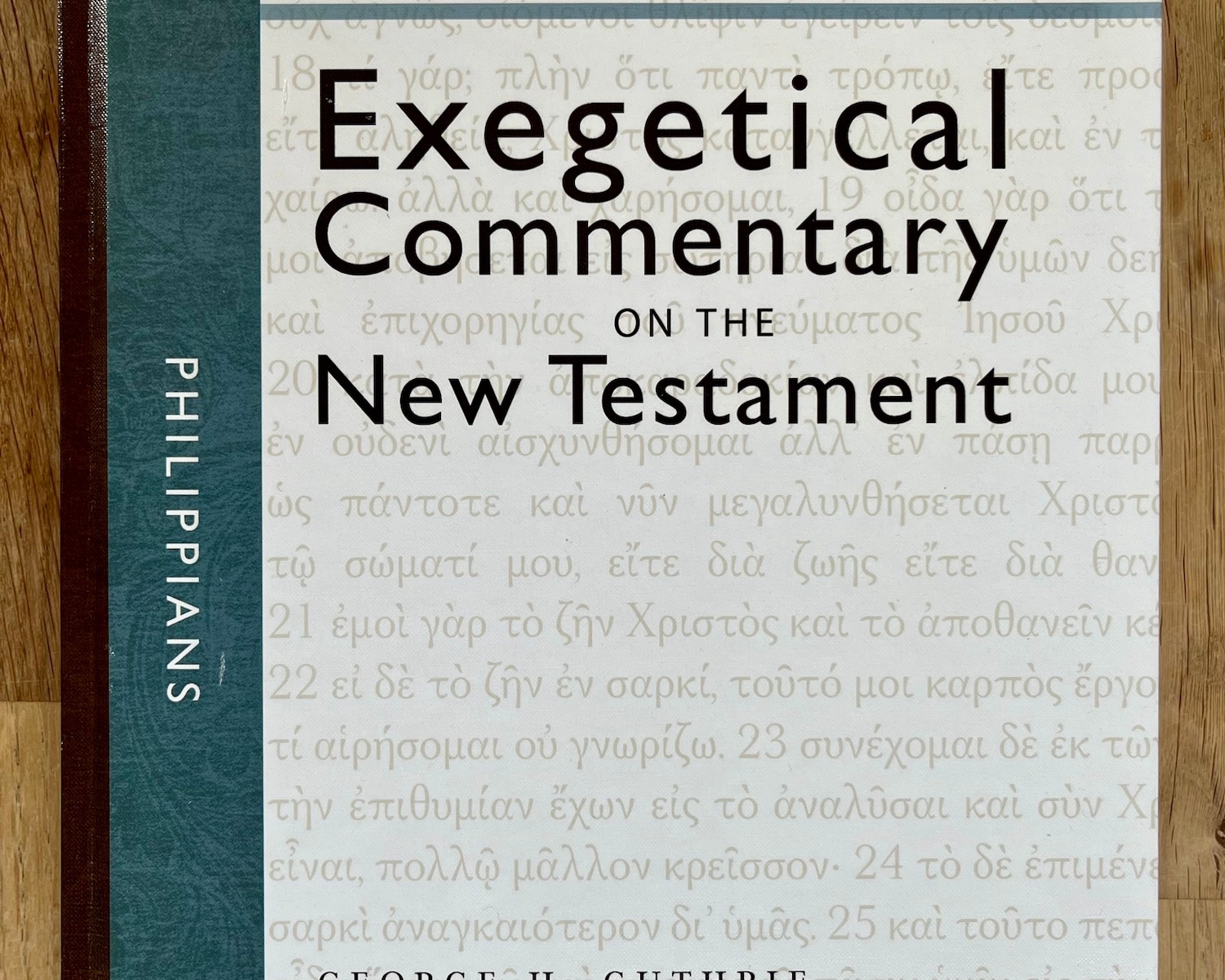


One of Paul’s aims in sending his letter to the Philippians was to lead them back into loving unity with each other. There were disagreements within the church and pressures from outside of the church that made life difficult. Philippi was a Roman colony and its citizens displayed civic pride all the time. While religiously diverse with many gods, the imperial cult seems “to have dominated the heart of the city” (9). The Philippians Christians couldn’t honor the Casesar, for doing so would mean they agreed with him being both “Lord” and the “son of god.” Paul’s proclamation that God had made Jesus, the Son of God, to be “Lord” to whom every knee will one day bow (2:10–11) should be read against this backdrop. The beliefs of the Philippians were at complete odds with their surrounding culture.
In a letter about unity, it is ironic though that “in the mid-twentieth century scholars” questioned the unity of the letter itself, “championing the position that Philippians consists of at least two or three letters, pieced together in a literary patchwork” (29–30). Where would this idea come from? Paul writes in Philippians 3:1, “Finally, my brothers, rejoice in the Lord. To write the same things to you is no trouble to me and is safe for you.” It seems like Paul is going to end his letter here, but he doesn’t. Instead 3:2–14 suddenly shift “to a rather harsh warning about false ministers and then to Paul’s reflections on his own religious identity” (30).
Thankfully this view and the view that Philippians is made up of various letter fragments has been largely abandoned. We have no external evidence for this theory, no manuscripts made up of these supposed fragments. In his Philippians commentary, George Guthrie adds, “Also, if we cannot make sense of an author’s moves in crafting the letter as it stands, why hypothesize that an editor would craft a final product in this way?” (p.30, n.105).
Opening and Closing
Philippians 1:3–11 and 4:10–20
George Guthrie shows both linguistic and conceptual parallels between the letter opening (Phil 1:3–11) and the closing (4:10–20), which frame the letter. One connecting theme is Paul’s relationship with the Christian brothers and sisters in Philippi. Guthrie provides a table of matching Greek words, synonyms, and concepts, but I will just write it out below.
| “joy” (1:4) | “I rejoiced” (4:10) |
| “your participation” (1:5) | “shared” (4:15) |
| “the gospel” (1:5) | “the gospel” (4:15) |
| “from the first day” (1:5) | “at the beginning” (4:15) |
| “The one who began a good work among you” (1:6) | “the one enabling me” (4:13) |
| “to think this way about al of you” | “giving careful thought to what might be done for me” (4:10) |
| “fellow participants” (1:7) | “sharing” (4:14) |
| “imprisonment” (1:7) | “in my difficulty” (4:14) |
| “might overflow” (1:9) | “I have more than I need” (4:18) |
| “having been filed” (1:11) | “have been supplied/will supply” (4:18, 19) |
| “fruit” | “interest” (lit., “fruit”) (4:17) |
| “Jesus” (1:11) | “Jesus” (4:19) |
| “glory… of God” (1:11) | “to… God… glory” (4:20) |
Why would Paul write his letter like this? Guthrie again notes, “We need to remember that ancient writings consisted of mostly unbroken lines of letters—no headings, no punctuation, and no spaces between words” (31). One way authors would show the movements of their letter was by an inclusio, which marked the beginning and end of a chapter or paragraph. Instead of using headings and subheadings, this would tell people where a section began and ended.
The Center
1:27–2:4 and 3:16–4:3
Guthrie brings up an article* by David Garland who highlights eight literary parallels between 1:27-2:4 and 3:16-4:3. This marks 1:27-4:3 as the main body of the letter. Guthrie expands Garland’s list and provides seventeen lexical and conceptual parallels.
| “worthy of the gospel” (1:27) | “in the gospel” (4:3) |
| “of Christ” (1:27, 29) | “of Christ” (3:18; cf. 3:20) |
| “live out your heavenly citizenship” (1:27) | “citizenship… live” (3:20) / live a pattern of life” (3:17–18) |
| “you are standing firm in one Spirit” (1:27) | “stand firm in the Lord” (4:1) |
| “striving together” (1:27) | “worked hard alongside of me” (4:3) |
| “for the gospel faith” (1:27) | “in the gospel” (4:3) |
| “of destruction” (1:28) | “destruction” (3:19) |
| “of salvation” (1:28) | “Savior” (3:20) |
| “those standing against” (1:28) | “enemies” (3:18) |
| “From God” (1:28) | “God” (3:15, 19) |
| “you saw I had and now hear that I have” (1:30) | “Be imitators of me” (3:17) |
| “Love” (2:1, 2) | “loved” (4:1) |
| “encouragement” (2:1) | “I urge” (4:2) |
| “being like-minded… sharing a common perspective” (2:2) | “let us embrace this mindset… align their perspective” (3:15; 4:2) |
| “My joy” (2:2) | “my… joy” (4:1) / “rejoice” (4:4a) |
| “with humility” (2:3) | “of humiliation” (3:21) |
| “focused… on” (2:4) | “pay careful attention” (3:17) |
Rejoice!
Despite what I wrote in my review about preachers typically promoting Philippians as a letter of “joy,” well, it is about joy and rejoicing. Guthrie believes joy/rejoicing may be one of the cohesive structural themes in Philippians. In 1:18, 2:17-18, 2:28-3:1, and 4:4 Paul uses “joy/rejoicing” as transitional themes from one part of his letter to the next.

In Phil 1:18h; 2:17, 2:28–29; and 4:4a, what Paul writes leads up to his rejoicing. In 1:18i; 2:18; 3:1; and 4:4b, Paul’s statements about joy or rejoicing point forward to what he is about to write, encouraging the Philippians to rejoice with him. The final use of rejoice in 4:10 matches Paul’s “I will rejoice” statements in 1:18; 2:17 and 18. Guthrie writes, “This expression of joy is forward referring, with the apostle now turning to the Philippians’ concern for him and his joy in that concern” (35).
*Garland’s article is titled “The Composition and Unity of Philippians: Some Neglected Literary Factors” (1985).
You can find my review of Guthrie’s commentary here.
Amazon Affiliate Disclosure: As an Amazon Associate I earn from qualifying purchases.
Buy it on Amazon or from Zondervan!

 spoiledmilks